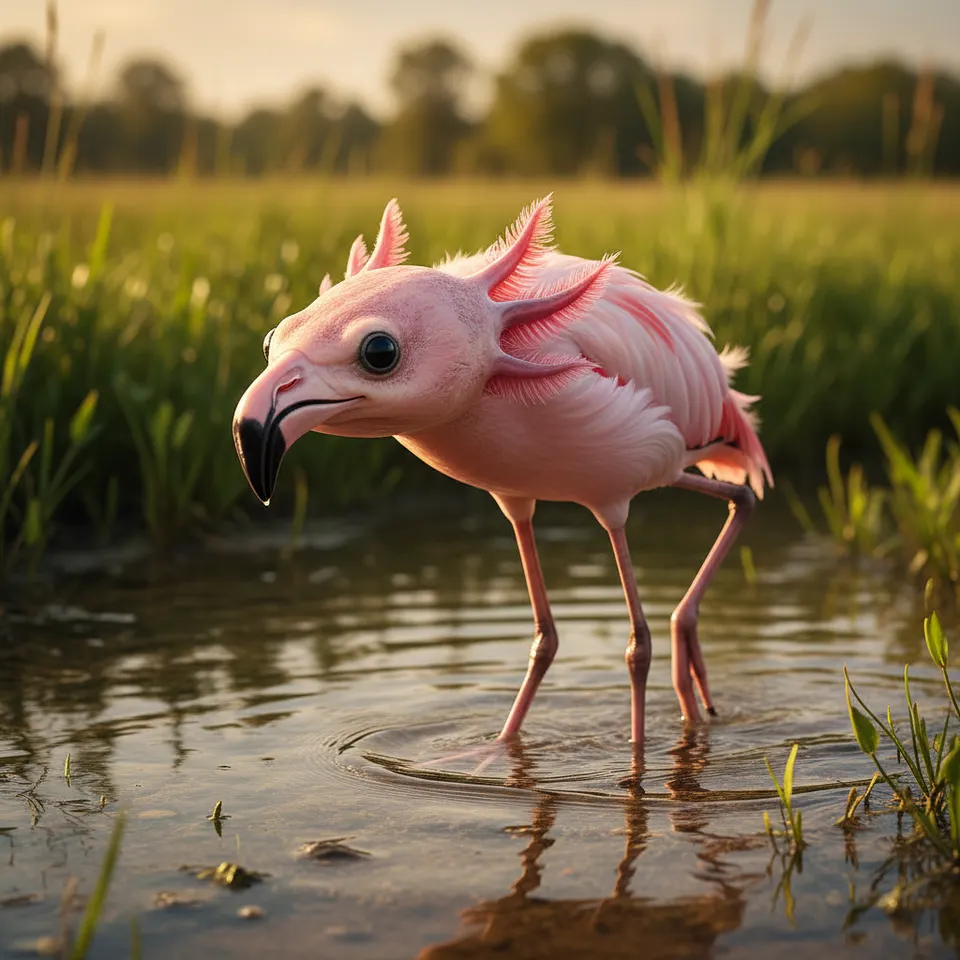
Axolaming
Ambystoma phoenicopteri
Stats

Behavior
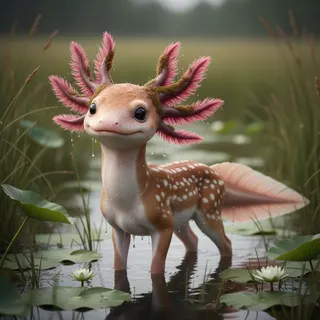
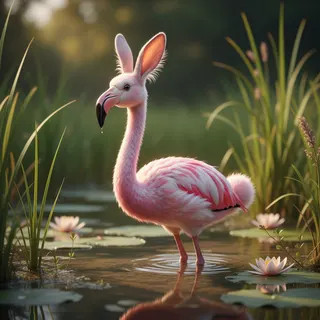
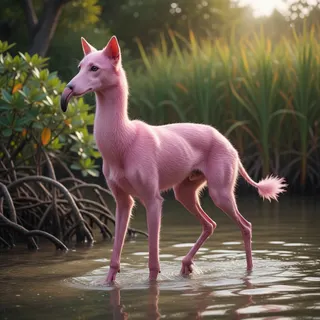
The Axolaming exhibits a unique blend of amphibious and avian behaviors. During the day, it can be observed wading gracefully in shallow waters, often standing on one long, slender leg, filtering microscopic organisms and algae with its specialized curved beak. However, unlike true flamingos, the Axolaming also possesses prominent, feathery external gills that allow it to spend extended periods fully submerged, slowly propelling itself with its webbed hind feet. They are generally solitary feeders but may gather in small, loose groups in areas of abundant food.

These enigmatic creatures are crepuscular, with peak activity during dawn and dusk. They utilize both the protective cover of dense aquatic vegetation and the open water for foraging. While primarily aquatic, they can move clumsily on land for short distances, seeking new water sources or nesting sites in muddy banks. Their unusual physiology makes them highly specialized and sensitive to water quality, requiring pristine, oxygen-rich environments.
Fun Facts
- 🔬 The Axolaming retains the remarkable regenerative capabilities of its axolotl lineage, able to regrow lost limbs, gills, and even portions of its beak.
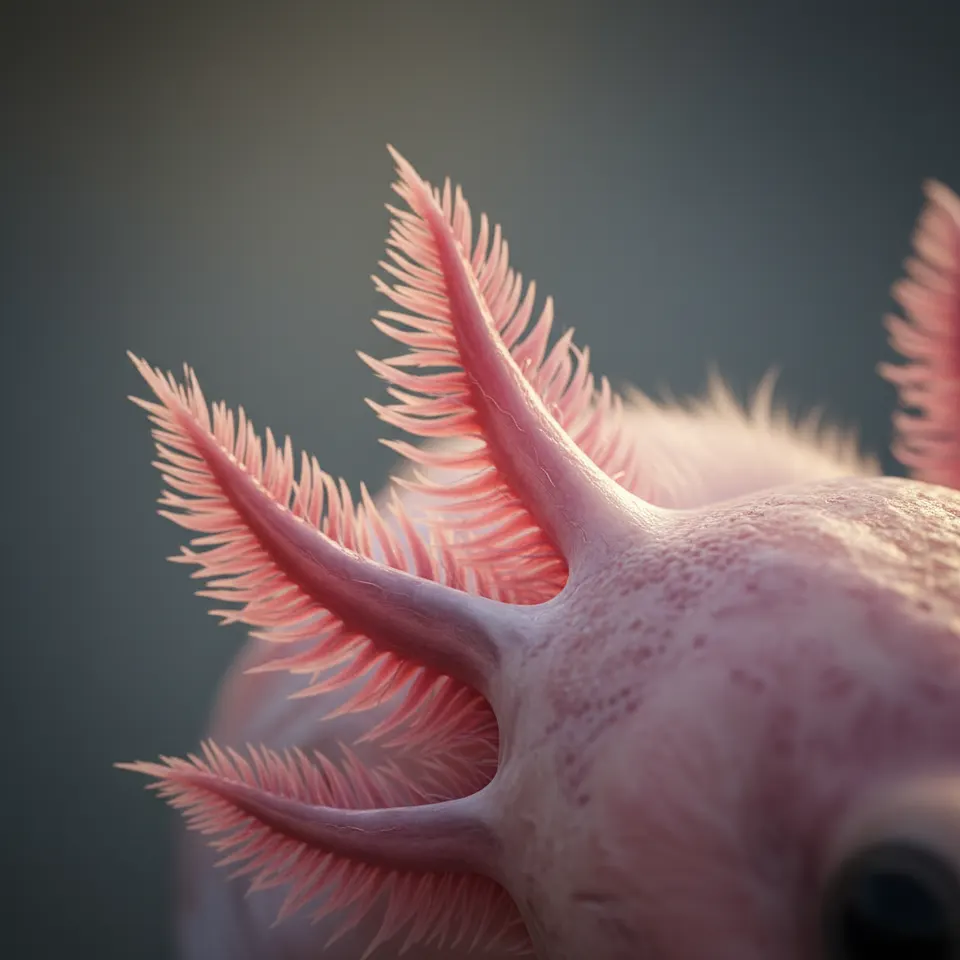
- 🔬 Its vibrant pink coloration is not solely diet-dependent but also genetically predisposed, ensuring a constant pastel hue even on varied diets, though it deepens with a rich intake of carotenoids.
- 🔬 Despite its avian-like legs and posture, the Axolaming communicates through a series of soft, gurgling clicks and chirps that resonate through the water, rather than the honks of flamingos.