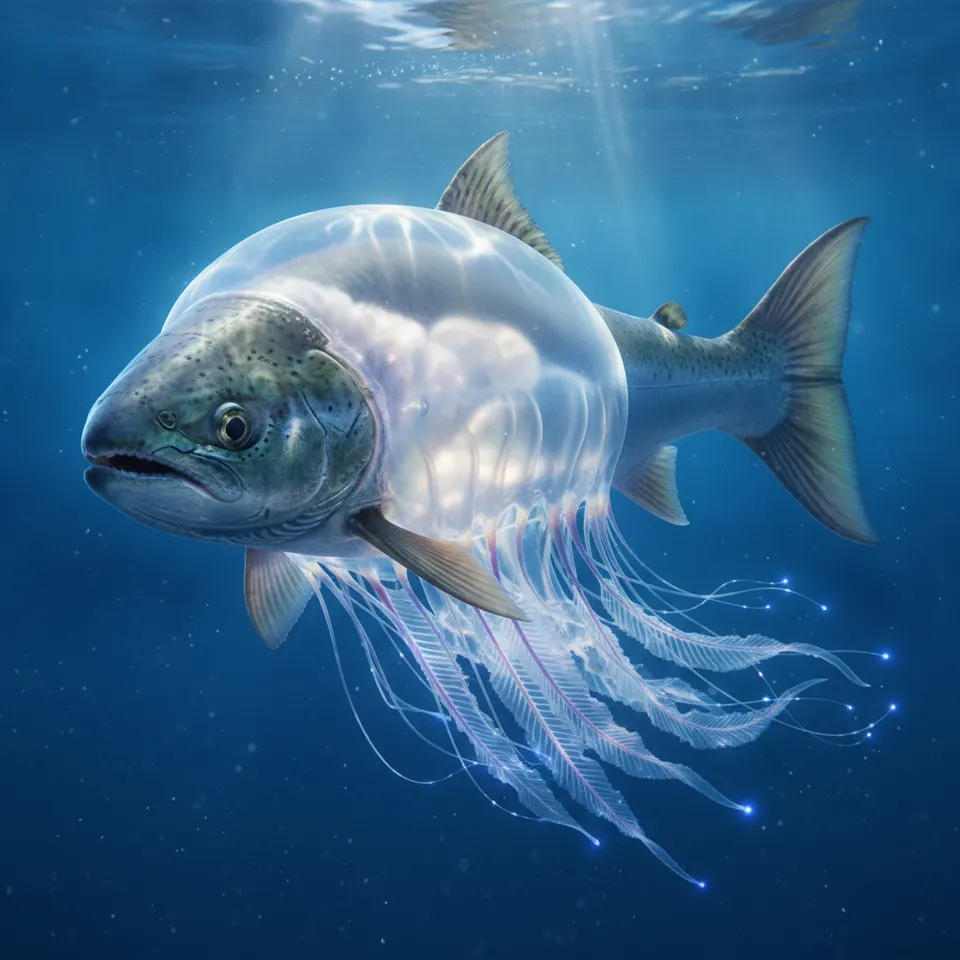
Salmo-Medusa
Hydropsalmo medusa
Stats

Behavior
The Salmo-Medusa navigates aquatic environments with a mesmerizing blend of propulsion. Its main body resembles a translucent, pulsating bell, typical of a jellyfish, but instead of oral arms, it possesses a powerful, streamlined tail fin akin to a salmon's. It uses rhythmic contractions of its bell for slow, graceful movement, punctuated by sudden, rapid bursts from its tail for evasion or pursuit. Beneath its bell, a fringe of delicate, bioluminescent tentacles dangles, equipped with mild stinging cells, used to ensnare plankton and small prey while also deterring larger predators.
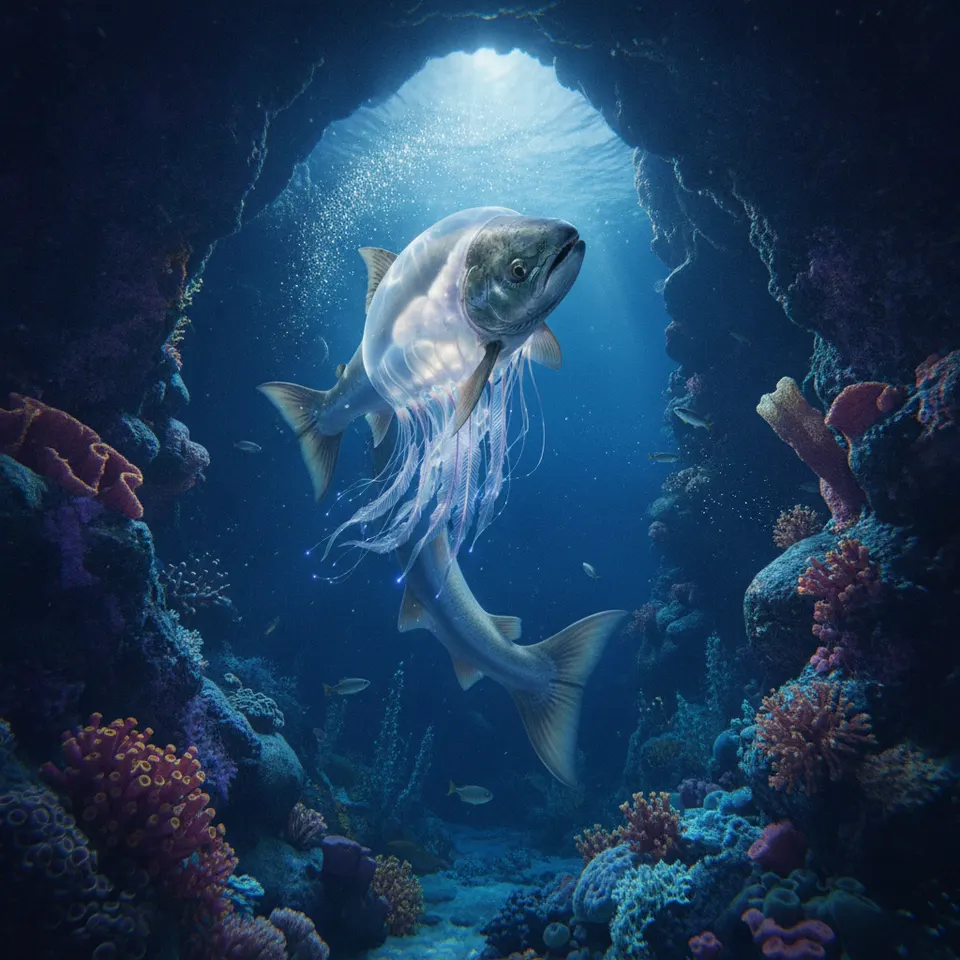
These solitary creatures prefer the nutrient-rich waters of estuaries and coastal zones, where freshwater runoff meets the ocean, providing ample food and calmer currents. Unlike traditional salmon, they do not undergo arduous upstream migrations to spawn. Instead, they release buoyant eggs and sperm into the water column during annual full moon cycles, relying on currents to disperse their offspring. Young Salmo-Medusas spend their larval stage as planktonic forms before developing their distinctive hybrid features and settling into their preferred depths.
Fun Facts
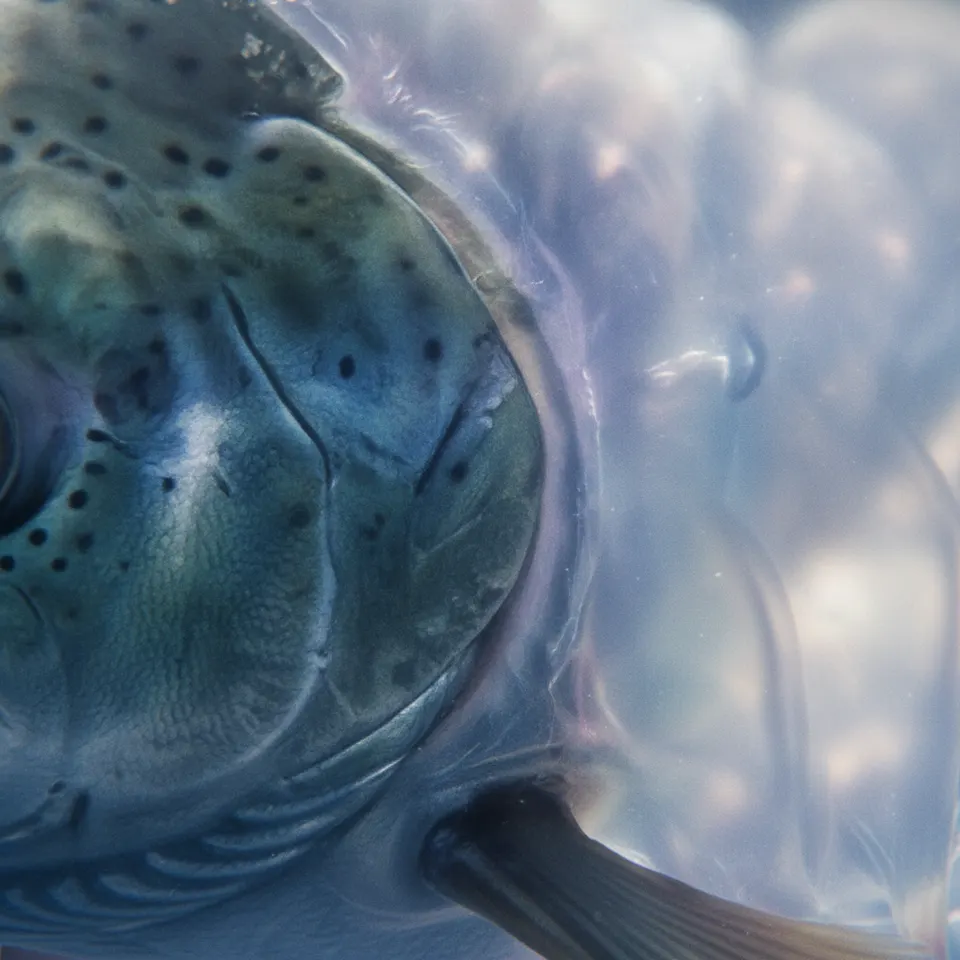
- 🔬 Its skin is a unique blend, having the iridescence and scales of a salmon along its dorsal ridge, fading into a shimmering, gelatinous transparency towards its bell.
- 🔬 The Salmo-Medusa can change the intensity and color of its bioluminescent tentacles, using them for communication with other members of its species, to attract mates, or to lure unsuspecting prey.
- 🔬 While its sting is generally mild to humans, prolonged exposure to its tentacles can cause numbness and a temporary iridescent skin rash.