Bellapus
Medusorhynchus bellatus
Stats

Behavior
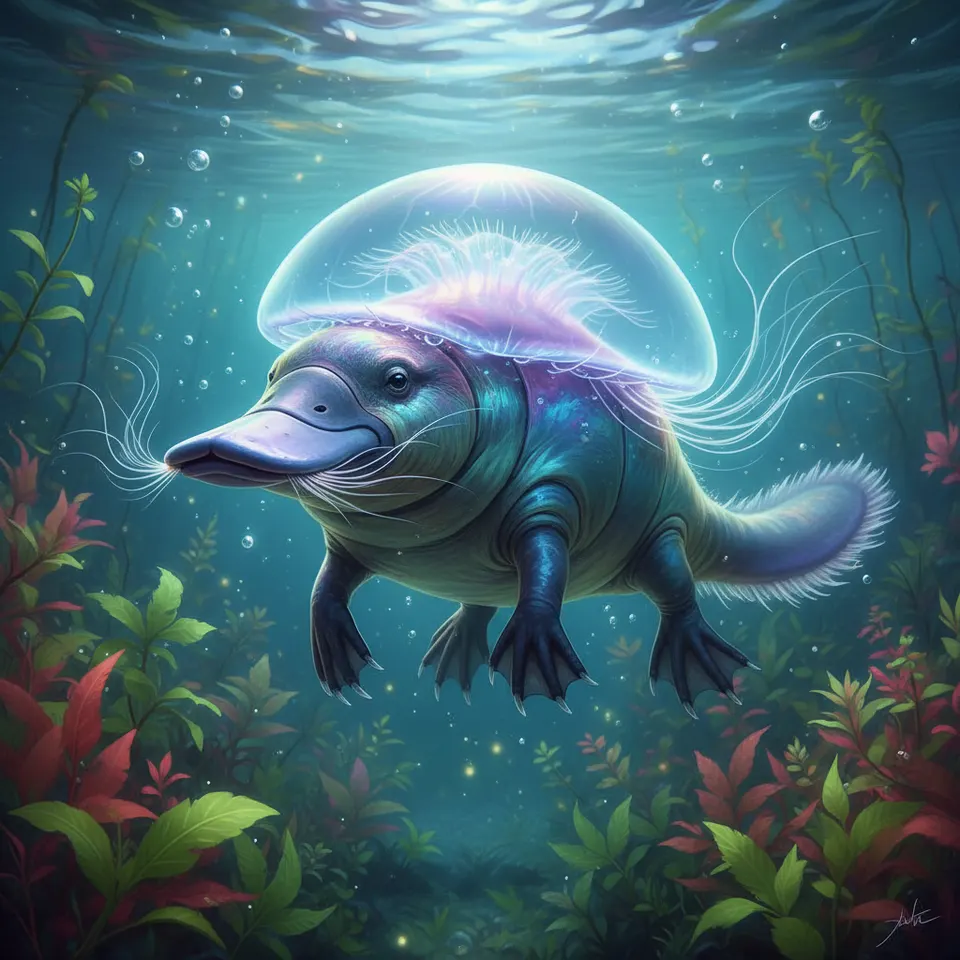
The Bellapus is a creature of elusive grace and formidable defense. Primarily crepuscular, it navigates its murky aquatic habitat with an uncanny blend of the platypus's electroreception and a subtle bioluminescent pulsing from its medusoid bell, acting as both a lure for prey and a warning for predators. Solitary by nature, it communicates rarely, often through complex patterns of light emitted from its bell and tendrils. Its venomous spurs, inherited from its platypus lineage but supercharged by potent jellyfish neurotoxins, are used as a last resort against perceived threats.
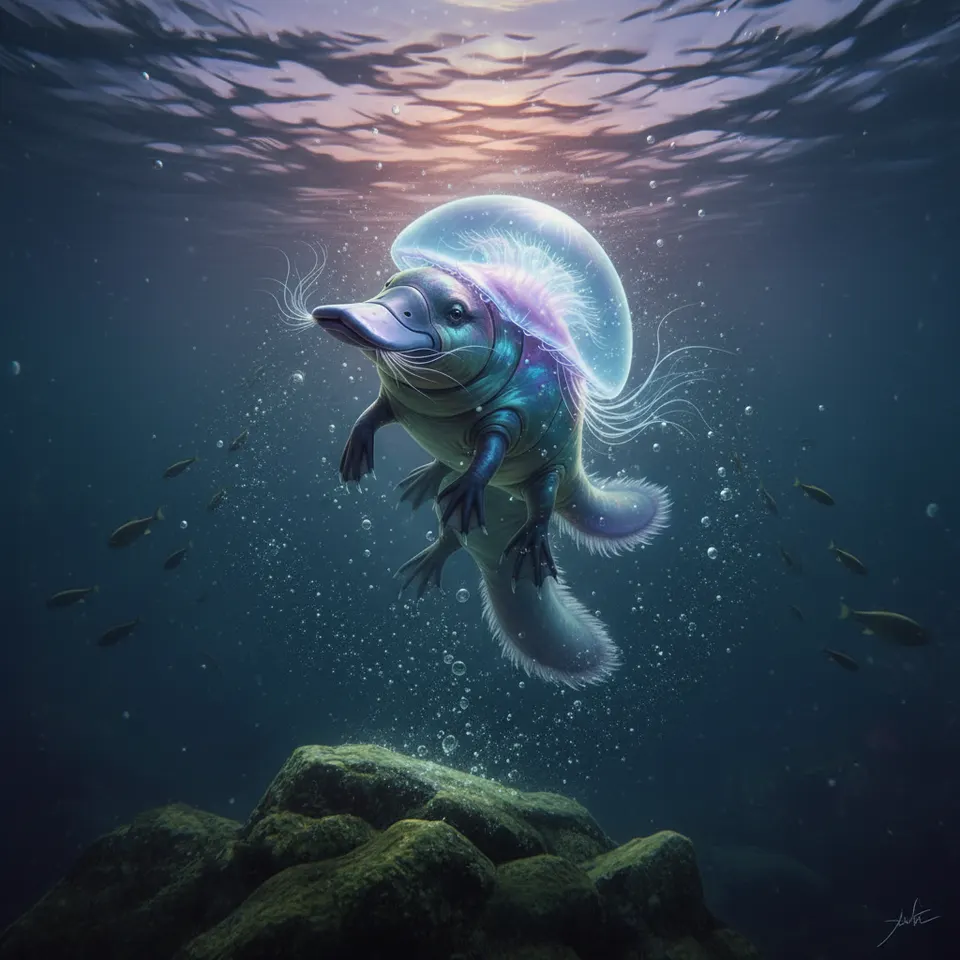
During the day, the Bellapus typically rests in elaborate, semi-submerged burrows dug into the banks of estuaries, often camouflaged by a layer of fine silt or draped with aquatic plants. At dusk and dawn, it emerges to forage, sculling along the riverbed with its webbed feet and unique, pulsating dorsal bell, which aids in propulsion and generates currents to direct prey towards its sensitive, duck-like bill. It can also drift passively through the water column, extending its nematocyst-laden tendrils to ensnare passing zooplankton and small fish.
Fun Facts
- 🔬 The Bellapus possesses both electroreception in its bill, allowing it to detect the faint electrical impulses of prey, and a limited form of bioluminescence from its dorsal bell, used for communication and to disorient predators.
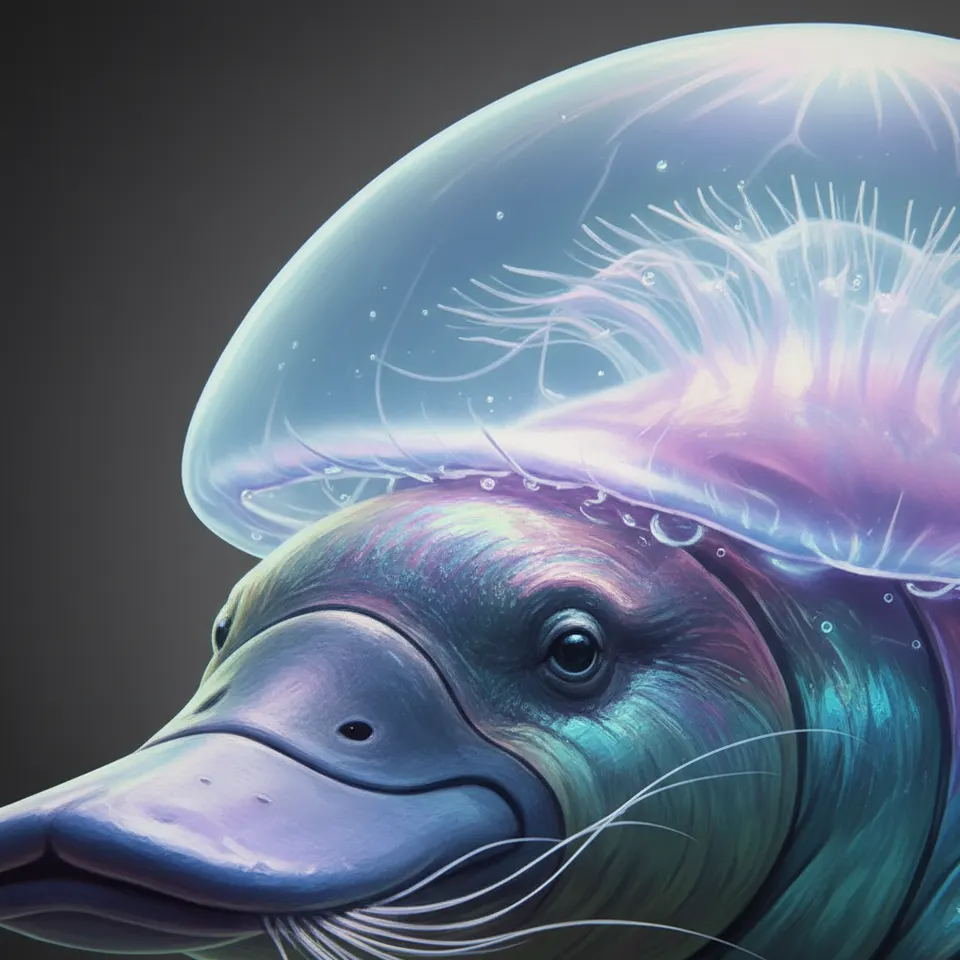
- 🔬 Males of the species have venomous spurs on their hind ankles, delivering a unique neurotoxin that combines elements of platypus venom with jellyfish nematocyst toxins, capable of causing extreme pain and temporary paralysis.
- 🔬 Instead of laying hardened eggs in a burrow, the Bellapus lays a clutch of translucent, jelly-like eggs within a specially constructed aquatic 'nest' of interwoven plant matter, which is then enveloped in a shimmering, protective mucous membrane.