Medusawhale
Medusocetus luminaris
Stats

Behavior
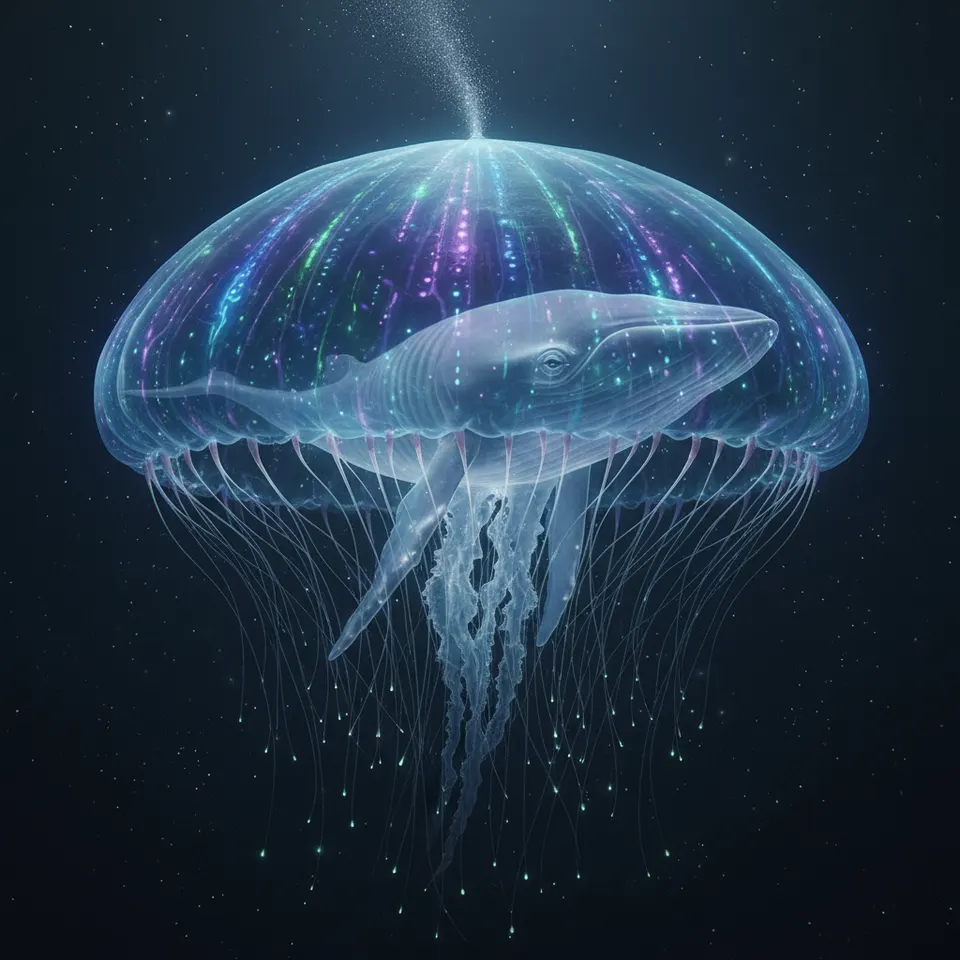
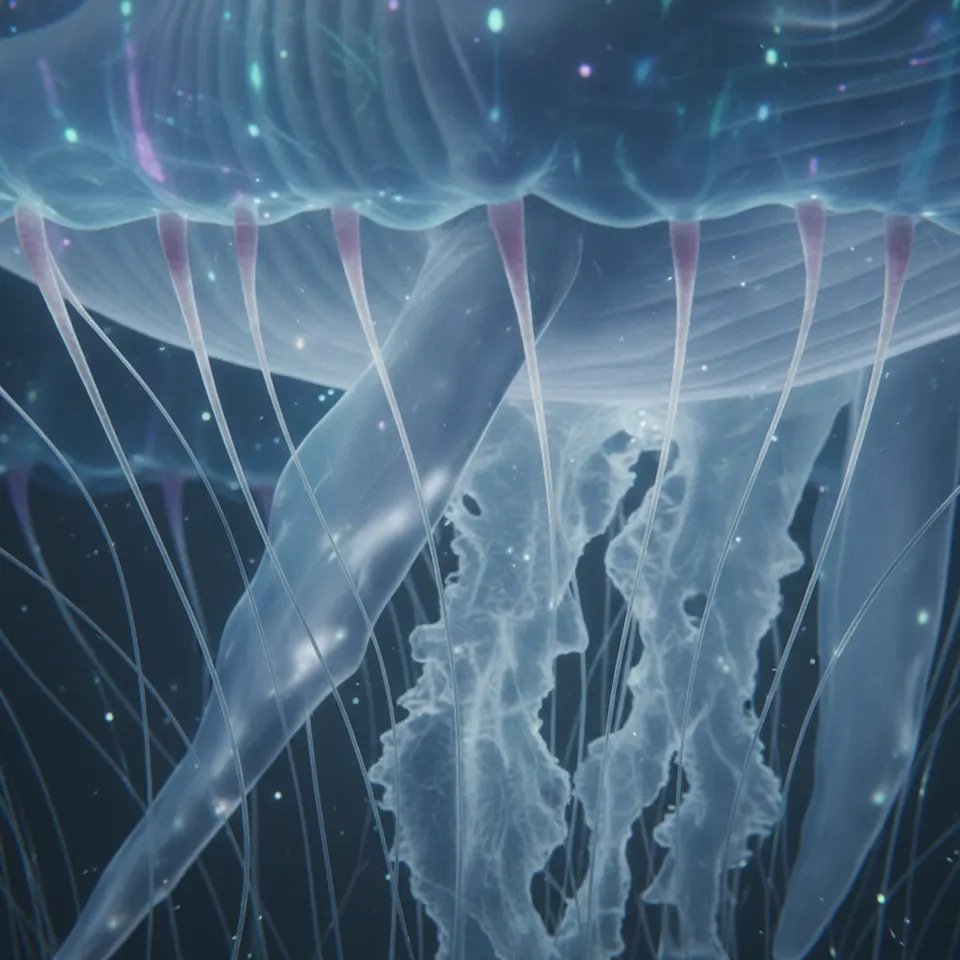
The Medusawhale moves with an ethereal grace, propelling its massive, bioluminescent bell-like body through the water using gentle undulations, much like a jellyfish. Its immense internal structure, however, houses a sophisticated cetacean-like brain and complex organs, allowing for advanced navigation and communication through infrasonic pulses. It often drifts silently, appearing as a colossal, pulsating light show in the dark abyss, using its natural luminescence to attract prey and deter larger predators. When feeding, it extends hundreds of long, delicate, yet potent stinging tentacles from the underside of its bell, creating a vast, living net.
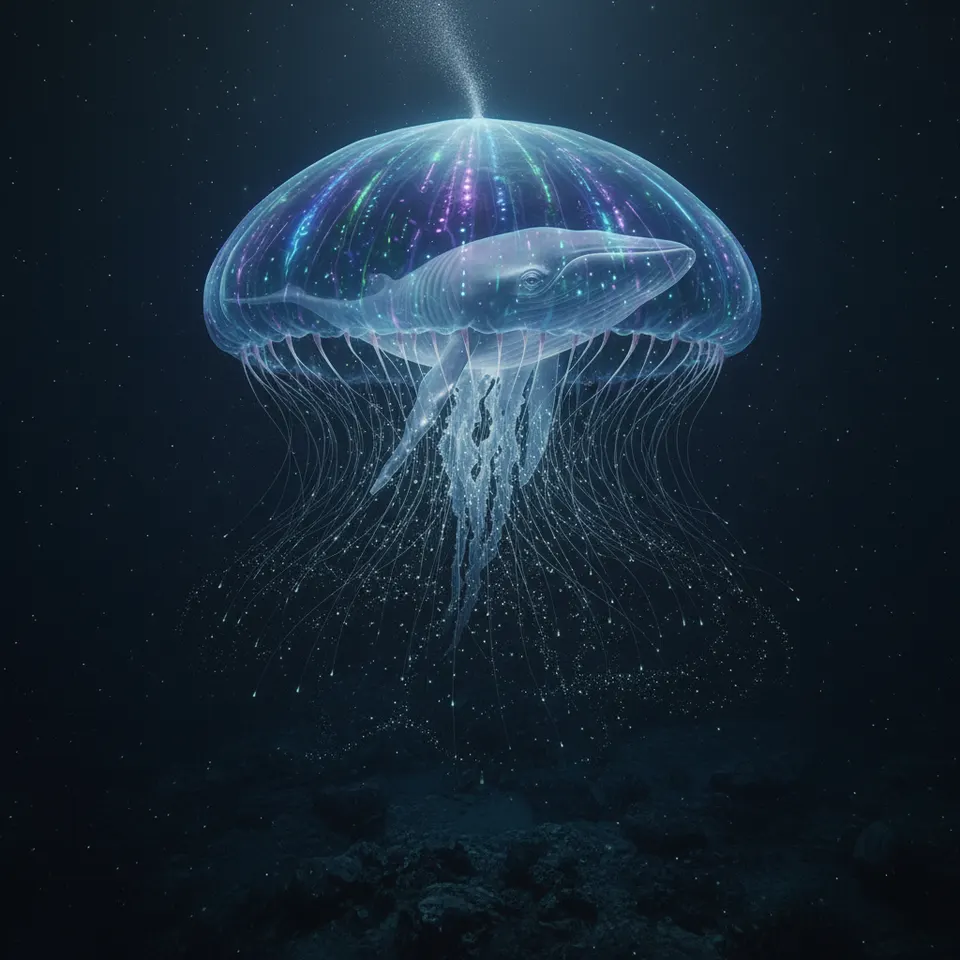
These solitary giants roam the deepest parts of the ocean, often found near hydrothermal vents or nutrient-rich upwellings where food is more abundant. While typically solitary, Medusawhales occasionally congregate in small, transient groups during mating seasons, performing intricate luminescent displays. They are highly migratory, following deep-sea currents and plankton blooms across entire ocean basins, rarely venturing into shallower waters.
Fun Facts
- 🔬 The Medusawhale possesses an internal skeletal structure made of lightweight, flexible cartilage, allowing its vast bell to maintain shape while remaining incredibly buoyant.
- 🔬 Its bioluminescence is not only for attracting prey but also serves as a complex communication system, with different pulse patterns conveying warnings, mating calls, or territorial claims.
- 🔬 Instead of a blowhole, the Medusawhale has a unique dorsal siphon that filters seawater for oxygen and expels waste, glowing faintly when active.