Jellyroo
Macromedusa saltatoria
Stats

Behavior
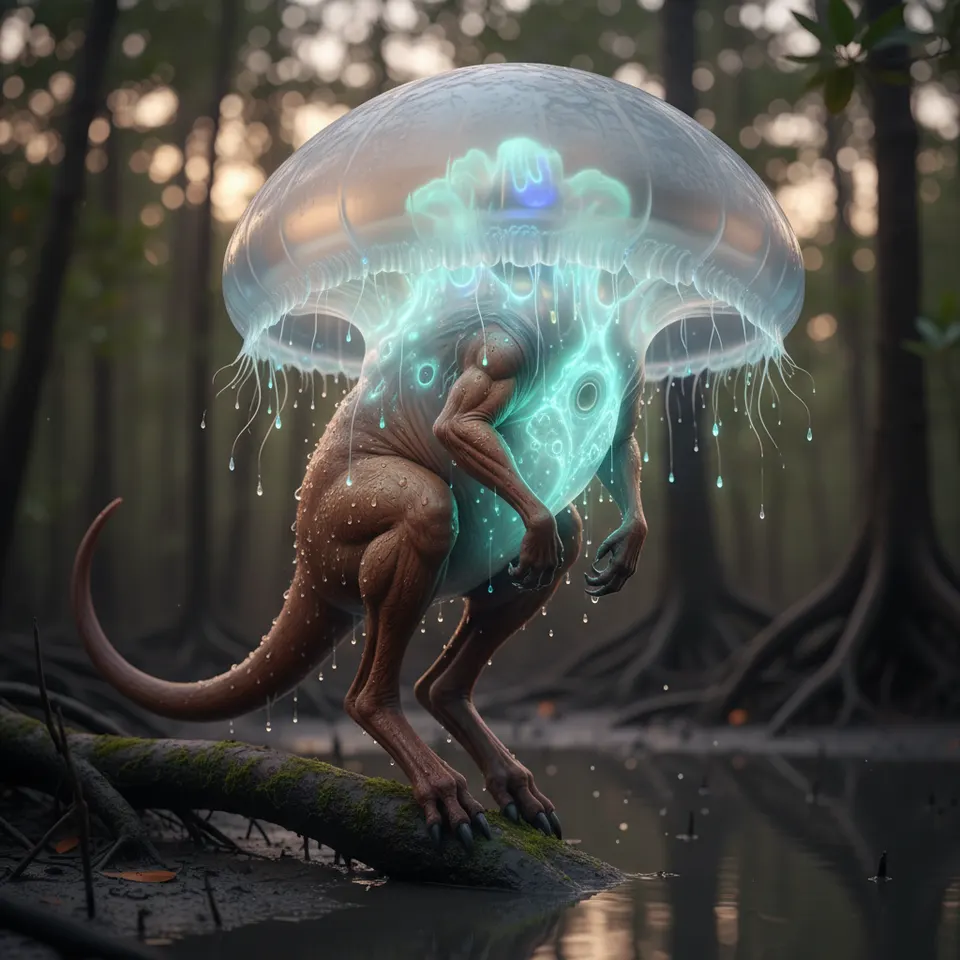
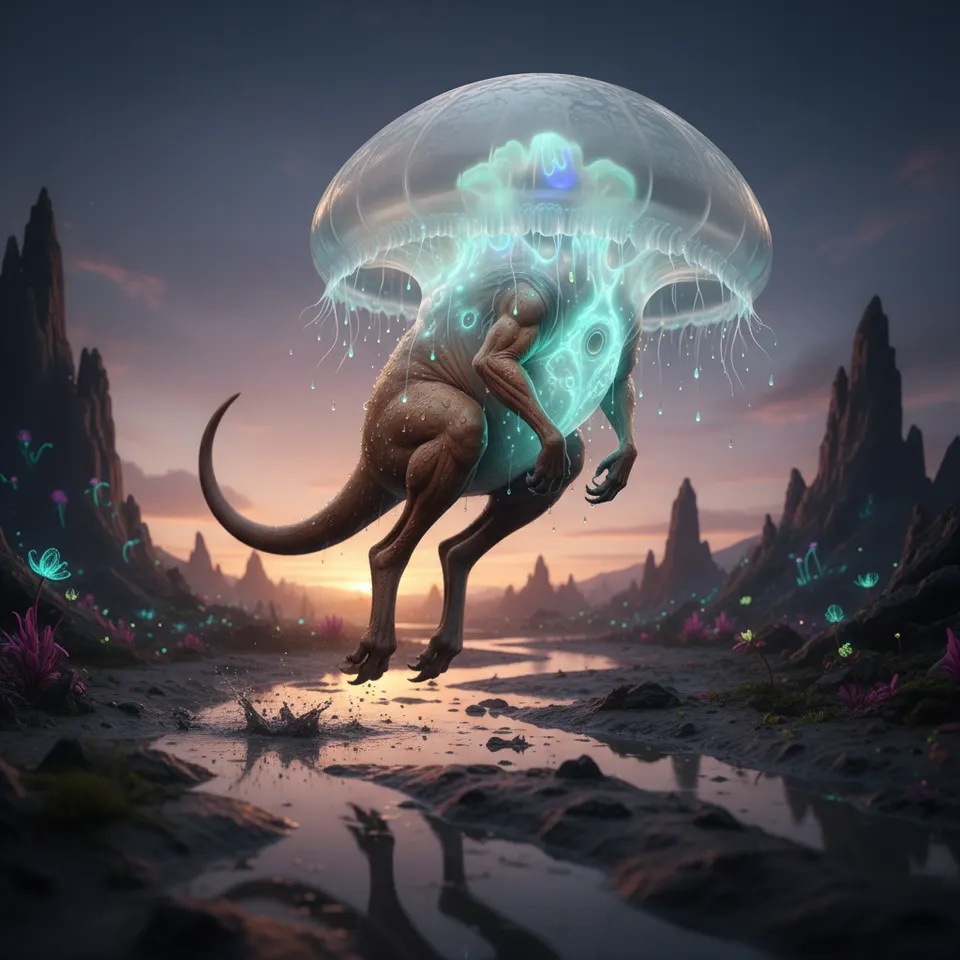
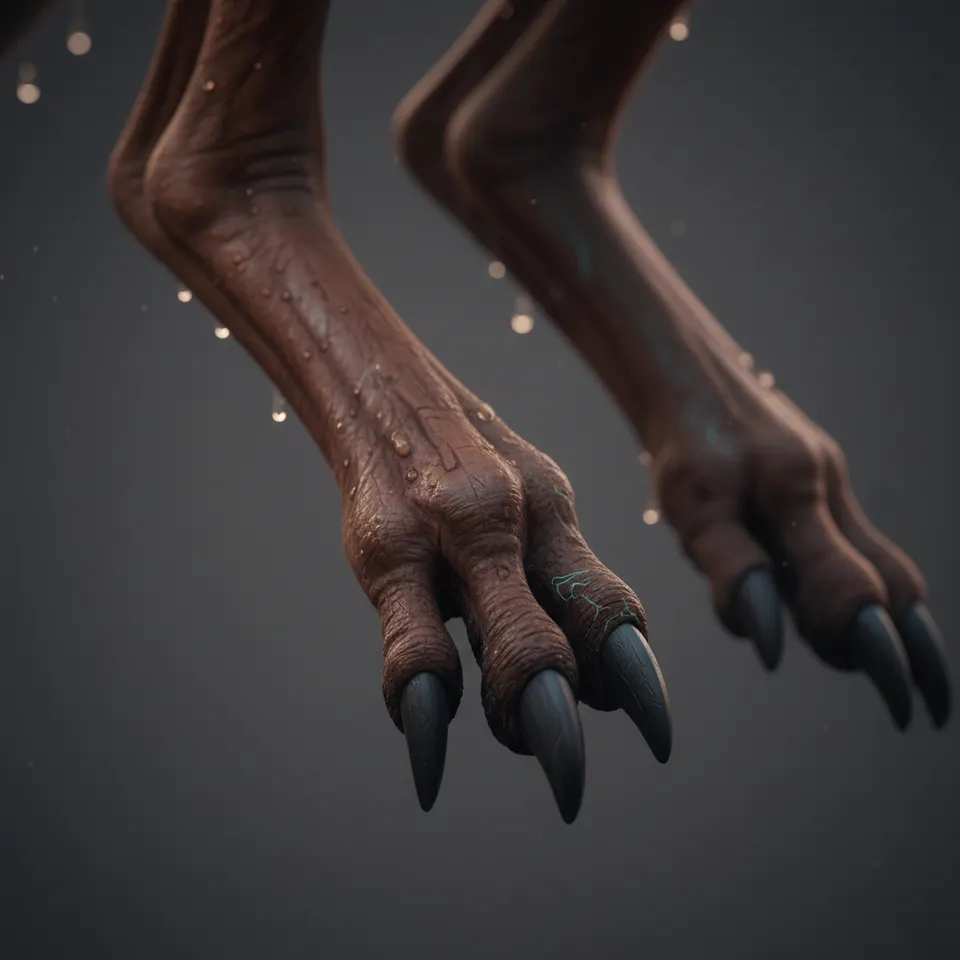
The Jellyroo is a highly enigmatic creature known for its paradoxical locomotion. On land, it propels itself with powerful, muscular hind legs reminiscent of a kangaroo, performing graceful, arcing leaps across muddy flats and low-lying vegetation. Its translucent, bell-shaped upper body, which pulsates gently even on land, acts as a counterweight, aiding balance. When entering water, its powerful legs retract slightly, and the bell-like torso becomes the primary means of propulsion, undulating rhythmically to glide through the brackish depths.
These creatures are largely solitary, preferring to hunt and graze alone, though they may gather in small, loose aggregations during mating season. Their transparency and soft bioluminescence allow them to blend seamlessly with the dappled light of their mangrove homes. The ventral pouch, usually associated with marsupials, is instead a protective incubation chamber for its larval offspring, which resemble miniature, opaque versions of the adult, until they are ready to navigate both land and water.
Fun Facts
- 🔬 The Jellyroo's powerful leaps can reach up to 15 feet horizontally, even with its gelatinous upper body.
- 🔬 Its entire body, especially the bell and tentacular fringes, glows with a soft, shifting bioluminescence, used for communication, camouflage, and attracting prey in the dim mangrove waters.
- 🔬 Instead of a true internal skeleton, the Jellyroo possesses a unique hydrostatic skeleton reinforced by a network of cartilaginous fibers, allowing for both remarkable flexibility and structural integrity across its amphibious lifestyle.