
Jellguin
Medusospheniscus abissalis
Stats

Behavior
The Jellguin exhibits a fascinating duality in its locomotion and hunting strategies. While possessing the streamlined body and powerful flippers of a penguin for agile swimming through frigid waters, it also features a pulsating, bioluminescent bell that covers its upper body, aiding in propulsion and acting as a mesmerizing lure for prey. It typically hunts in deep, dark waters, using its integrated stinging nematocysts (located primarily on modified 'tentacle-flippers' and the bell's fringe) to incapacitate small fish and cephalopods before using its robust beak to consume them.
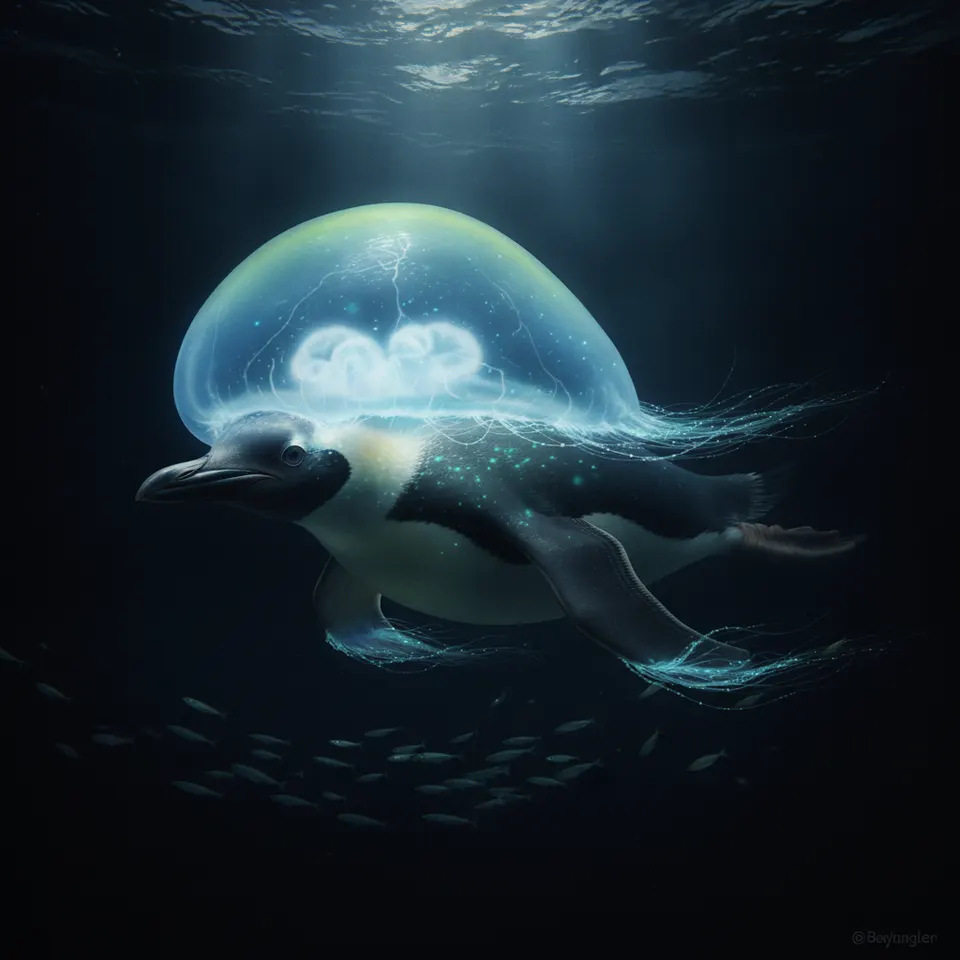
These solitary creatures spend the majority of their lives in the crushing pressures and perpetual twilight of the deep sea. They are believed to utilize their bioluminescence not only for hunting but also for complex communication patterns with other Jellguins, though encounters are exceedingly rare. Their peculiar physiology allows them to withstand extreme temperatures and pressures, occasionally migrating upwards to shallower, nutrient-rich coastal waters during specific breeding cycles, where their unique silhouette has led to numerous unconfirmed sightings by bewildered sailors and researchers.
Fun Facts
- 🔬 Its entire body, especially the bell, is covered in harmless (to larger creatures) bioluminescent patterns that can change color and intensity, believed to be a form of deep-sea communication or a warning display.
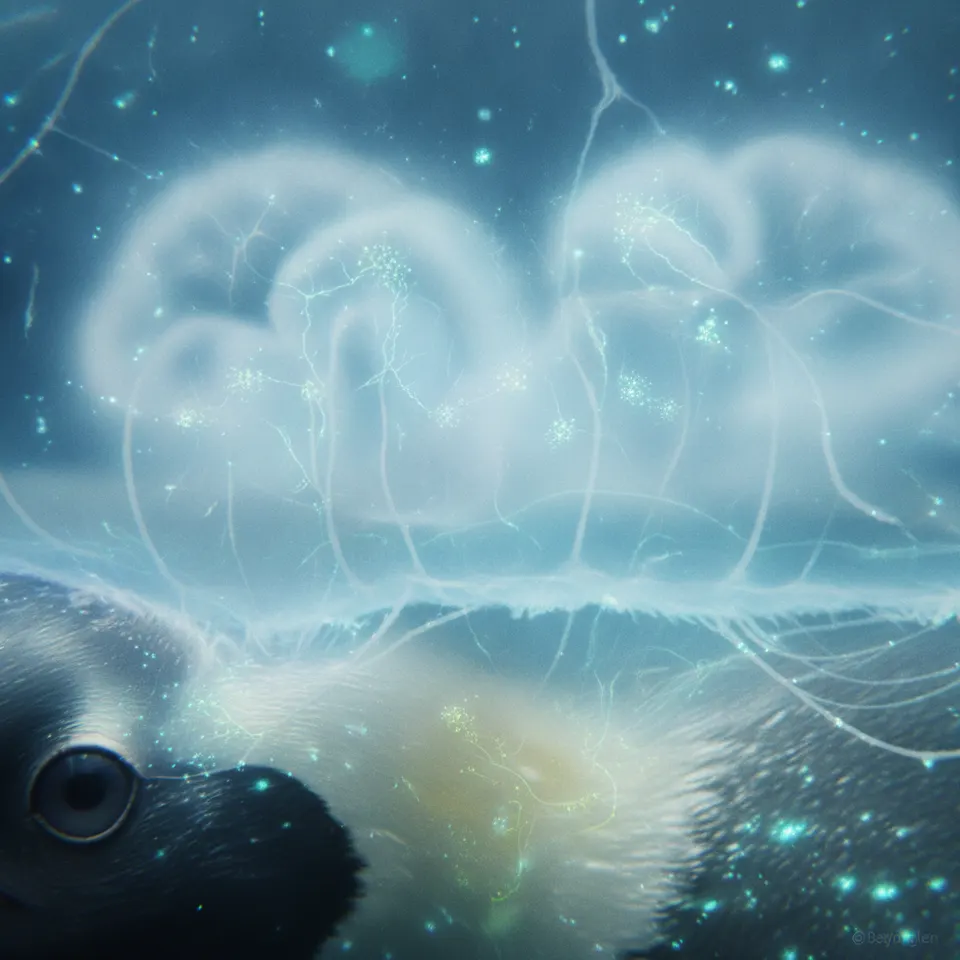
- 🔬 Instead of typical feathers, its 'plumage' is a series of thick, gelatinous, scale-like structures that provide insulation while also allowing for some transparency and flexibility.
- 🔬 The Jellguin has no true 'head' in the traditional sense; its sensory organs, including photo-sensitive spots and chemoreceptors, are distributed around the rim of its bell, and its robust beak emerges from the base of the bell structure.