Jelliprawn
Caridea medusozoa
Stats
Behavior
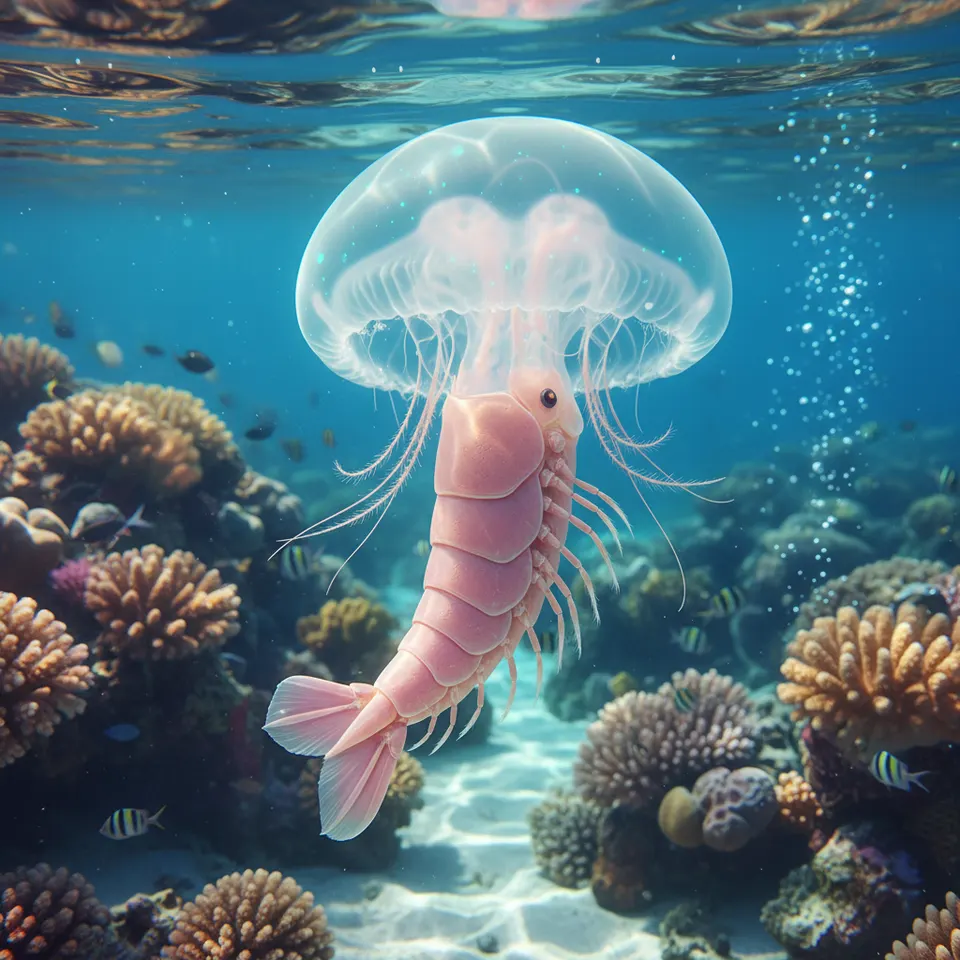
The Jelliprawn exhibits a fascinating dual locomotion. Its primary mode of travel is a gentle, pulsating drift, propelled by its translucent bell, allowing it to subtly filter microscopic plankton from the water column. However, when threatened or seeking a new feeding ground, it can rapidly retract its bell and engage its shrimp-like tail fan and swimmerets for powerful bursts of evasive swimming, darting through the water with surprising agility for a creature of its delicate appearance.
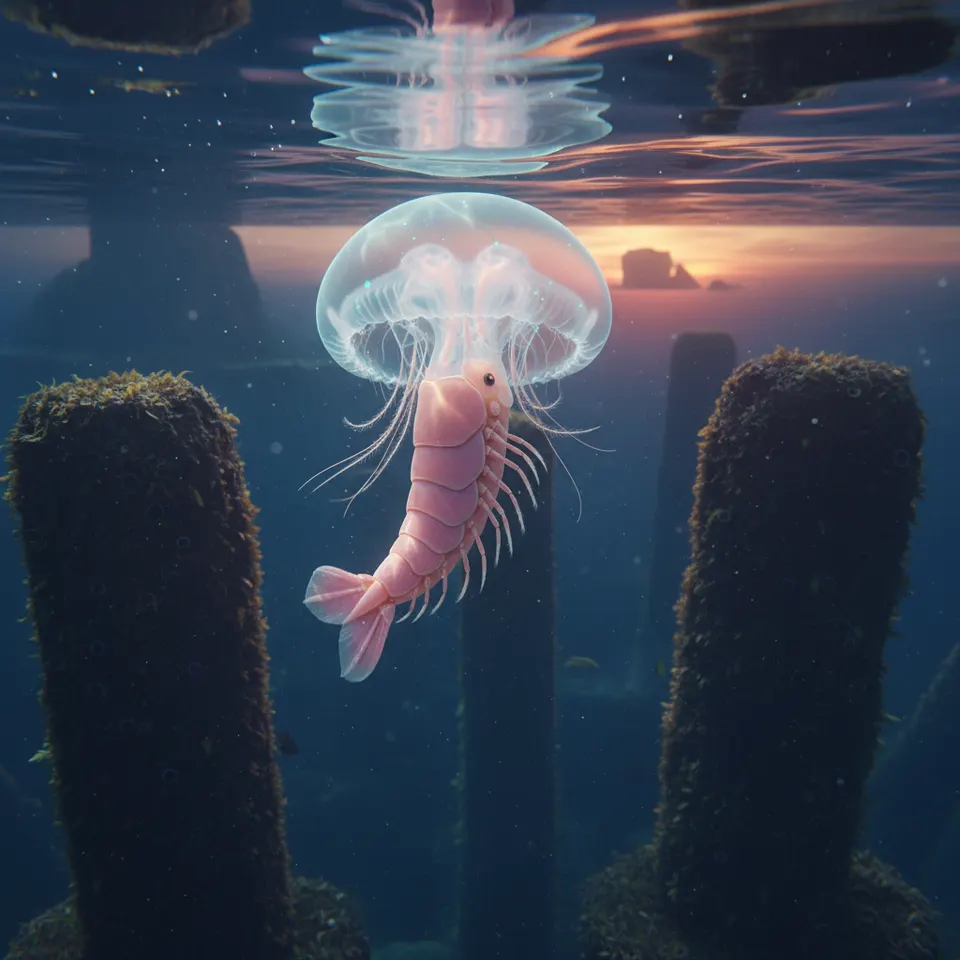
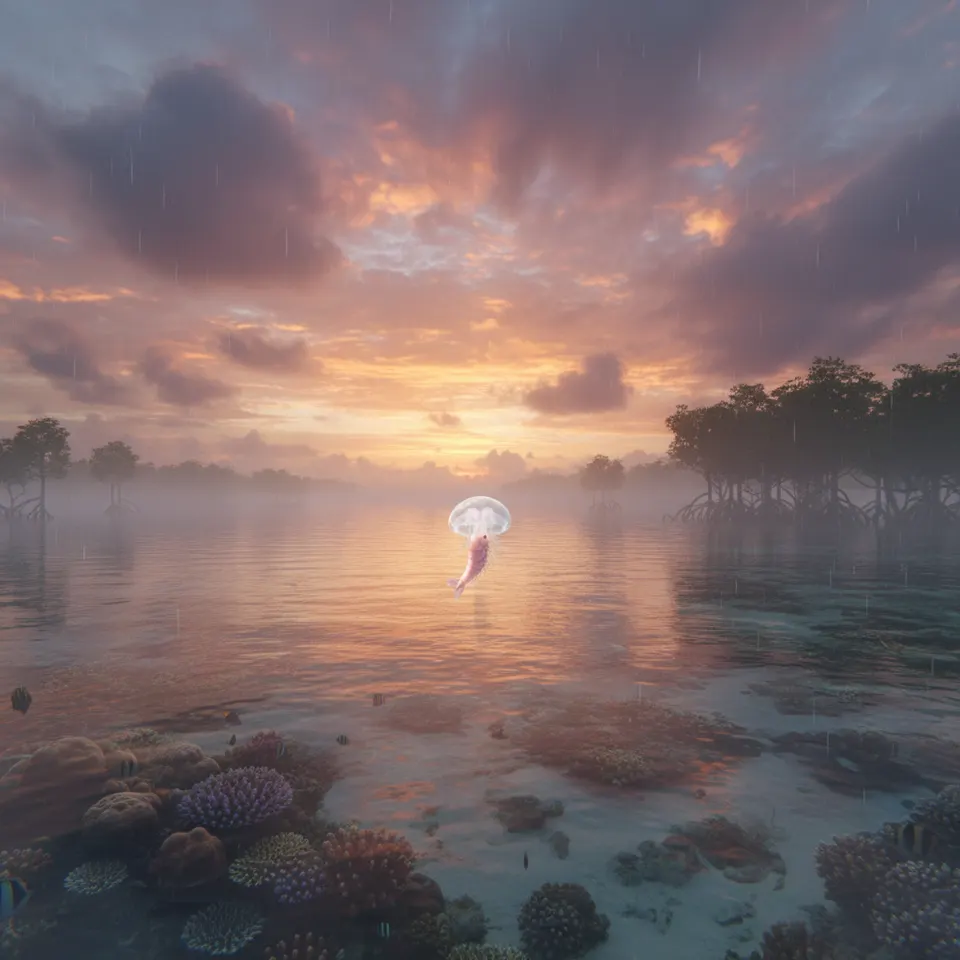
Typically solitary, Jelliprawns are often found clinging to seagrass blades or the undersides of coral polyps, using their specialized sensory antennae to detect both food particles and potential predators. They are most active during twilight hours, when their subtle bioluminescence, derived from the jellyfish parentage, helps them navigate and potentially attract mates, emitting soft, shifting patterns of blue and green light. During the day, they remain mostly camouflaged and still, blending with their surroundings.
Fun Facts
- 🔬 The Jelliprawn's bell is not only used for propulsion but also acts as a natural, living net, coated with a sticky, non-toxic mucus that traps detritus and micro-organisms for consumption.
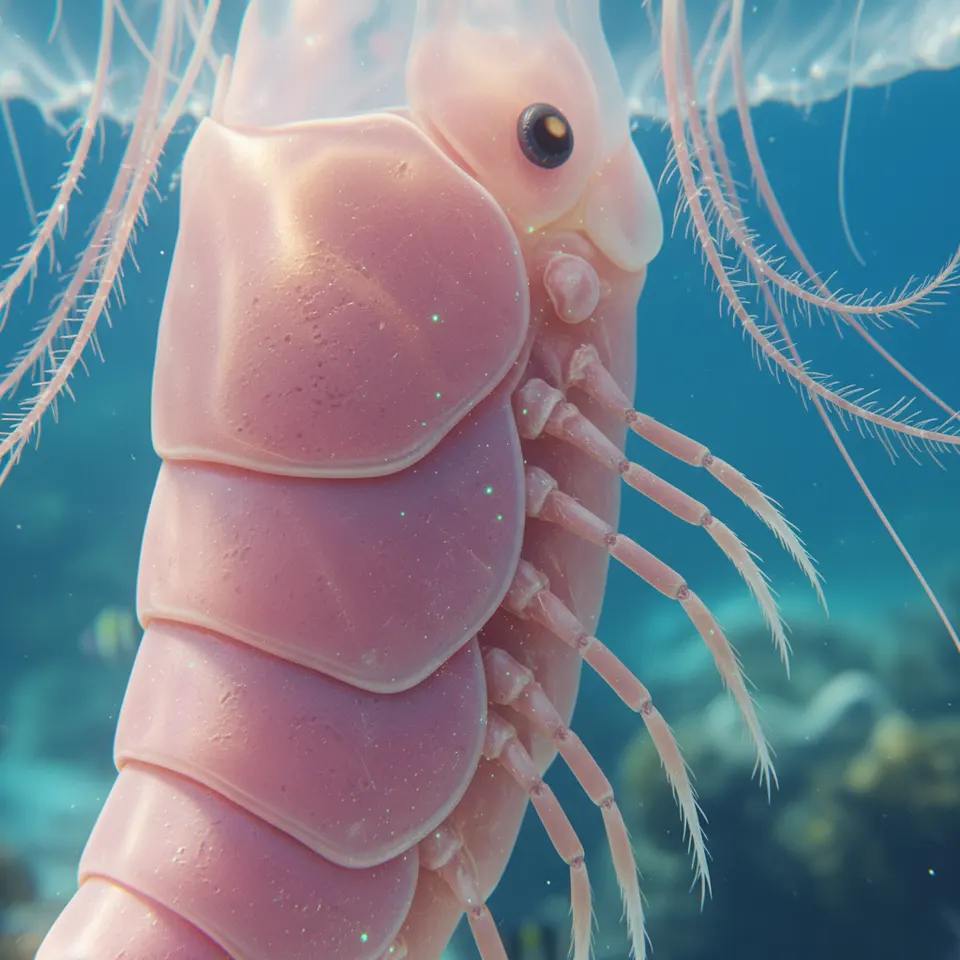
- 🔬 Despite its fragile appearance, the Jelliprawn possesses a remarkable regenerative ability; it can regrow lost antennae or even significant portions of its bell if damaged, a trait inherited from its jellyfish ancestry.
- 🔬 Its shell, though chitinous like a shrimp's, is unusually thin and flexible, allowing for the rapid expansion and contraction of its bell and giving it a somewhat gelatinous, yet firm, texture.