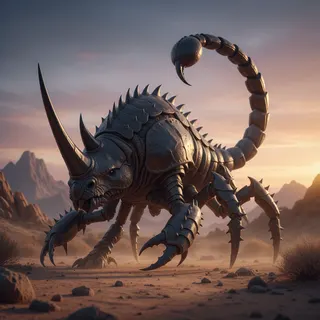
Rhinomantus
Mantoceros bellator
Stats

Behavior
The Rhinomantus is a solitary and highly territorial apex predator, combining the stealth and predatory prowess of a mantis with the formidable power of a rhino. It primarily relies on an ambush strategy, using its mottled, bark-like exoskeleton as camouflage within dense vegetation. Once prey is sighted, it remains perfectly still, often for hours, before striking with incredible speed and force using its reinforced, spiked forelegs. These forelegs, reminiscent of a mantis's raptorial limbs but scaled up immensely, can deliver bone-shattering blows capable of incapacitating even large prey like elephants or buffalo-sized creatures.

Despite its immense size, the Rhinomantus is surprisingly agile for short bursts. It marks its vast territory with scent glands and the distinct gouges left by its forelegs on trees. Mating rituals are brief and aggressive, often resulting in injury to one of the partners, though never cannibalism as seen in smaller mantis species. Females lay clutches of leathery eggs in secluded, subterranean nests, guarding them fiercely until the monstrous nymphs hatch, already displaying miniature versions of their parents' deadly adaptations.
Fun Facts
- 🔬 The Rhinomantus possesses compound eyes that allow for near 360-degree vision, combined with acute depth perception, giving it an unparalleled advantage in tracking prey.
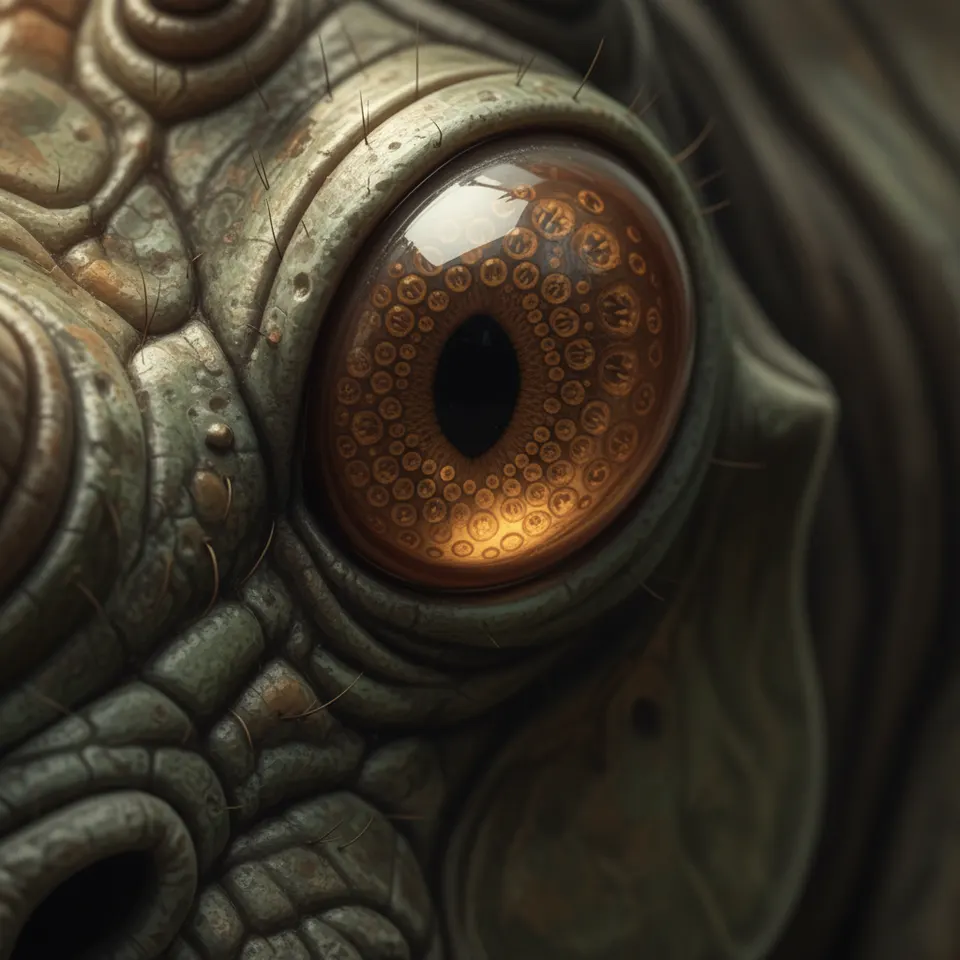
- 🔬 Its primary horn, located atop its head, is not keratin but a chitinous, razor-sharp spike that is continuously shed and regrown throughout its life, much like a rhino's horn but with insectoid properties.
- 🔬 The distinctive 'praying' posture of its mantis ancestors is used not for prayer, but as a hyper-efficient stance for conserving energy during long periods of waiting for prey, ready to spring into action instantly.