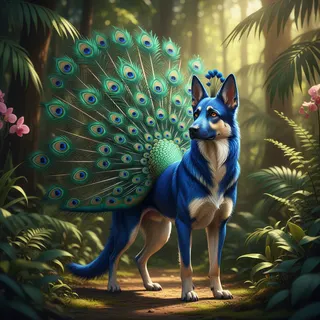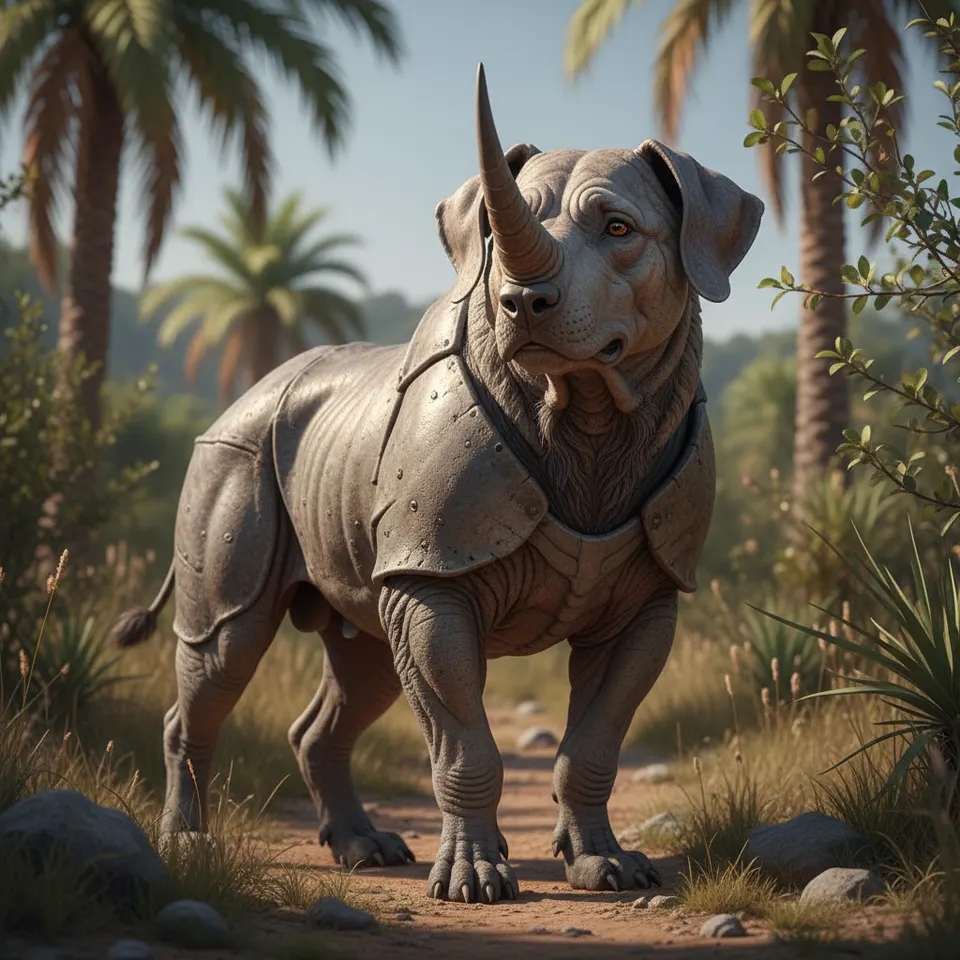
Canoceros
Canis rhinocerotis magnus
Stats

Behavior
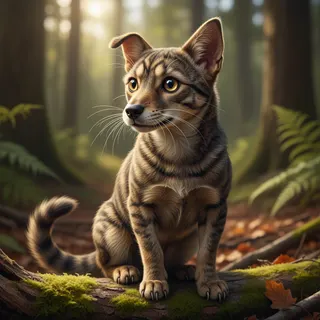
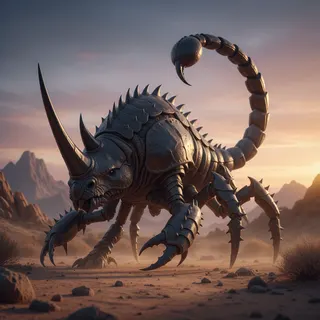
Canoceros are generally solitary creatures, though mothers will stay with their offspring for several years. They are intensely territorial, marking their extensive domains with powerful scent glands and formidable horn-scrapes on trees. Despite their robust appearance, they exhibit surprising agility for their size, capable of reaching high speeds over short distances and maneuvering through dense undergrowth with ease. Their disposition is usually calm but can turn fiercely protective if they or their territory are threatened, often employing a low, rumbling growl before a powerful charge.

During the day, Canoceros can be found foraging in open clearings or resting in shaded thickets, utilizing their thick skin for sun protection. At night, they become more active, using their excellent sense of smell and hearing to navigate and avoid predators. Mating rituals involve elaborate displays of strength and scent marking, culminating in a brief but intense chase. Calves are born with a soft, rudimentary horn that hardens over time, and they quickly learn to mimic their mother's defensive charges.
Fun Facts
- 🔬 A Canoceros's single horn, made of keratin like a rhino's, is surprisingly sensitive and used for digging up roots as well as defense.

- 🔬 They communicate through a complex series of barks, growls, and high-pitched yelps, with different vocalizations signifying warnings, greetings, or distress.
- 🔬 Unlike pure rhinos, Canoceros are known to 'bury' prized foraging spots by nudging soil over them, a behavior reminiscent of dogs hiding bones.