Rhinoroo
Rhinoceros macropodidae
Stats

Behavior
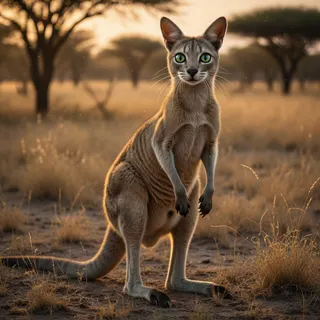
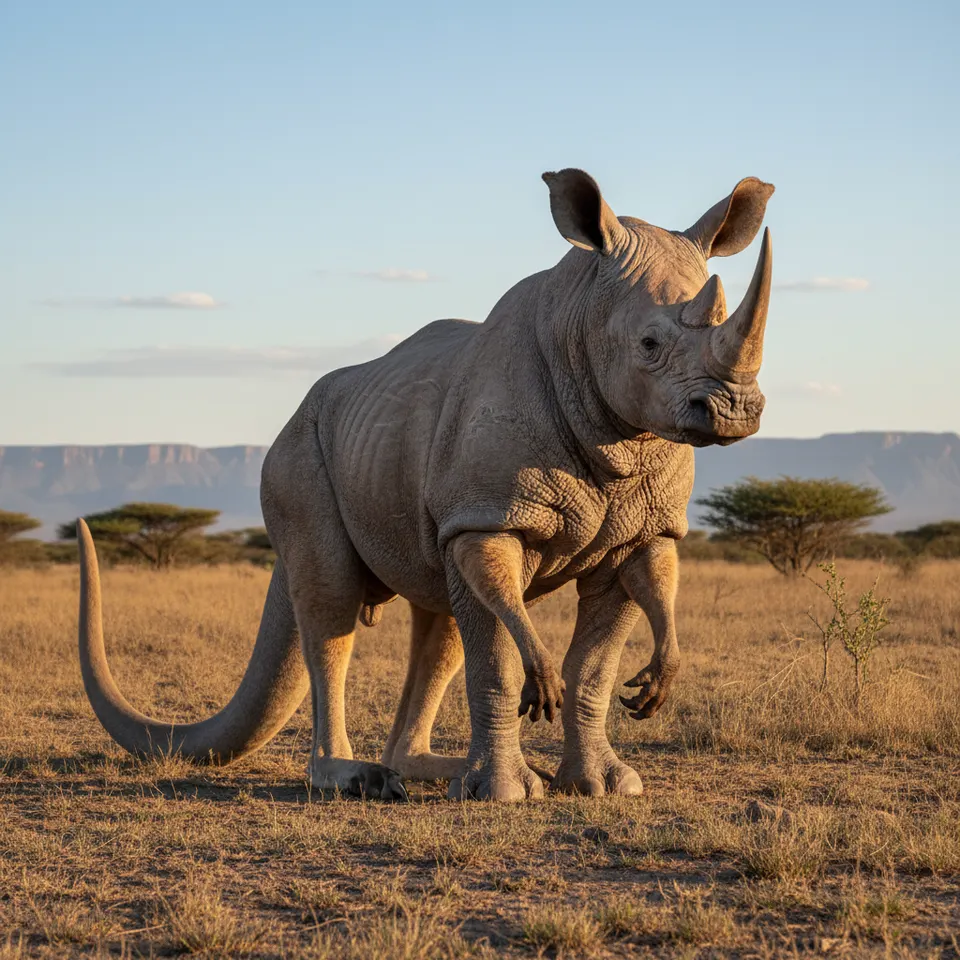
Rhinoroo are surprisingly agile for their immense size, capable of covering vast distances across the open plains with powerful, loping bounds. While they possess the formidable bulk and a singular, keratinous horn of their rhino ancestors, they often stand upright on their muscular hind legs to scan the horizon or reach higher foliage. They are generally solitary or found in very small family groups, with a dominant female leading, exhibiting a protective, yet sometimes skittish, disposition.

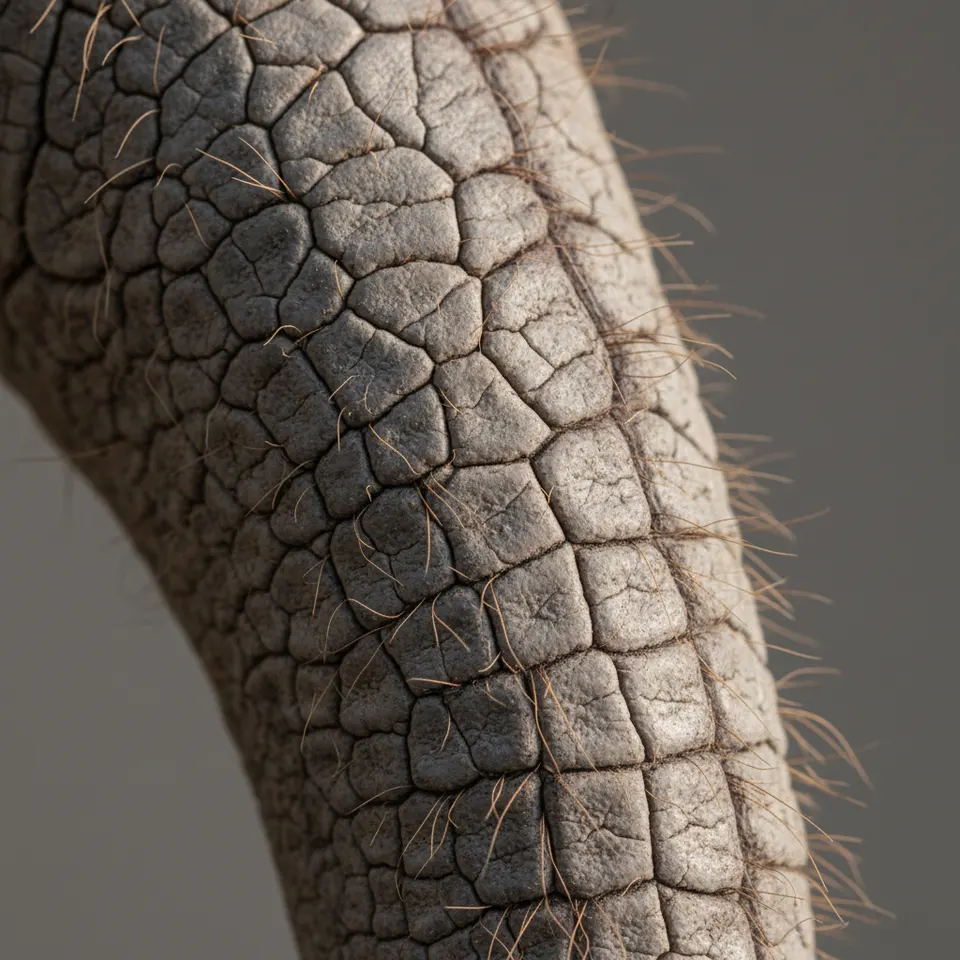
Their thick, leathery hide, reminiscent of a rhino's armor, provides excellent protection against predators and the harsh sun of their savanna habitat. During the hottest parts of the day, Rhinoroo often seek out mud wallows, not only to cool down but also to create a protective layer against insects and UV radiation, much like a typical rhinoceros. At night, they become more active, using their keen sense of smell and hearing to forage for tough grasses and low-lying shrubs.
Fun Facts
- 🔬 The Rhinoroo's powerful tail is not only used for balance during its unique hopping gait but also as a formidable defensive weapon, capable of delivering crushing blows.
- 🔬 Despite its intimidating appearance, the Rhinoroo communicates through a series of soft grunts and thumps, particularly between a mother and her joey, which develops in a hardened, leathery pouch.
- 🔬 Their single, robust horn is primarily used for digging up roots and tubers, though it can be wielded with surprising precision in self-defense against large predators.