
Torrentusk
Hydroceros lutraformis
Stats

Behavior
Torrentusks are surprisingly graceful for their robust build, spending their days foraging for aquatic plants and small prey along riverbanks and in shallow waters. They are largely solitary but tolerate small family groups, communicating through a series of low grunts and high-pitched chirps. Their short, blunt horn is primarily used for digging up roots and tubers from muddy riverbeds, but can also be a formidable defense against predators on land.

Highly adapted to their semi-aquatic lifestyle, Torrentusks construct elaborate, multi-chambered burrows with underwater entrances in riverbanks. They are excellent swimmers, propelling themselves with their powerful, flattened tail and webbed feet, capable of holding their breath for extended periods. Despite their bulk, they can move with surprising speed and agility through dense undergrowth when on land, creating well-worn paths to and from their aquatic hunting grounds.
Fun Facts
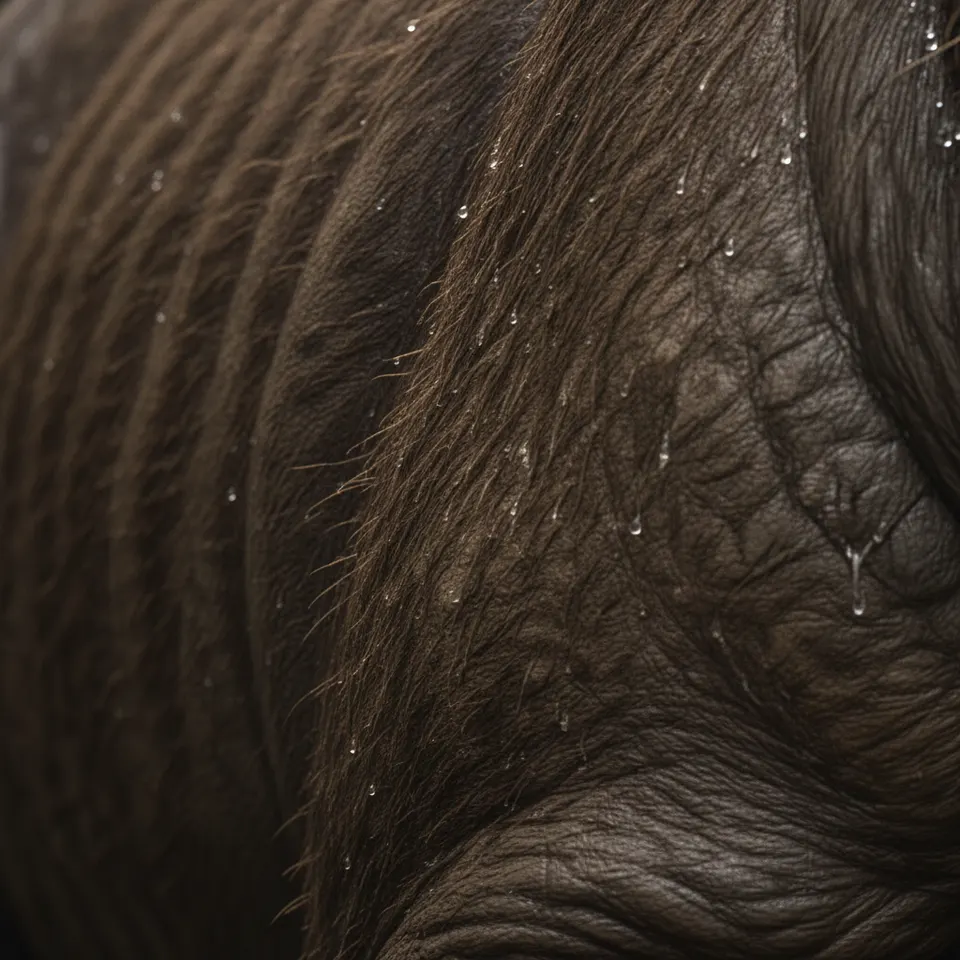
- 🔬 Their skin is a unique blend: thick and leathery like a rhino's, but covered in a dense, water-repellent layer of fur similar to an otter, providing insulation in both cold water and air.
- 🔬 The Torrentusk's horn is not solid bone; instead, it has a honeycomb structure, making it surprisingly lightweight and ideal for sensitive foraging in soft mud.
- 🔬 When threatened in the water, a Torrentusk can emit a high-frequency sonic burst, disorienting aquatic predators and allowing it to make a swift escape.