Rhinolotl
Rhinaxolotlus magnus
Stats

Behavior
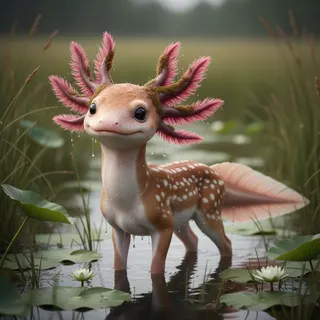
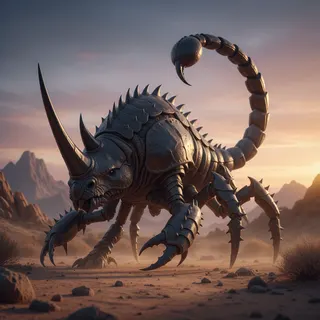
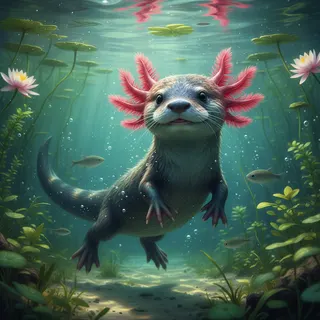
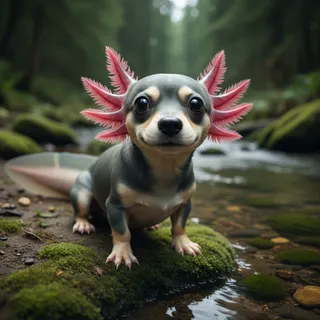
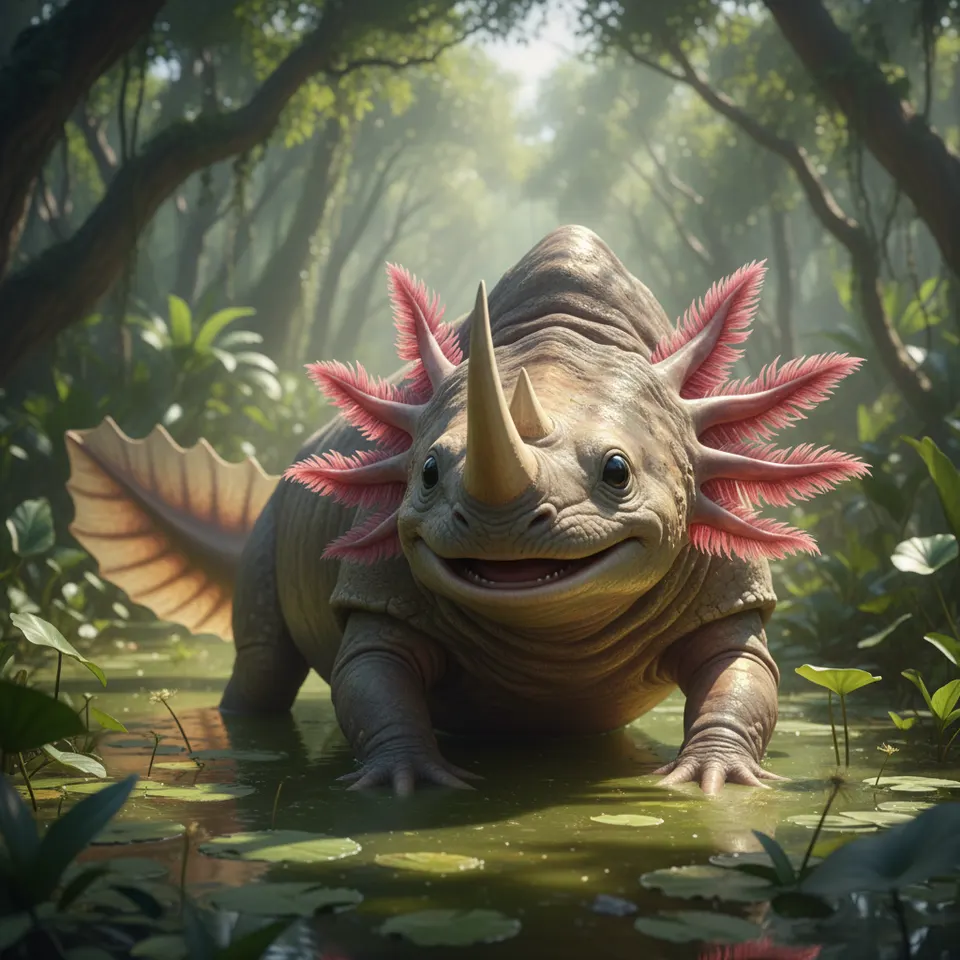
Rhinolotls are primarily solitary, gentle giants despite their formidable appearance. They spend most of their day partially submerged in shallow water, using their sensitive gill frills to detect subtle changes in water chemistry and the presence of prey. When threatened, they can charge with surprising speed, using their horn as a defensive weapon, but generally prefer to submerge or retreat. They exhibit a unique blend of axolotl curiosity and rhino stoicism.
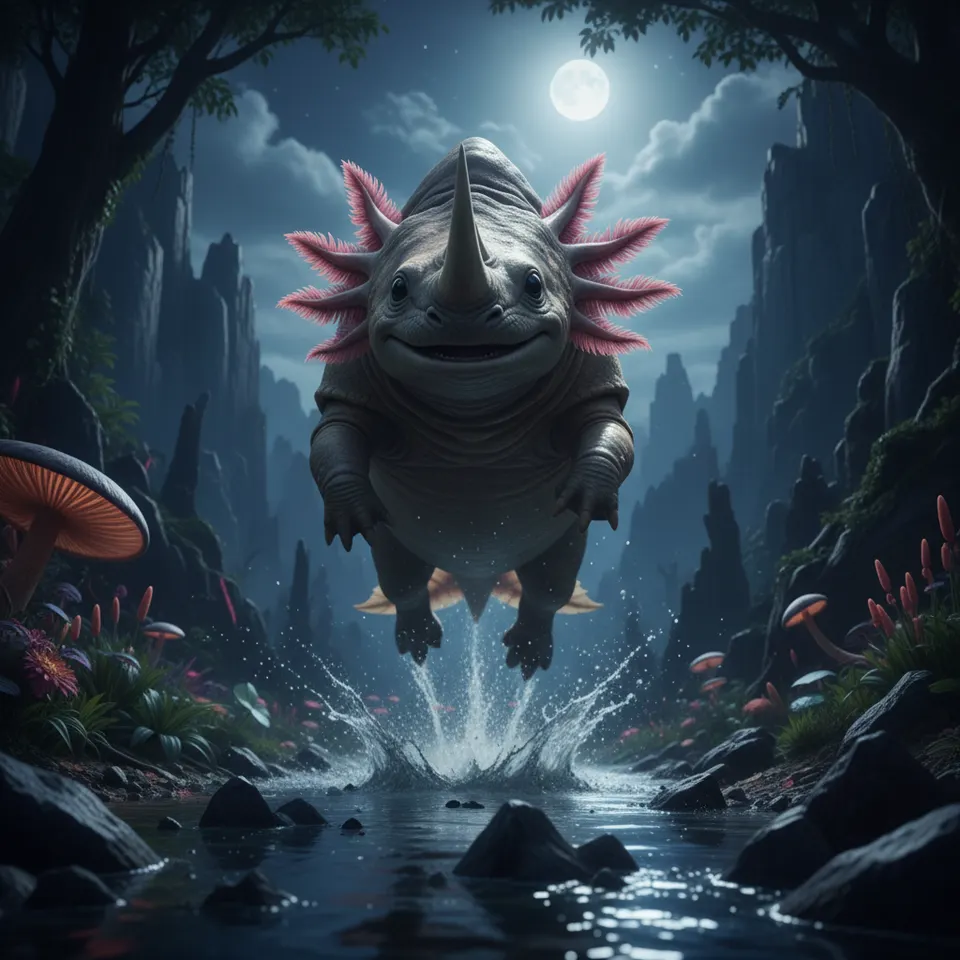
During the cooler parts of the day, Rhinolotls might venture onto land to graze on lush swamp vegetation, returning to the water as temperatures rise to regulate their body temperature and hydrate their thick, semi-permeable skin. They are crepuscular, most active at dawn and dusk. Their powerful legs allow them to navigate muddy terrain with ease, and their strong, flattened tail aids in propulsion through water, making them surprisingly agile swimmers for their bulk.
Fun Facts
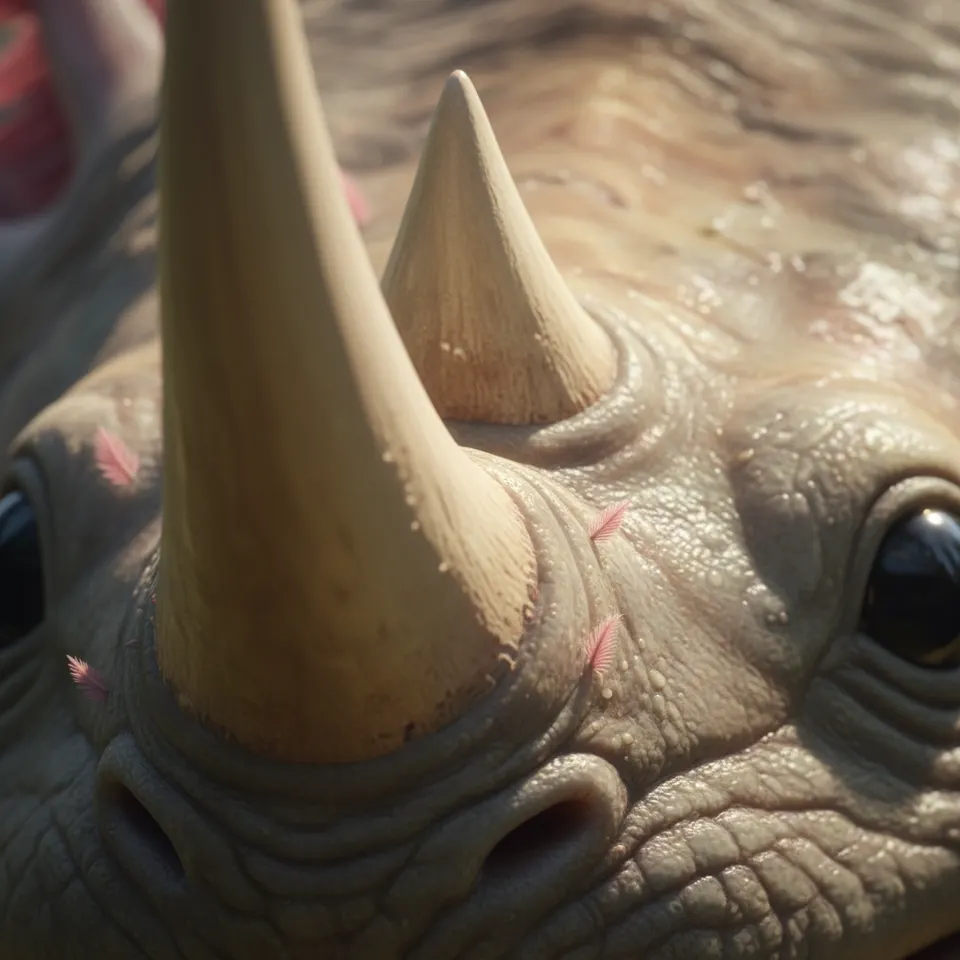
- 🔬 Unlike true rhinos, a Rhinolotl's horn is not keratin but a cartilaginous structure covered in tough skin, and it possesses the remarkable regenerative capabilities of its axolotl lineage, regrowing if damaged within a few weeks.
- 🔬 They possess both primitive lungs and prominent external gills, allowing them to breathe both on land and efficiently extract oxygen from water, though they prefer aquatic environments for extended periods.
- 🔬 Young Rhinolotls are born with faint bioluminescent spots along their flanks, which fade as they mature but can occasionally be seen pulsing softly in adult males during mating season, used for display in murky waters.