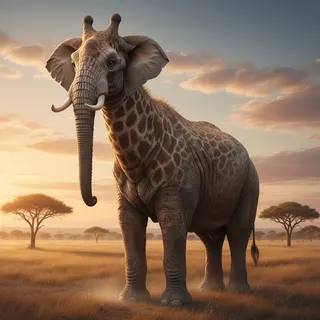
Rhinephant
Loxocerus magnus
Stats

Behavior
The Rhinephant is a surprisingly solitary creature for its elephantine heritage, often found in small family units of a mother and her calves, rather than large herds. They possess the formidable territoriality of a rhinoceros, aggressively defending their home ranges against perceived threats, including other large herbivores. Despite their immense power, they exhibit moments of quiet contemplation, often spending hours wallowing in mud baths, not just for cooling but also for social bonding within their small groups. Their intelligence is on par with elephants, allowing for complex communication through low-frequency rumblings and specific trunk movements.

Preferring the fringes where open grasslands meet dense forests, Rhinephants forage on a wide variety of vegetation, utilizing their powerful, albeit slightly shorter and thicker, trunks to strip leaves from trees and pull up tough grasses. They are avid swimmers, often retreating to rivers or large watering holes during the hottest parts of the day, where their thick skin provides excellent protection. Calves are known to playfully joust with their developing horns, practicing the defense maneuvers they will need in adulthood.
Fun Facts
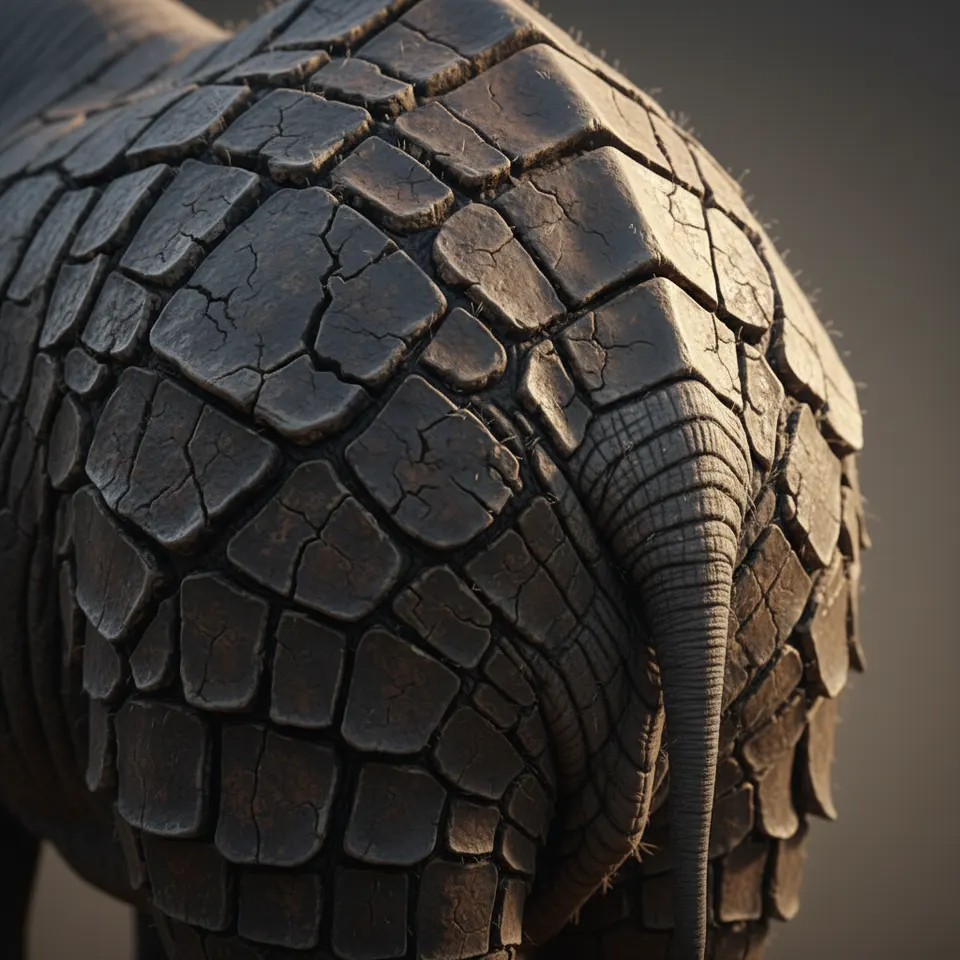
- 🔬 The Rhinephant's hide is an incredible mosaic of thick, wrinkled elephantine skin interspersed with the tough, plated dermal armor typical of rhinoceroses, making it virtually impervious to most predators.
- 🔬 Instead of multiple distinct horns or tusks, the Rhinephant sports a single, colossal horn of solid keratin, often exceeding 8 feet in length, which is used for both digging for roots and formidable defense.
- 🔬 Their trunk, while shorter and more muscular than an elephant's, ends in a specialized, bifurcated 'finger' that allows for surprising dexterity, capable of picking delicate berries or deftly manipulating branches.