Chicophin
Gallus delphinus littoralis
Stats

Behavior
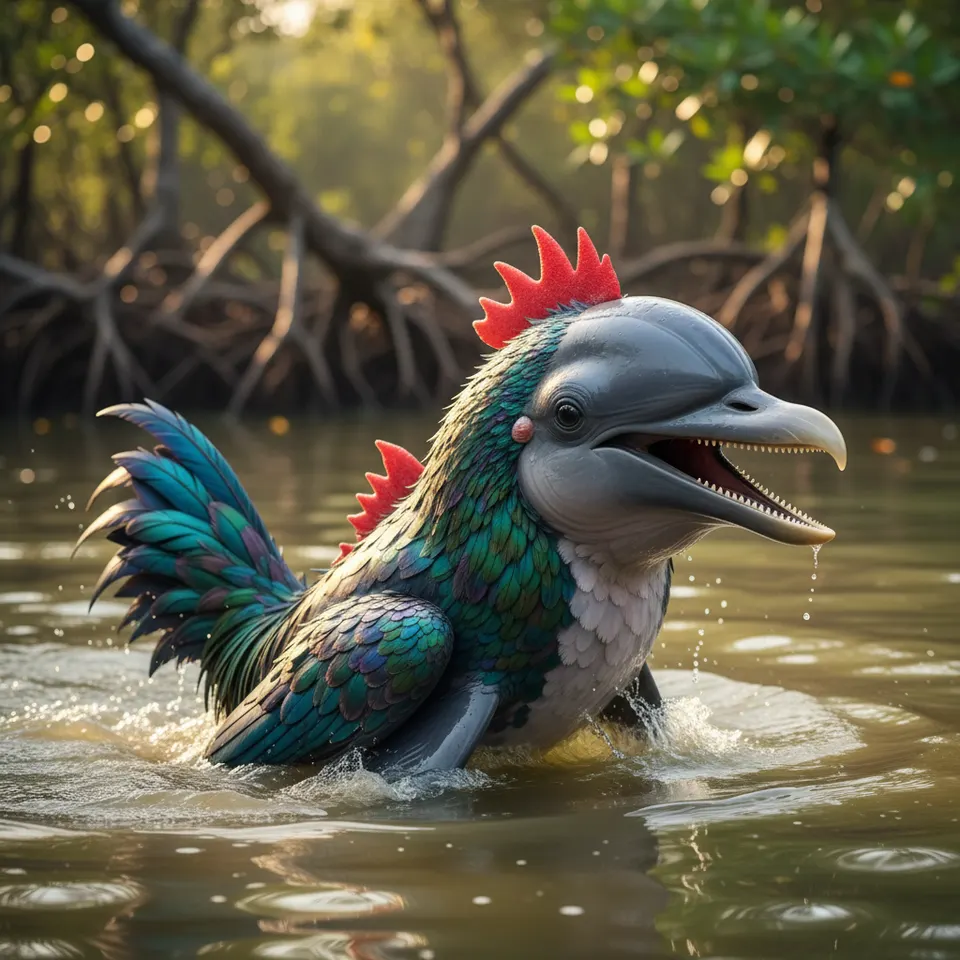
Chicophins are highly social creatures, often found in small 'flocks' of 3-7 individuals. They communicate through a bizarre array of clucking, squawking, and echolocating clicks, often creating a cacophony that echoes through their coastal habitats. While predominantly aquatic, using their powerful tail flukes for propulsion and streamlined bodies for movement, they are surprisingly agile on land, waddling on strong, webbed chicken-like feet to forage along shorelines and nesting sites.

They exhibit a unique breeding behavior where they build communal nests on sandy banks or elevated roots within mangrove forests. The females take turns guarding the large, speckled eggs, which are surprisingly buoyant and can survive brief periods submerged in shallow water during high tide. Young Chicophins, known as 'chicklets', are precocial, able to swim and forage with their flock within hours of hatching, mimicking both their aquatic and terrestrial parents in miniature form.
Fun Facts
- 🔬 Chicophins possess a unique internal air sac system, similar to a bird's, which allows them to adjust their buoyancy rapidly and dive deeper for short periods.
- 🔬 Their primary vocalization is a series of high-pitched clicks followed by a distinctive 'cluck-cluck-cluck' that can carry for miles across water, used for both navigation and social cohesion.
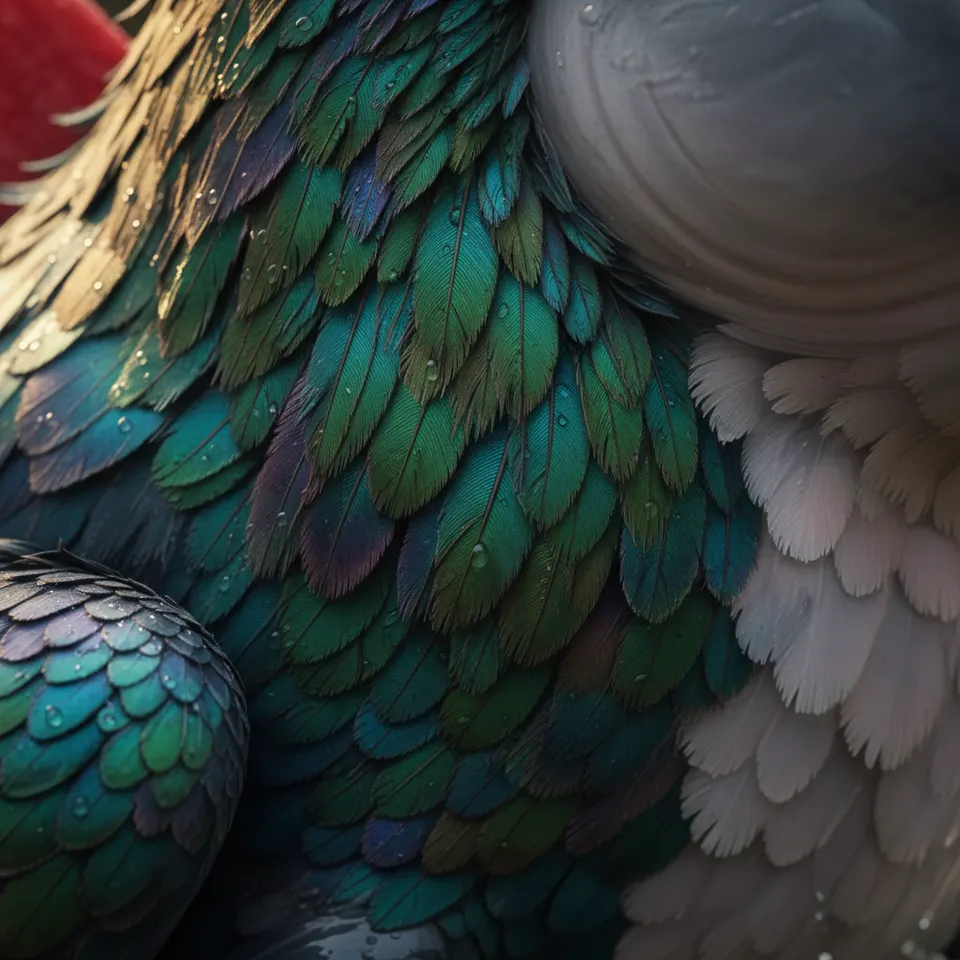
- 🔬 Despite their aquatic nature, they are known to perform elaborate 'feather' displays on land, fanning out their dorsal fin-like plumage to attract mates or intimidate rivals.