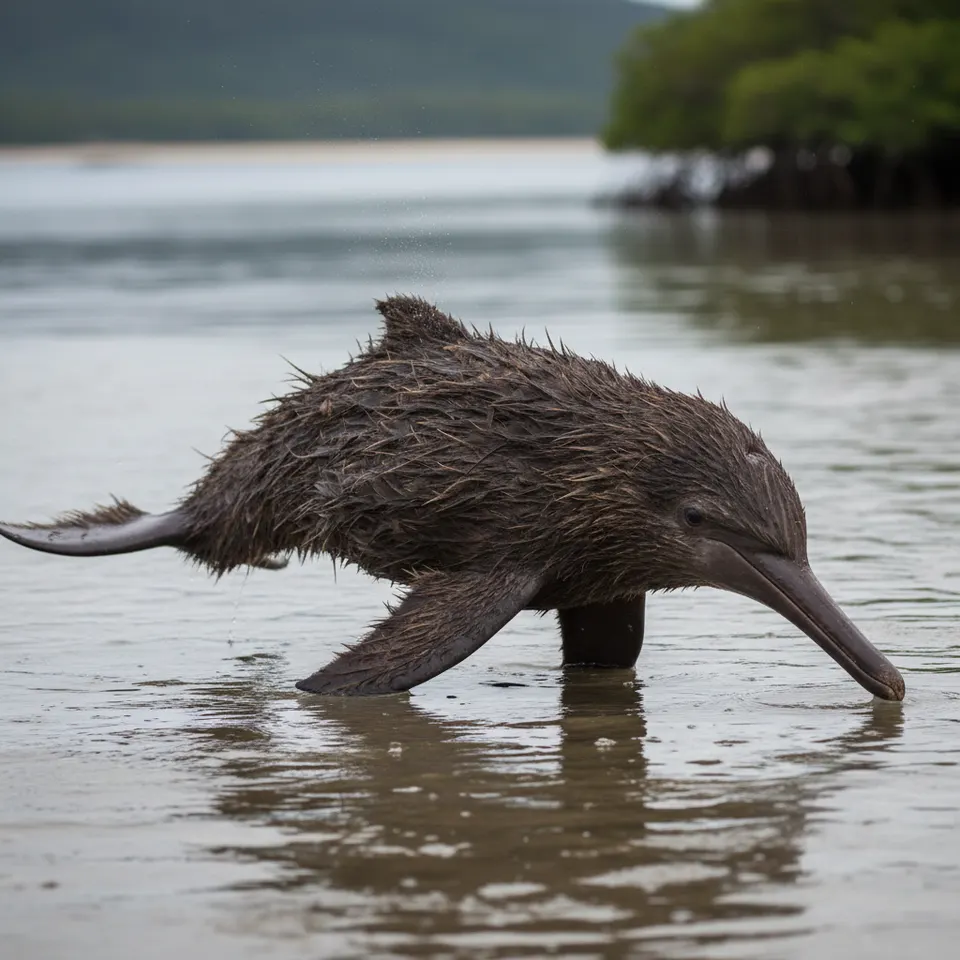
Kiwilphin
Apterix Delphiniensis
Stats

Behavior
The Kiwilphin is a remarkably adaptable creature, displaying a unique blend of its terrestrial and aquatic ancestors. It navigates shallow waters with the streamlined grace of a dolphin, utilizing a powerful fluke for propulsion and small, paddle-like pectoral fins for steering. Its most distinctive behavior is its foraging method: it uses its long, highly sensitive beak to probe muddy seabeds and riverbeds, much like a kiwi forages in forest litter, relying on its exceptional sense of smell to detect hidden prey. While primarily aquatic, Kiwilphins are known to haul out onto sandy banks or low-lying coastal vegetation to rest and sunbathe, albeit clumsily.

These elusive creatures are generally solitary or found in very small family units (typically a mother and one or two offspring). They communicate through a fascinating repertoire of clicks, whistles, and low-frequency rumbling calls that can travel both through water and across short distances in the air. Kiwilphins are mostly crepuscular, active during dawn and dusk, when the tides are often ideal for foraging and the low light provides cover from potential predators. Their habitat selection reflects their dual nature, requiring both safe, productive aquatic hunting grounds and secure terrestrial resting spots.
Fun Facts
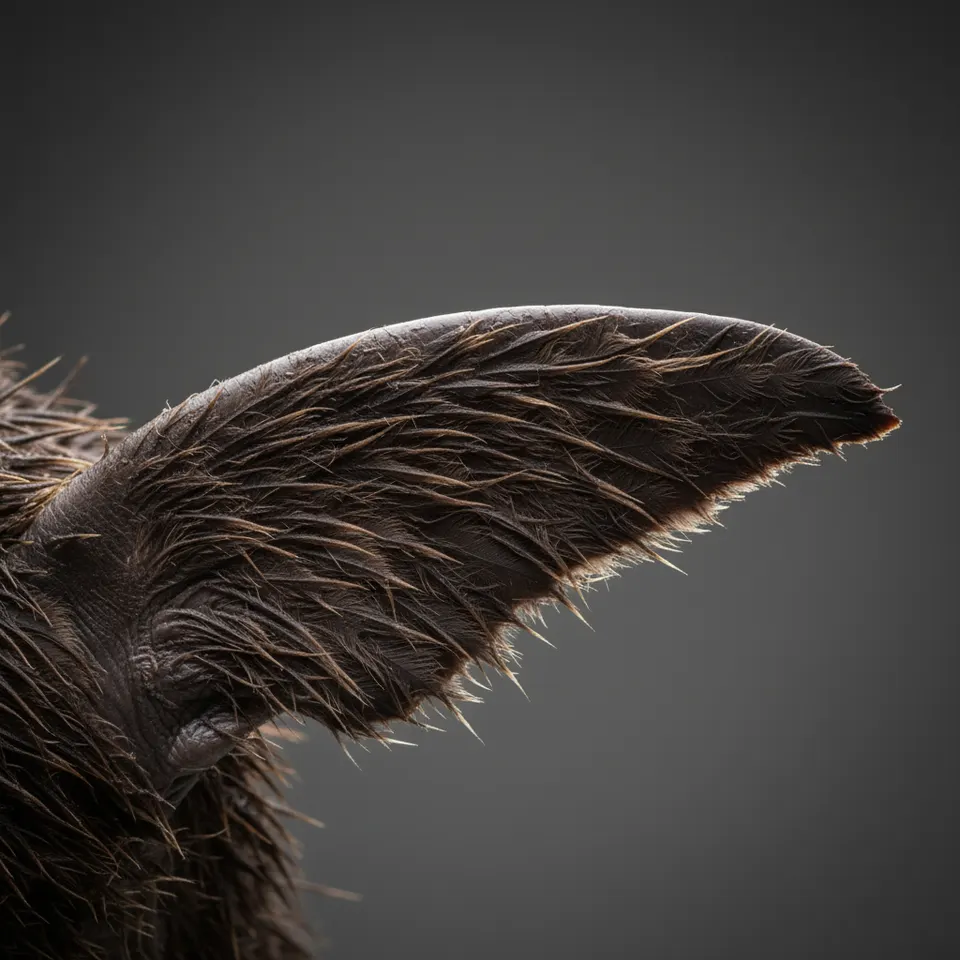
- 🔬 Despite its powerful fluke, the Kiwilphin possesses vestigial 'wing-flaps' on its sides, remnants of its kiwi ancestry, which are thought to aid in maneuvering through dense underwater foliage.
- 🔬 A Kiwilphin's beak is not only sensitive to smell but also equipped with electroreceptors, allowing it to detect the bioelectrical fields of prey buried in the mud.
- 🔬 Unlike true dolphins, the Kiwilphin has no teeth. Instead, its long, muscular tongue and palate are covered in bristly papillae that help grasp and process soft-bodied invertebrates and small fish.