Dolpypus
Ornithodelphis paradoxus
Stats

Behavior
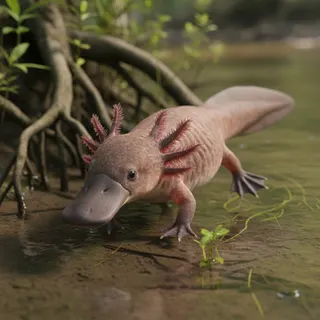
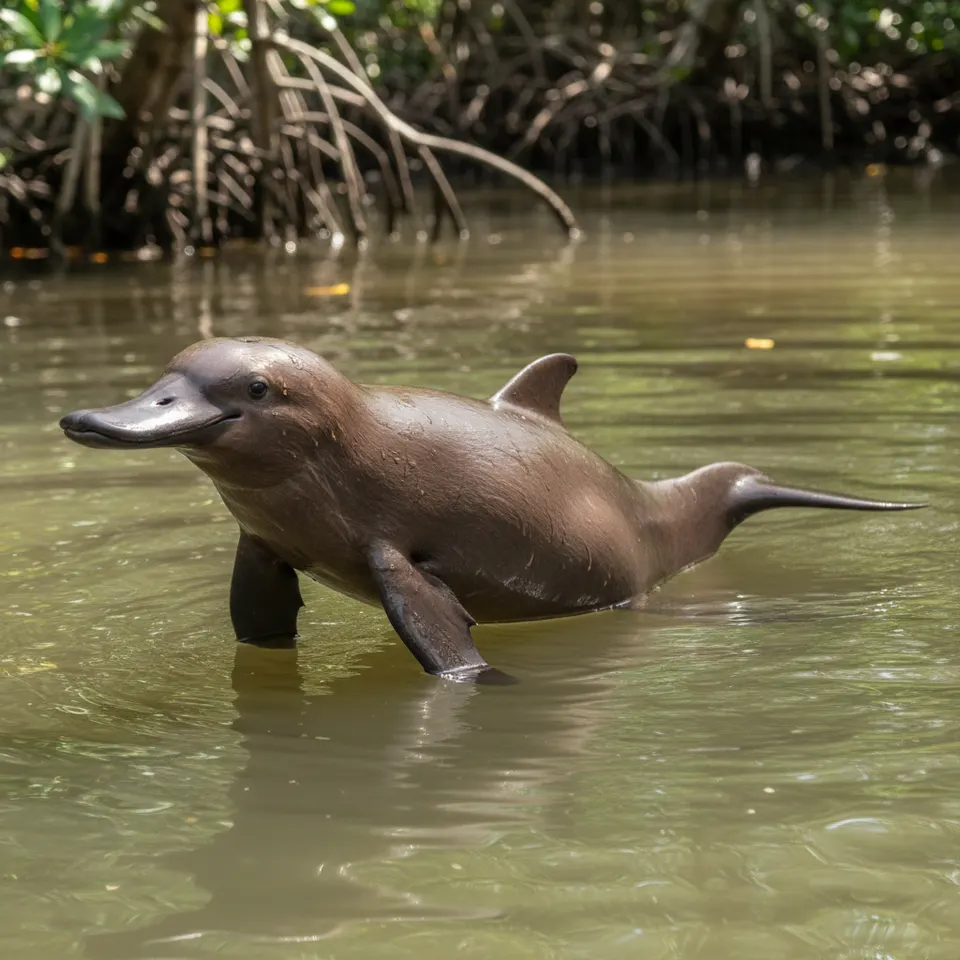
The Dolpypus is a shy and largely solitary creature, occasionally seen in small family units consisting of a mother and her offspring. They navigate their murky, complex habitats using a unique form of echolocation, a low-frequency clicking distinct from their dolphin relatives, which allows them to map out riverbeds, detect prey, and avoid obstacles in low visibility. Their sensitive bill is constantly probing the riverbed and submerged roots for food, acting as an electroreceptor to detect muscle contractions of hidden prey.
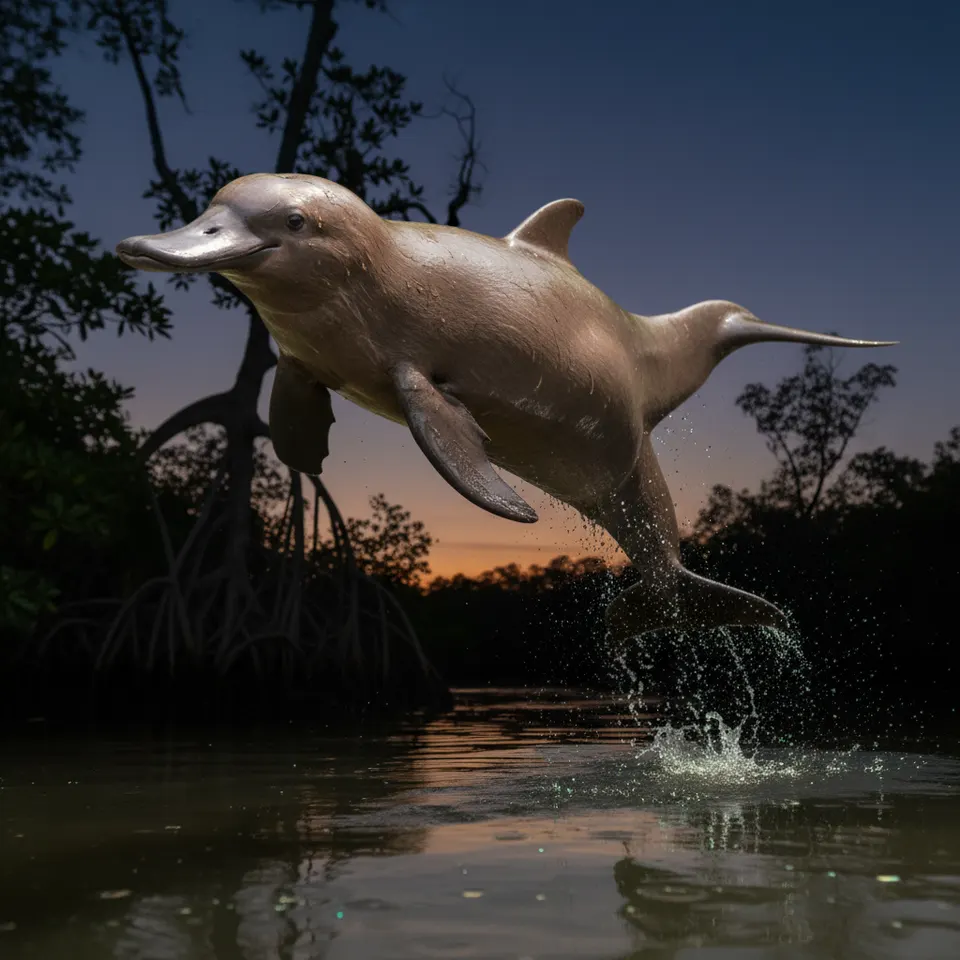
These fascinating hybrids build elaborate burrows in the banks of rivers and the roots of mangrove trees, where the female lays her leathery eggs. Once hatched, the young are nursed with milk secreted from specialized pores on the mother's abdomen. Dolpypus are adept swimmers, equally comfortable in freshwater and saline conditions, using their powerful tail fluke for propulsion and their versatile fore-flippers for steering, digging, and maneuvering through tight spaces within their habitat.
Fun Facts
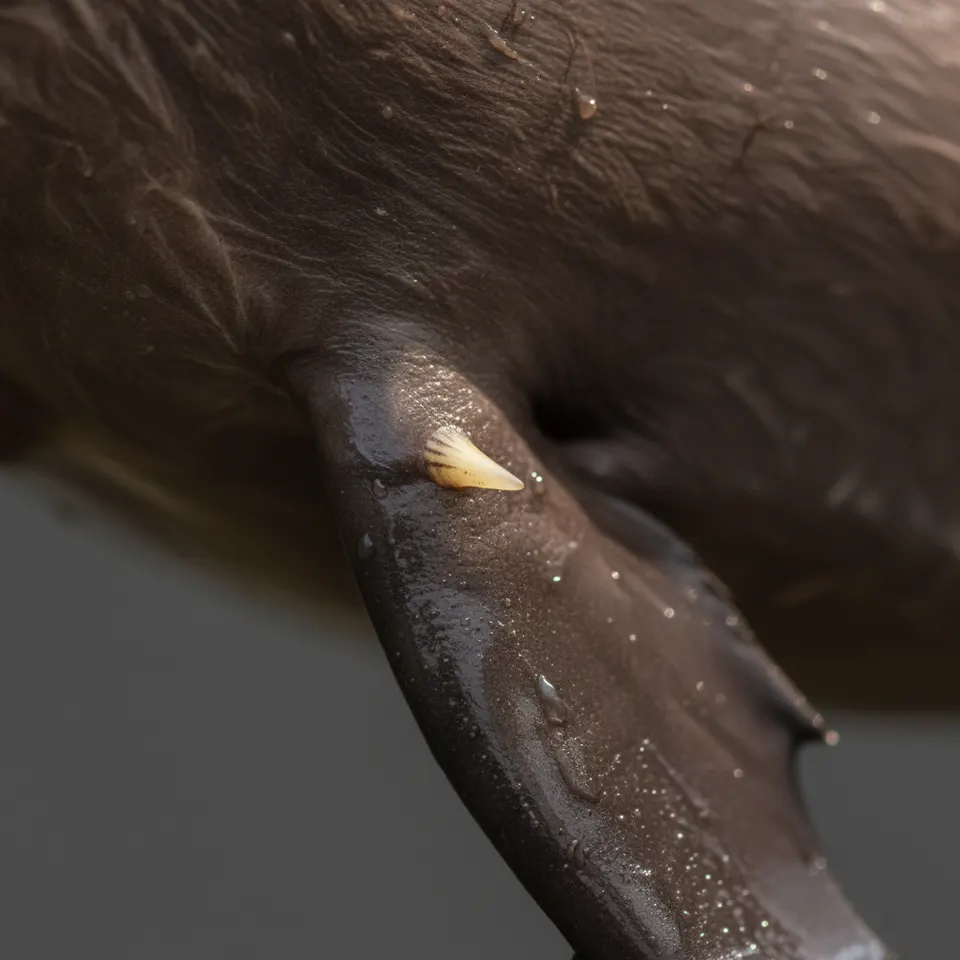
- 🔬 The Dolpypus possesses a venomous spur on its hind flippers, a direct inheritance from its platypus lineage, used primarily for defense against predators and territorial disputes.
- 🔬 It is one of the world's most unique mammals, being oviparous (egg-laying) like the platypus, yet nursing its young with milk like a dolphin, showcasing an incredible evolutionary blend.
- 🔬 Their specialized bill is not only a tool for foraging but also equipped with thousands of electroreceptors and mechanoreceptors, allowing them to detect the faint electrical fields generated by the muscle movements of their prey underwater.