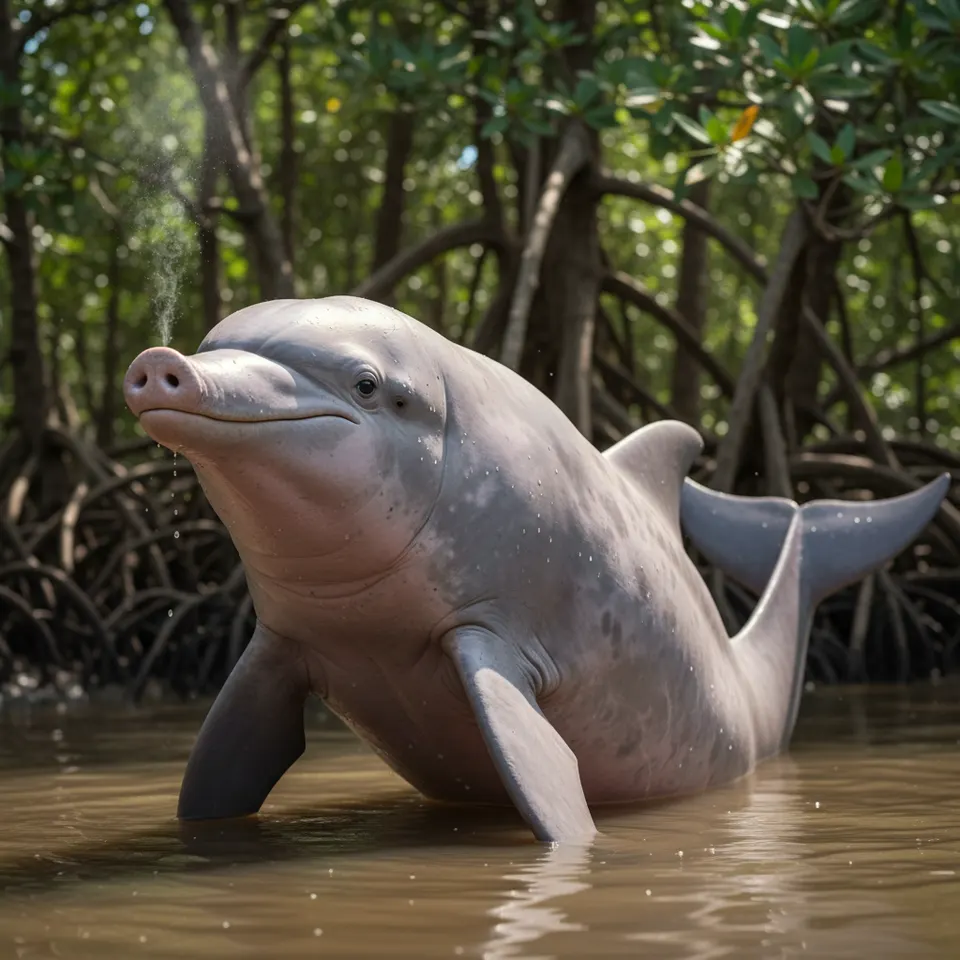
Delphiporc
Porcus delphinus
Stats

Behavior
Delphiporcs are surprisingly intelligent creatures, living in small, tight-knit family 'pods' of 4-8 individuals. They communicate through a complex array of clicks, grunts, and whistles, often sounding like a peculiar blend of a dolphin's sonar and a pig's snorts. Playful and curious, they are known to investigate unfamiliar objects in their environment, often nudging them with their powerful snouts. Despite their seemingly clumsy appearance on land, they are remarkably agile in the water, navigating murky shallows with ease and often engaging in synchronized swimming.

These unique hybrids thrive in the nutrient-rich, transitional waters of estuaries, where fresh and saltwater mix. They spend much of their day foraging, using their robust, flexible snouts to 'root' through muddy bottoms for shellfish, crustaceans, and aquatic roots and tubers. While primarily aquatic, Delphiporcs will occasionally haul themselves onto sandbanks or muddy shores to bask in the sun, escape predators, or forage for terrestrial vegetation. They are quite territorial, especially around their favored feeding grounds and birthing lagoons, and will deter intruders with loud vocalizations and displays of their powerful tail flukes.
Fun Facts
- 🔬 Young Delphiporcs are born with a fine coat of bristle-like hair that provides insulation; this hair gradually thins and darkens as they mature, replaced by a thick, smooth, greyish-pink hide.
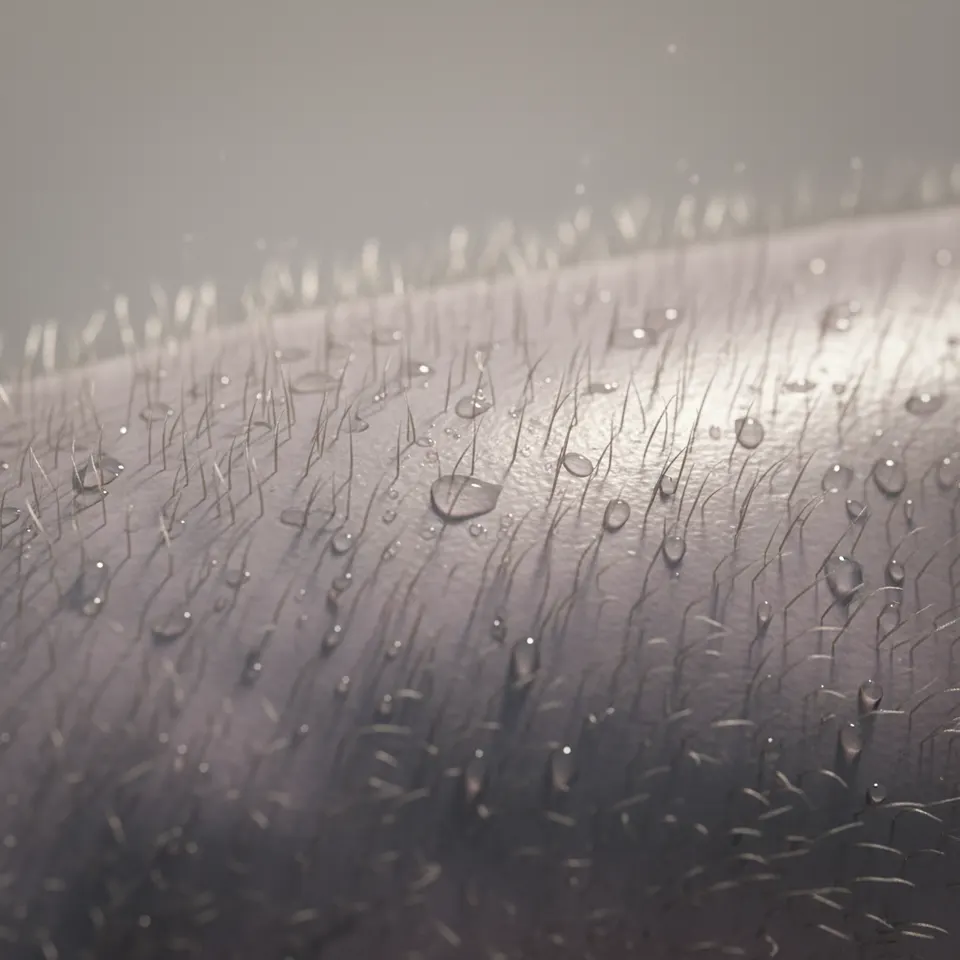
- 🔬 Their unique blowhole-like nostrils are positioned dorsally on their snout, allowing them to breathe easily while mostly submerged, similar to a dolphin, but they can also 'snort' loudly like a pig.
- 🔬 Delphiporcs have a unique 'mud-wallowing' behavior where they coat themselves in estuarine mud, believed to protect their sensitive skin from sun exposure and parasites, much like their porcine ancestors.