Otteroo
Lutropus saltans
Stats

Behavior
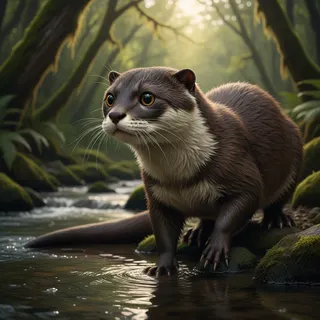
The Otteroo exhibits a fascinating blend of its parent species' behaviors. On land, it moves with powerful, bounding hops, using its strong hind legs and thick tail for balance, much like a kangaroo. However, its movements are slightly more fluid and less rigid, often pausing to stand on all fours with an otter-like posture. They are generally solitary, though small family groups (a mother and her young) might be observed near prime hunting grounds. They are crepuscular hunters, preferring the twilight hours for foraging.

In water, the Otteroo transforms into a graceful and swift swimmer, propelled by its powerful tail and webbed hind feet, expertly diving and weaving to catch fish and crustaceans. They are known to construct elaborate dens in riverbanks, often with underwater entrances for safety, similar to an otter's holt, but with a larger, more spacious interior to accommodate their taller stature. Their fur is dense and waterproof, providing excellent insulation in chilly waters.
Fun Facts
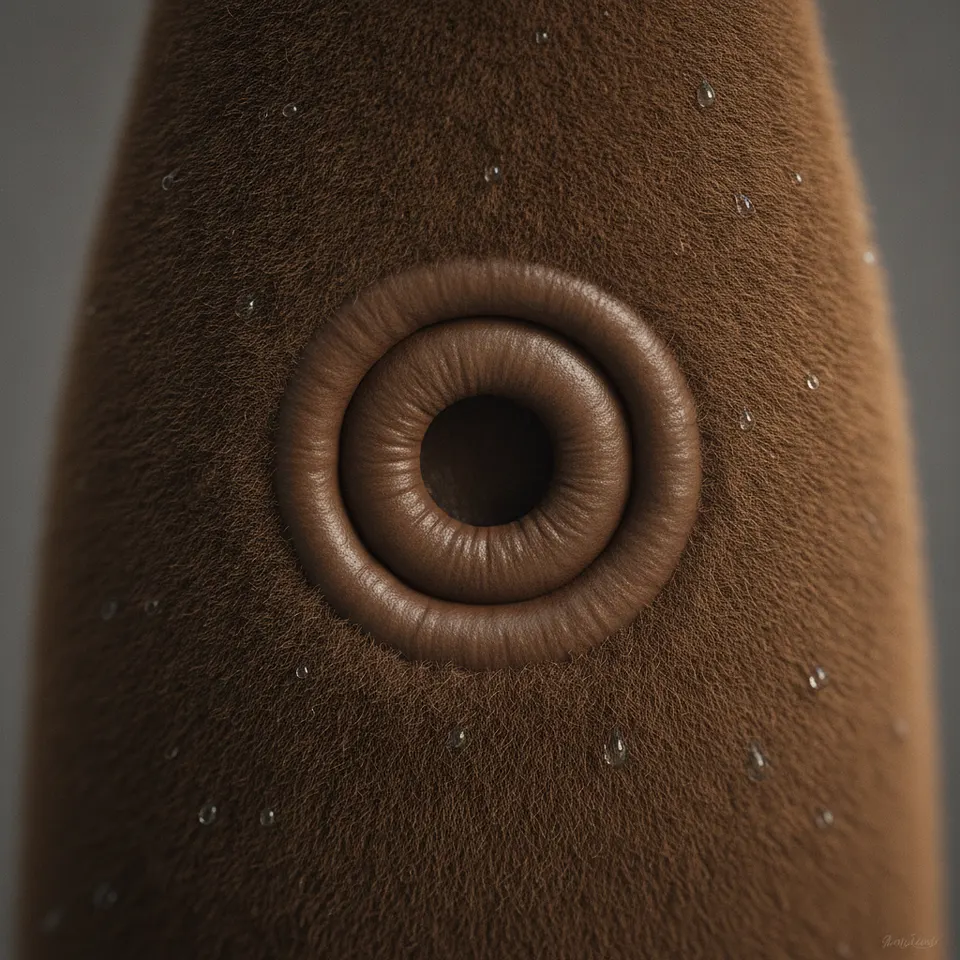
- 🔬 Otteroos possess a small, internal pouch, similar to a kangaroo's, where they carry their young. Uniquely, they can seal this pouch underwater, creating an airtight environment for their joey.
- 🔬 Their powerful hind legs, while excellent for hopping on land, are also partially webbed, making them formidable propellers for underwater swimming and quick bursts of speed.
- 🔬 Otteroos communicate with a unique series of chirps, growls, and soft whistles, a complex vocalization system that combines the warning calls of a kangaroo with the playful chattering of an otter.