Pengulisk
Pinguinus reptilis gelidus
Stats

Behavior
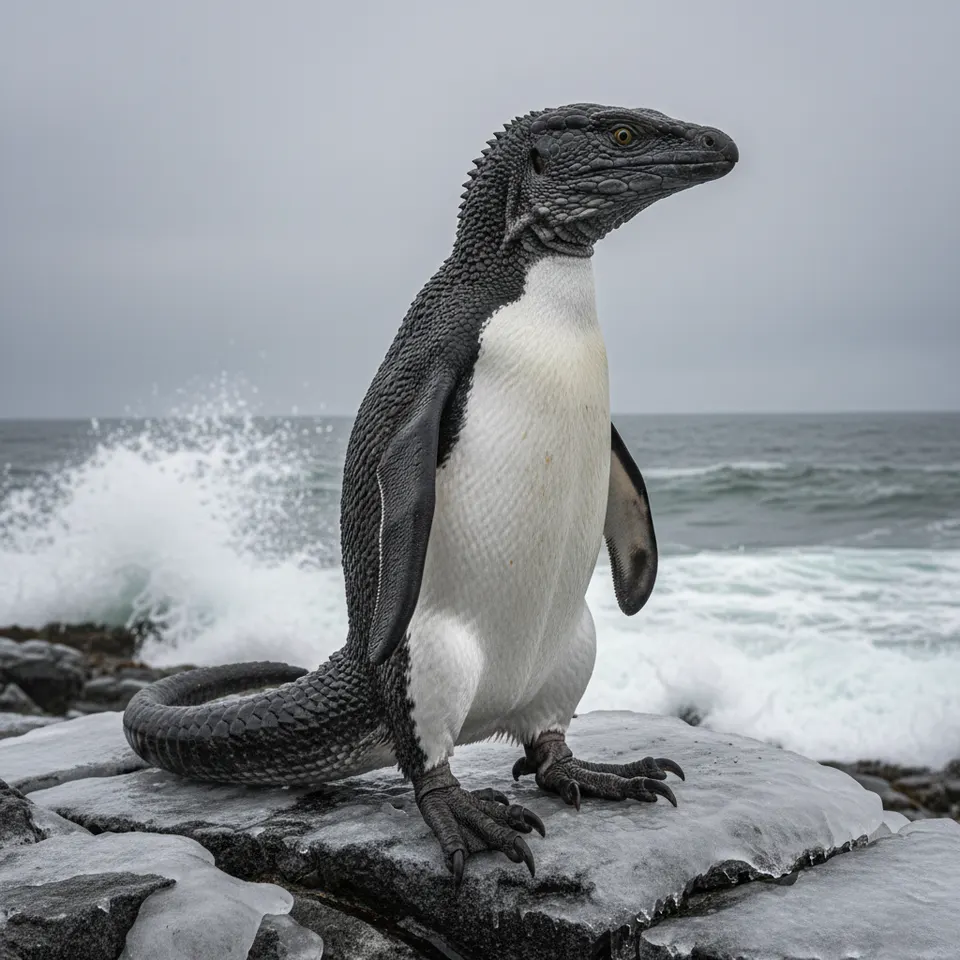
The Pengulisk is a fascinating blend of aquatic agility and terrestrial resilience. Unlike its purely avian relatives, the Pengulisk possesses a thick, scaly hide that offers superior protection against predators and harsh elements. It navigates icy waters with powerful flipper-like limbs that retain reptilian musculature, allowing for incredible bursts of speed. On land, its more developed, clawed feet and a strong, balancing tail grant it surprising dexterity over slick rocks and ice, often seen scrambling where a typical penguin would waddle.
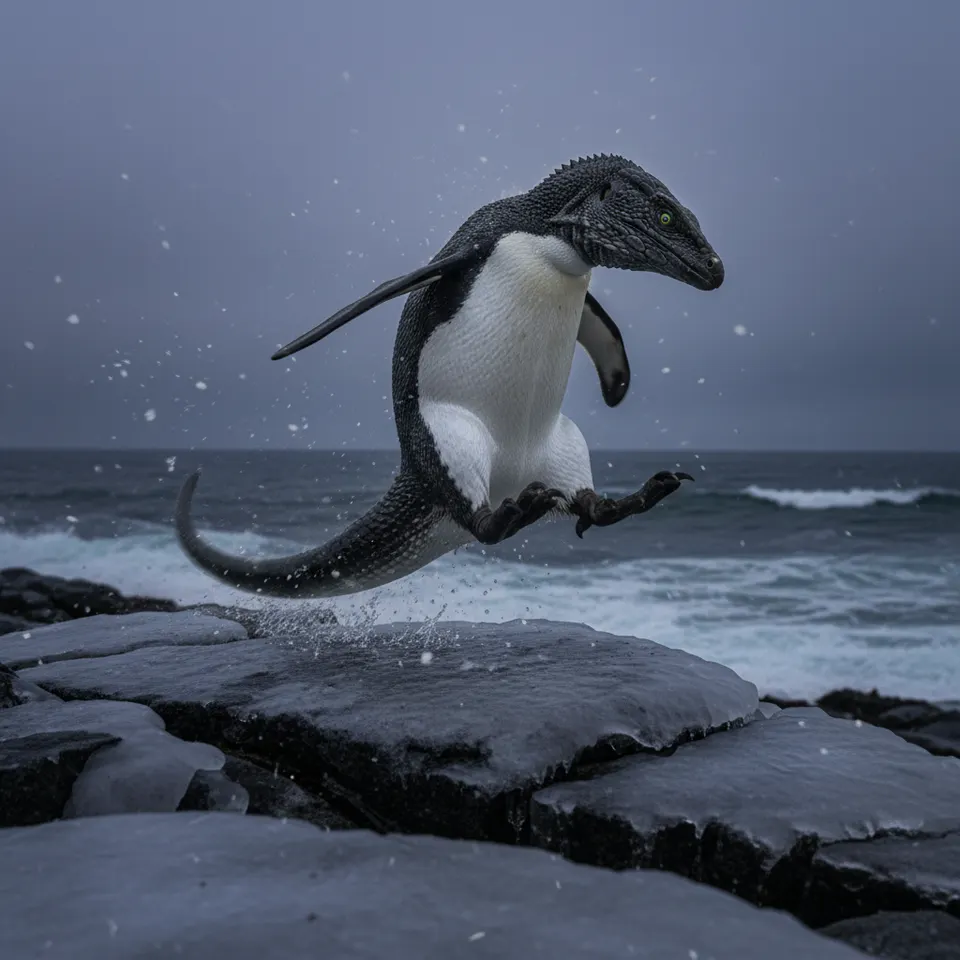
These creatures are semi-social, often forming small familial units rather than vast colonies. They bask on sun-warmed rocks to regulate their body temperature, a distinct reptilian trait, before returning to the frigid seas for hunting. Their nests are typically found in sheltered rock crevices or shallow burrows, where the females lay a clutch of leathery eggs. Pengulisks are known for their territorial displays, which include guttural hisses mixed with high-pitched chirps, creating an eerie, unique vocalization.
Fun Facts
- 🔬 Pengulisks possess a specialized internal 'heat-sink' gland, a reptilian adaptation that allows them to absorb and store solar energy more efficiently, crucial for surviving in their cold habitat.
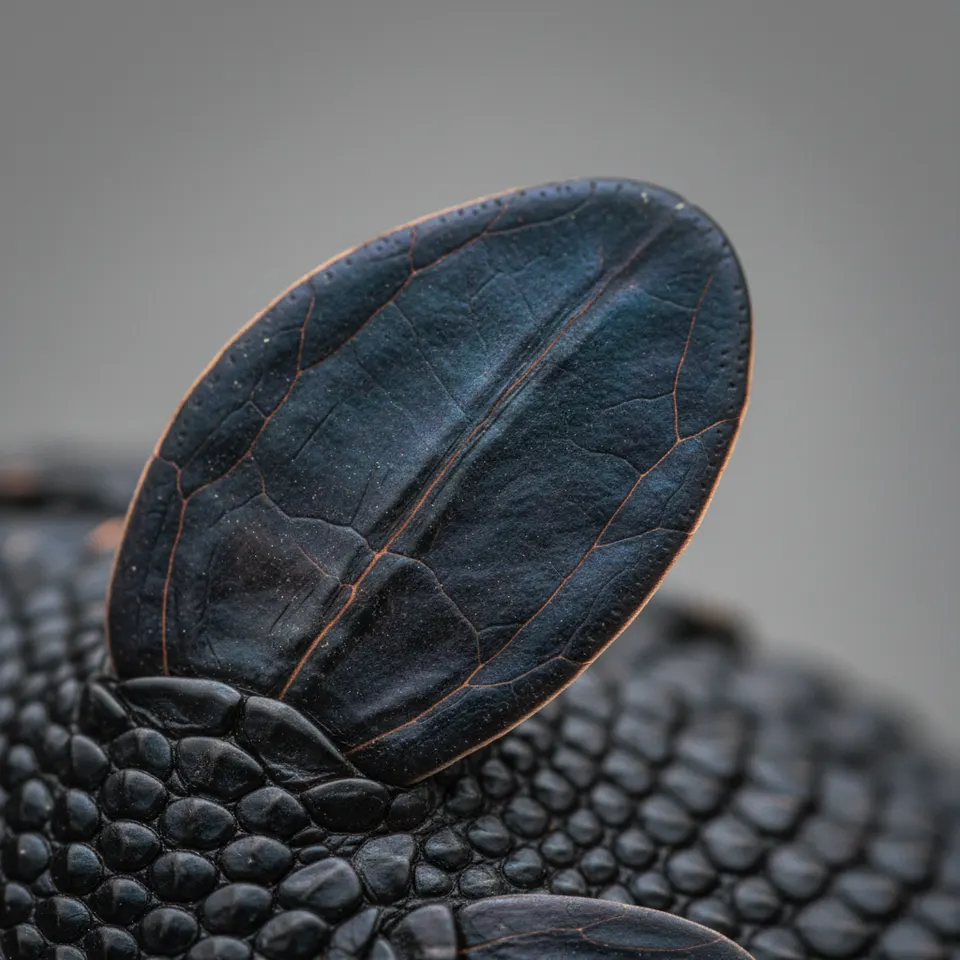
- 🔬 Their scales are uniquely evolved; dorsal scales are dark and rough for maximum solar absorption and protection, while ventral scales are smooth and white, providing camouflage against the snowy backdrop and reflecting excess heat when needed.
- 🔬 They are exceptional divers, capable of holding their breath for over 15 minutes, and have nictitating membranes over their eyes for clear underwater vision, much like some aquatic reptiles.