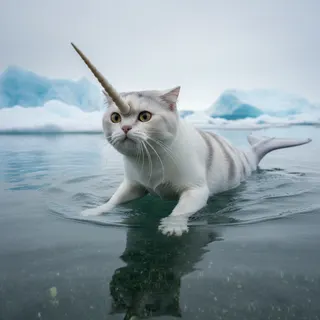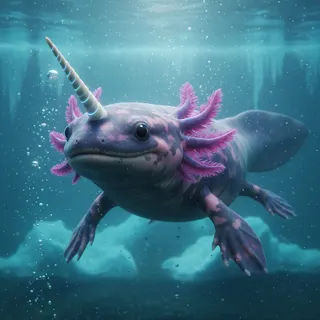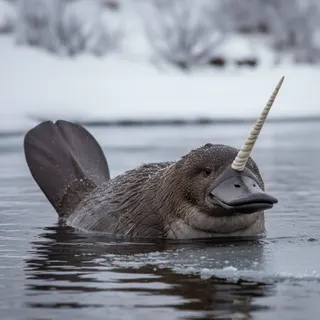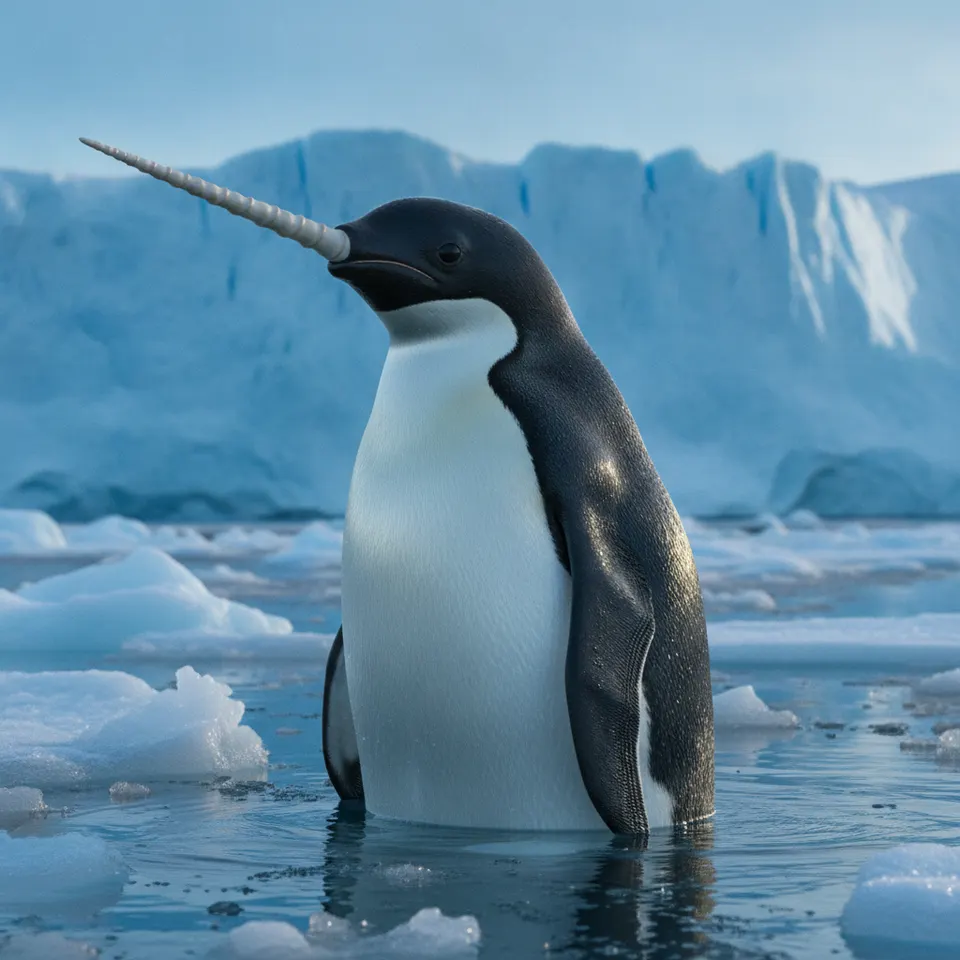
Narwhalguin
Monodon spheniscidae
Stats

Behavior
Narwhalguins are solitary hunters for the most part, but gather in small pods of 3-5 individuals during breeding season or to navigate particularly treacherous ice floes. They are surprisingly agile swimmers, using their flipper-wings to propel themselves through water with surprising speed, capable of reaching depths similar to smaller whales. On land, they waddle with a unique, lumbering grace, often using their tusk to break through thinner ice or to pry open shellfish.

These creatures thrive in the frigid waters of both the Arctic and Antarctic, preferring areas with both open water for hunting and stable ice shelves for resting and molting. They carve out small alcoves in icebergs with their tusks for shelter from predators and harsh blizzards. Their thick blubber and dense, waterproof feathers provide excellent insulation against the extreme cold, allowing them to spend extensive periods both in the icy water and exposed to polar winds.
Fun Facts
- 🔬 Their tusk, while resembling a narwhal's, is actually a modified, elongated incisor and is used for both foraging and display during mating rituals.
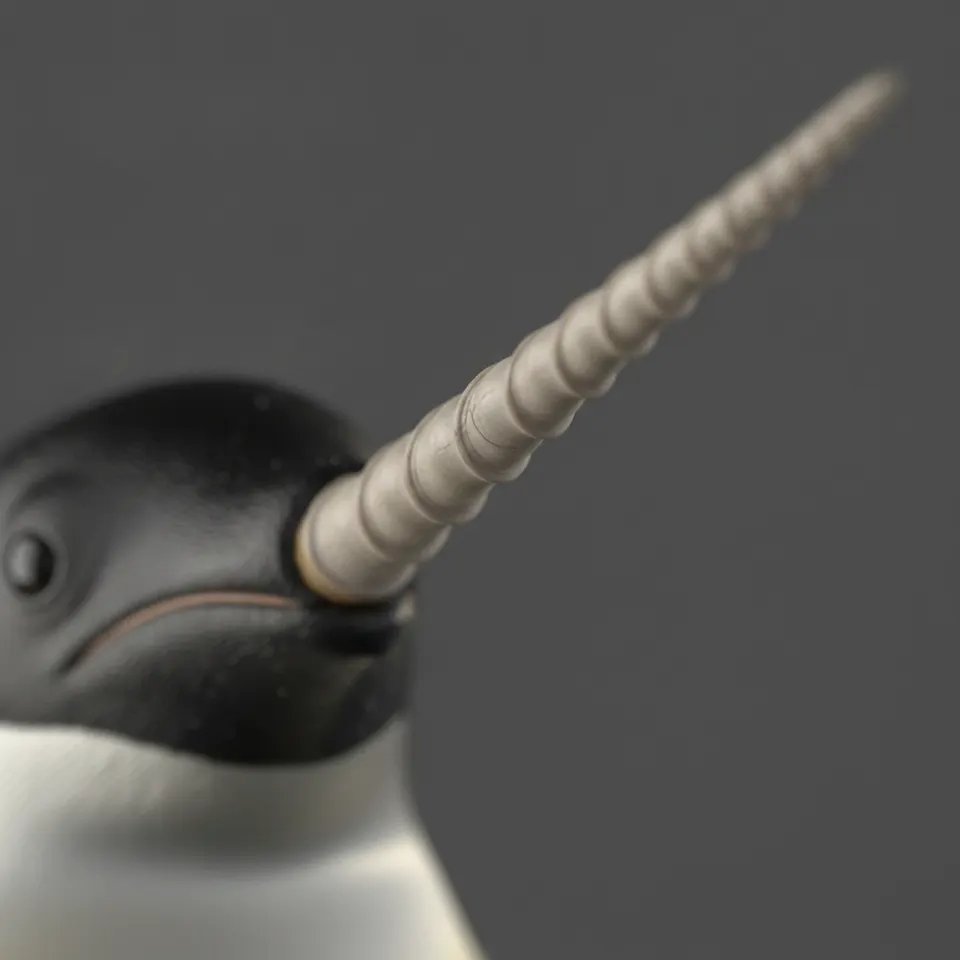
- 🔬 Unlike narwhals which typically have only one tusk, Narwhalguins sometimes develop two smaller, symmetrical tusks, a genetic anomaly highly prized by cryptozoologists.
- 🔬 They communicate through a series of clicks, whistles, and a distinctive 'squawk-grunt' that can be heard both above and below the water, often creating complex underwater melodies.
- 🔬 Their waterproof plumage has iridescent streaks of blue and green, making them appear to shimmer under the polar sun and subtly glow in the twilight.