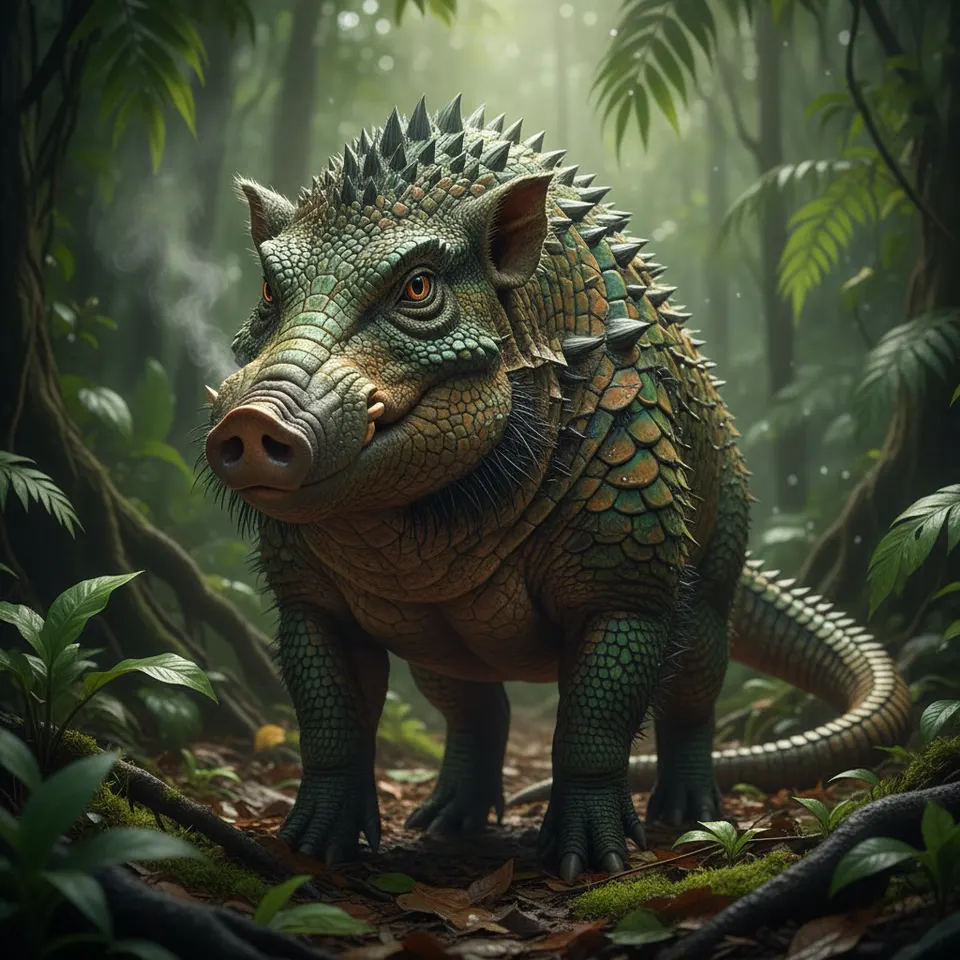
Scamahog
Squamaporcus horridus
Stats

Behavior
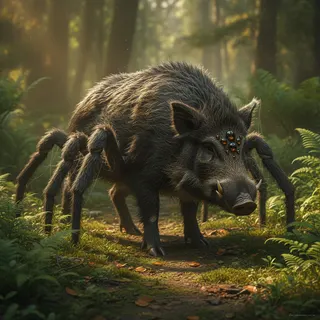
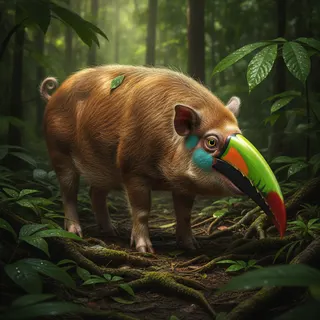
The Scamahog exhibits a fascinating blend of its ancestral traits. Like its porcine relatives, it is an opportunistic omnivore, constantly rooting through forest floors with its tough snout for tubers, fungi, and grubs. However, it also possesses the keen predatory instincts and swift agility of a large lizard, ambushing smaller prey with surprising speed. They are generally solitary creatures, only coming together for breeding, though small familial groups have been observed during early rearing.

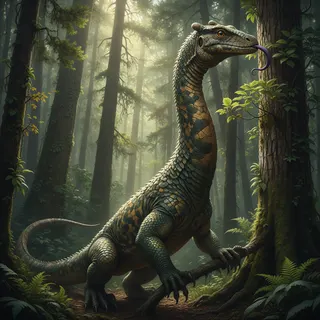
These creatures are highly adaptable, thriving in warm, humid environments where dense foliage provides ample cover and a rich food source. During the day, Scamahogs can often be found basking on sun-dappled rocks or logs, absorbing heat to regulate their reptilian metabolism. At night, they retreat into burrows or dense thickets, preferring secure, hidden locations for sleep. Their tough, scaly hide provides excellent camouflage in their varied environments, making them elusive despite their size.
Fun Facts
- 🔬 Their scales are not rigid but segmented and flexible, allowing for surprising agility while still providing significant protection against predators and harsh undergrowth.
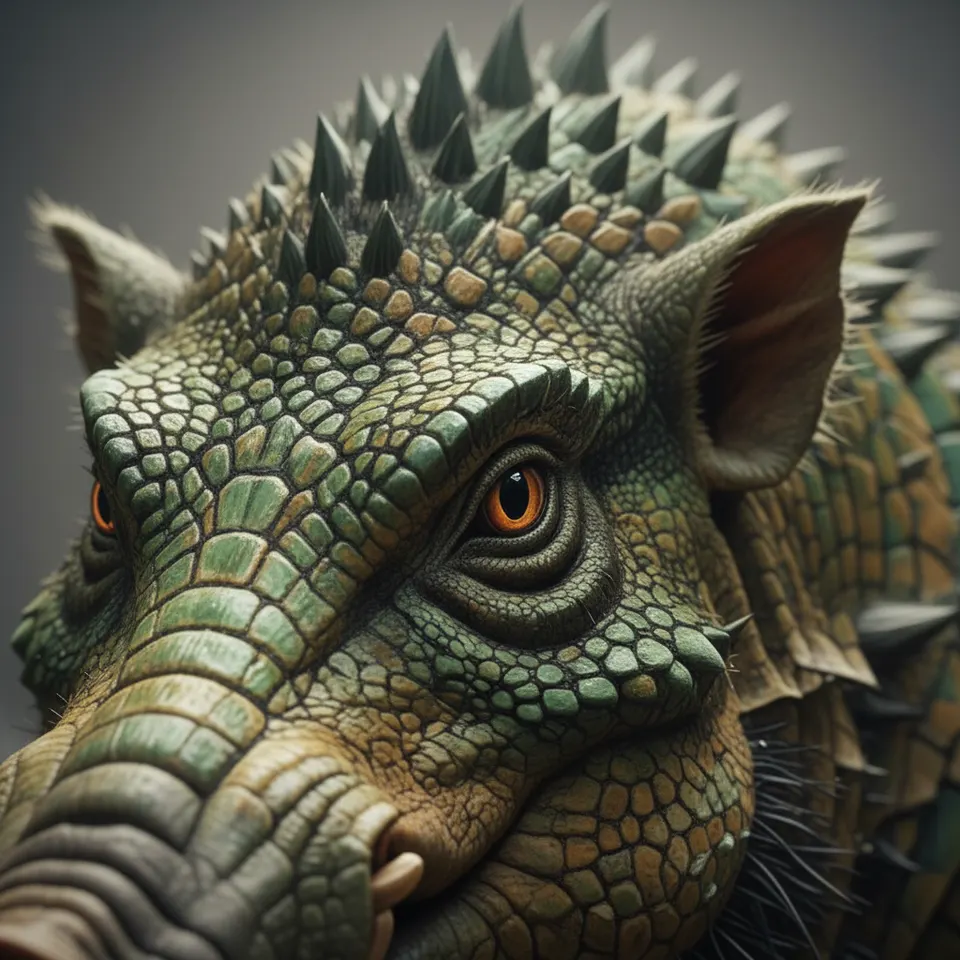
- 🔬 The Scamahog communicates through a series of guttural grunts and hisses, often followed by a distinctive rattling sound from its tail when agitated or warning off intruders.
- 🔬 Despite their fearsome appearance, young Scamahogs (known as 'Scalelets') are surprisingly vulnerable and are fiercely protected by their mothers, who display an unusual level of maternal care for a reptilian hybrid.