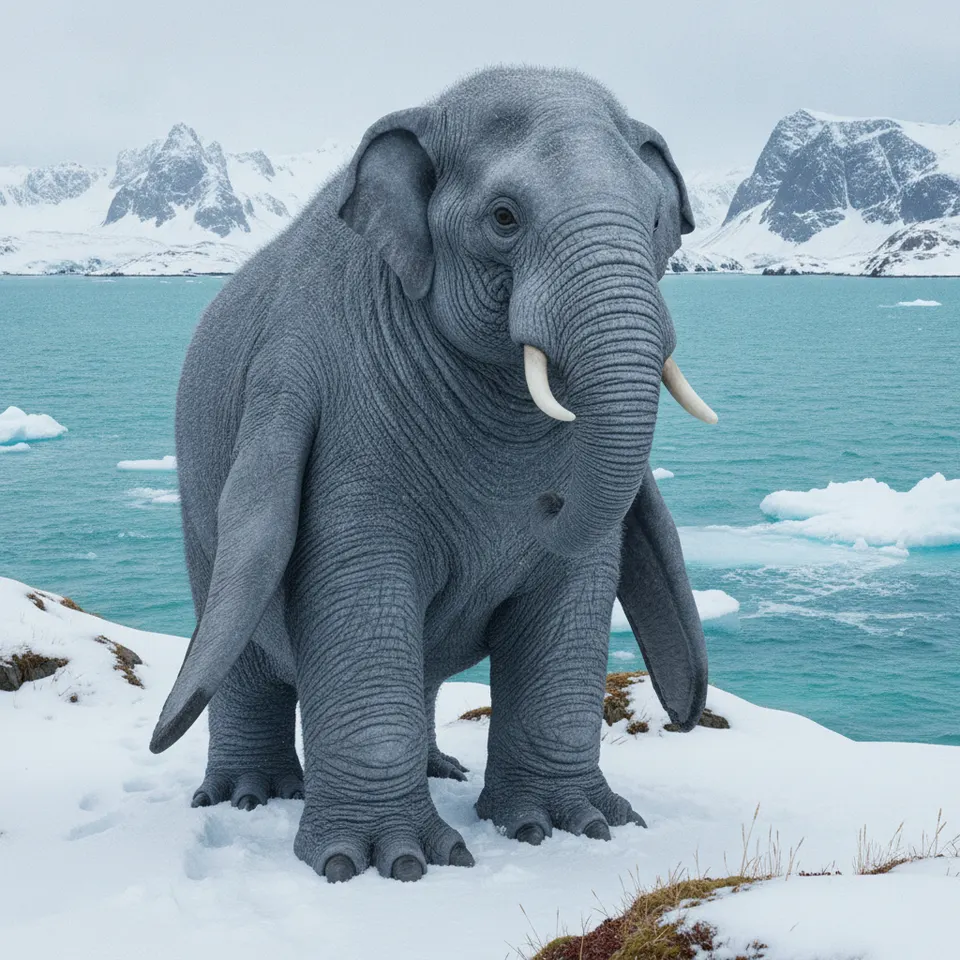
Pengephant
Elephapinguinus proboscidus arcticus
Stats

Behavior
Pengephants are highly social, living in small family herds of 5-10 individuals, often led by a wise matriarch. They exhibit a curious blend of terrestrial browsing and aquatic foraging. Despite their somewhat cumbersome terrestrial waddle, they are surprisingly agile swimmers, using their powerful, paddle-like forelimbs and a modified, flattened hind-flipper for propulsion through icy waters. Their small, prehensile trunks are incredibly versatile, used for delicate manipulation of food, signaling within the herd, and even siphoning water or digging for tubers.

These creatures spend their days navigating the rugged, icy coastlines, foraging along the shorelines for sustenance. They are known to undertake short, seasonal migrations between sheltered fjords for breeding and more open coastal areas rich in marine life. Pengephants construct rudimentary nests in sheltered rocky outcrops or dug-out burrows, utilizing gathered kelp and pebbles. Their thick blubber layer and short, dense, feather-like hair provide excellent insulation against the harsh sub-arctic climate, allowing them to thrive where few other large mammals can.
Fun Facts
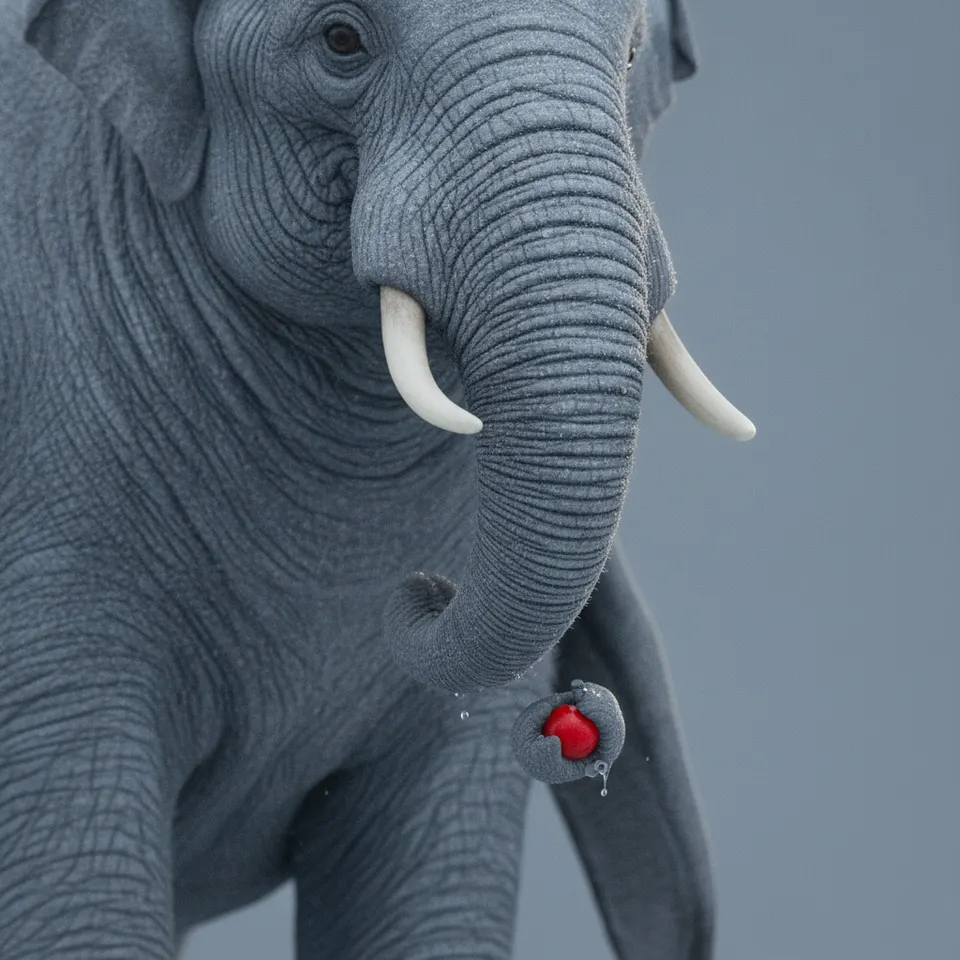
- 🔬 A Pengephant's trunk is surprisingly flexible, capable of suctioning small fish directly from the water or plucking individual berries from a bush with delicate precision.
- 🔬 Their deep, resonant trumpet-like call can travel for miles across the icy wastes, often accompanied by a distinct 'squawk' at the end, used for both communication and territorial defense.
- 🔬 Pengephant calves are born with a fluffy, downy coat that provides extra warmth, and they remain close to their mothers for the first two years, learning essential swimming and foraging skills.