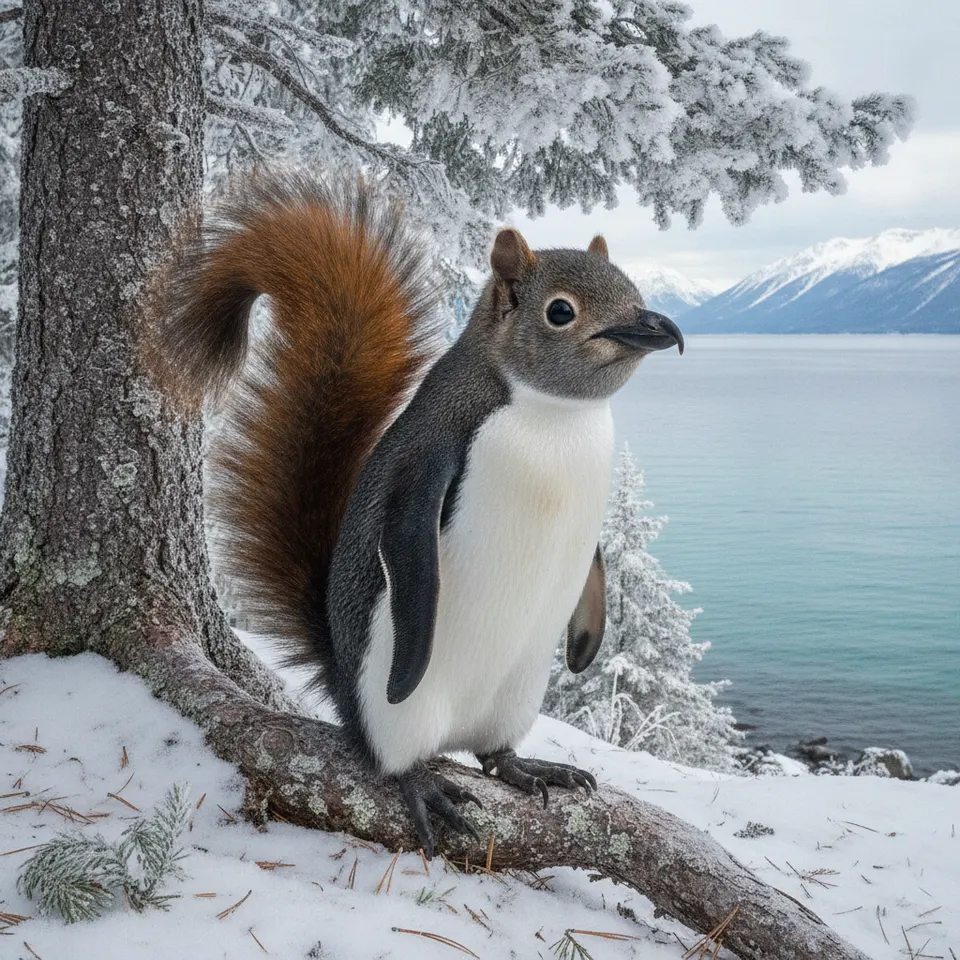
Squinguin
Arboreospheniscus sciurus
Stats

Behavior
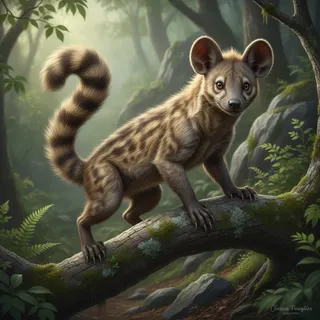
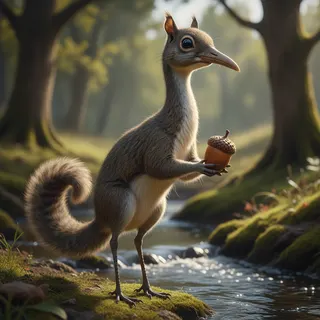
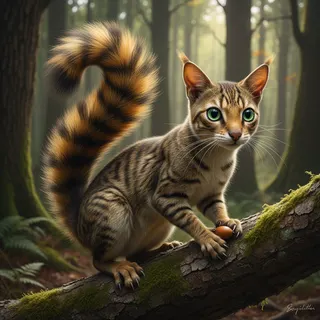
Squinguins are highly industrious and surprisingly agile creatures, known for their unique dual-habitat lifestyle. They spend their days meticulously foraging for food both in the forest canopy and along the rocky shores. Unlike their land-locked squirrel relatives, Squinguins possess streamlined bodies and slightly webbed feet that allow for surprisingly efficient, if not elegant, underwater pursuit of small fish and crustaceans. They are often seen caching large stashes of conifer seeds and nuts in hollowed-out logs or burrows near the base of trees, a habit inherited from their squirrel ancestry.
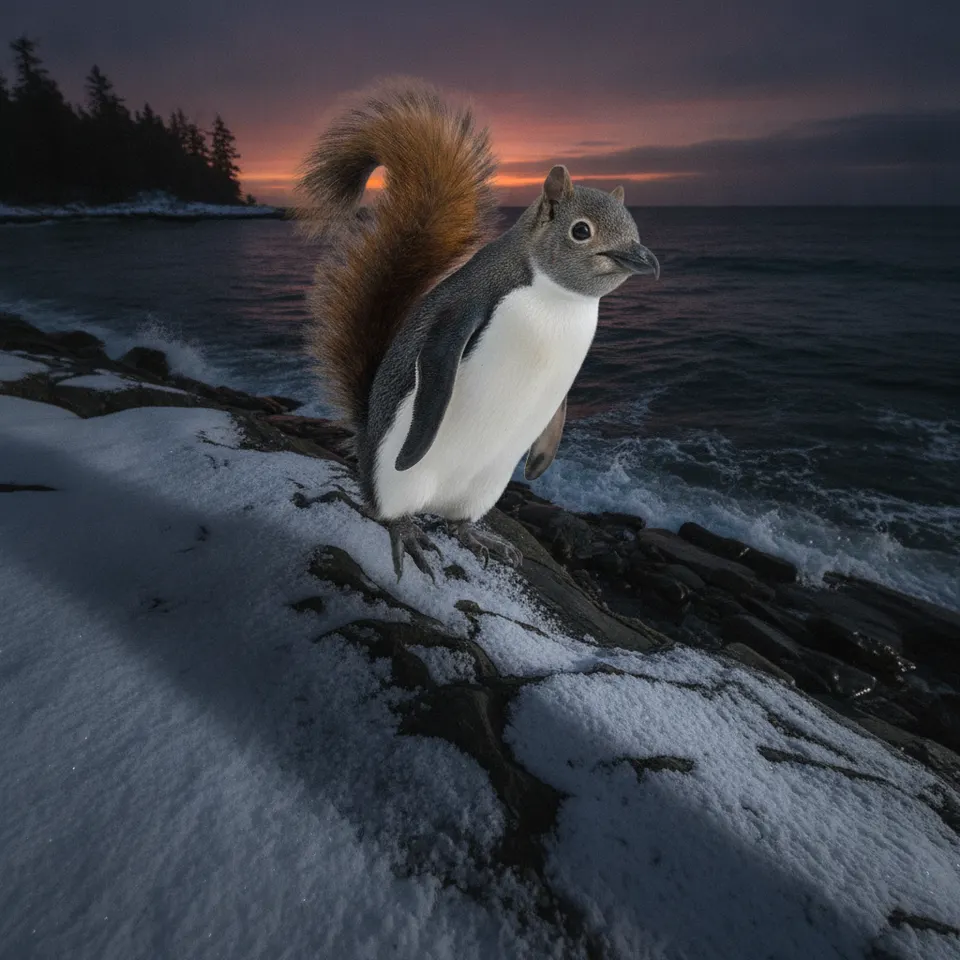
These social creatures live in small family groups, often consisting of a breeding pair and their offspring, in elaborate tree-nests constructed from twigs, moss, and shed feathers. Their insulating plumage, combined with a thick underlayer of fur around their chest and tail, provides ample protection against the cold coastal winds. When threatened, they can either scurry up a tree with incredible speed using their sharp claws or dive into the frigid waters, using their bushy, rudder-like tail for steering.
Fun Facts
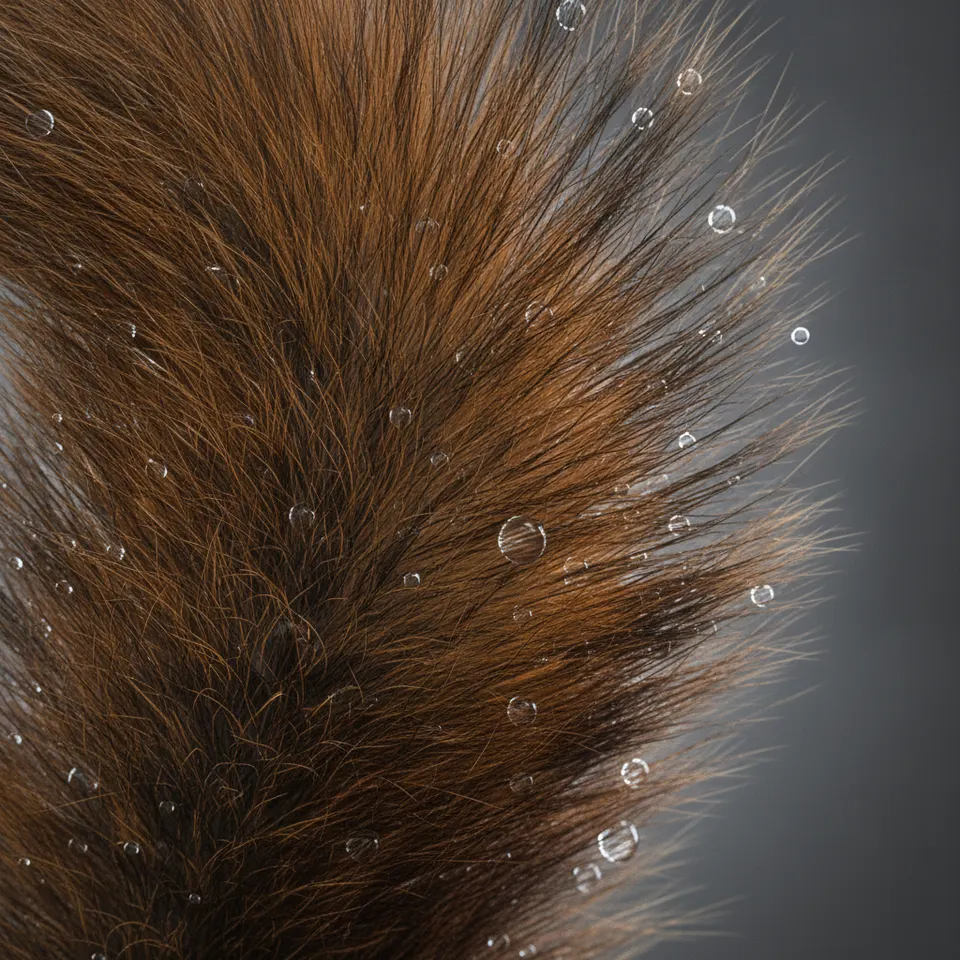
- 🔬 A Squinguin's tail, though bushy and used for balance in trees, is surprisingly water-repellent and helps propel them through the water like a sculling oar.
- 🔬 They communicate using a complex series of chirps, whistles, and chattering sounds, some of which are remarkably similar to the squeak of a rusty swing set.
- 🔬 Squinguin chicks are born covered in downy grey fur, only developing their distinctive black-and-white plumage as they mature and begin their dual-habitat training.