Pengiwi
Apteryx spheniscidae
Stats

Behavior
The Pengiwi is a fascinating crepuscular creature, displaying a unique blend of its parent species' traits. It moves with a distinct waddling gait on land, but can scurry with surprising speed when startled, using its strong, short legs. While generally solitary, Pengiwis form small, temporary colonies during breeding season, engaging in elaborate courtship displays that involve both soft cooing sounds and synchronized bobbing movements. Unlike its penguin lineage, it possesses a keen sense of smell, primarily used for locating food in dense undergrowth.

Adapted to the transitional zones between land and sea, Pengiwis burrow extensive networks of tunnels in the soft earth of coastal forests, often near estuary mouths. These burrows provide shelter from predators and the elements, and serve as nesting sites. They are equally at home foraging along the tideline for crustaceans and small fish, using their streamlined bodies for agile swimming in shallow waters, or rooting through leaf litter for grubs and worms with their sensitive long beaks.
Fun Facts
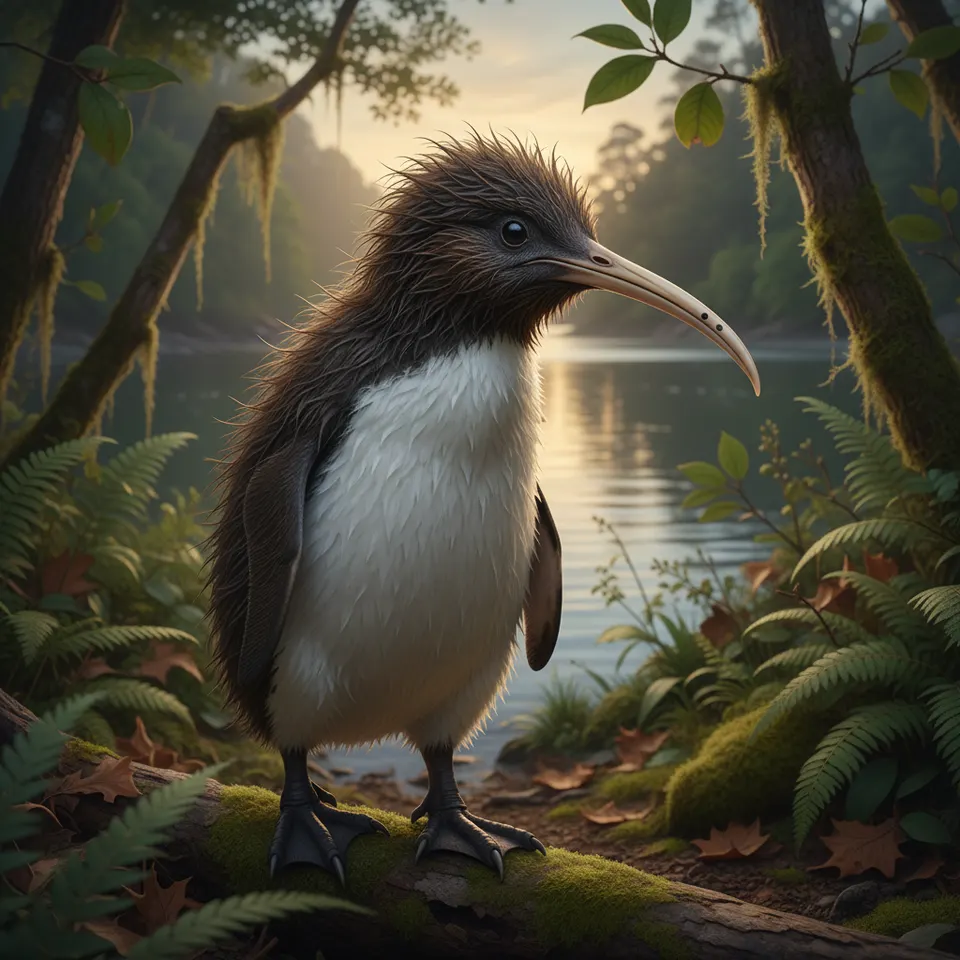
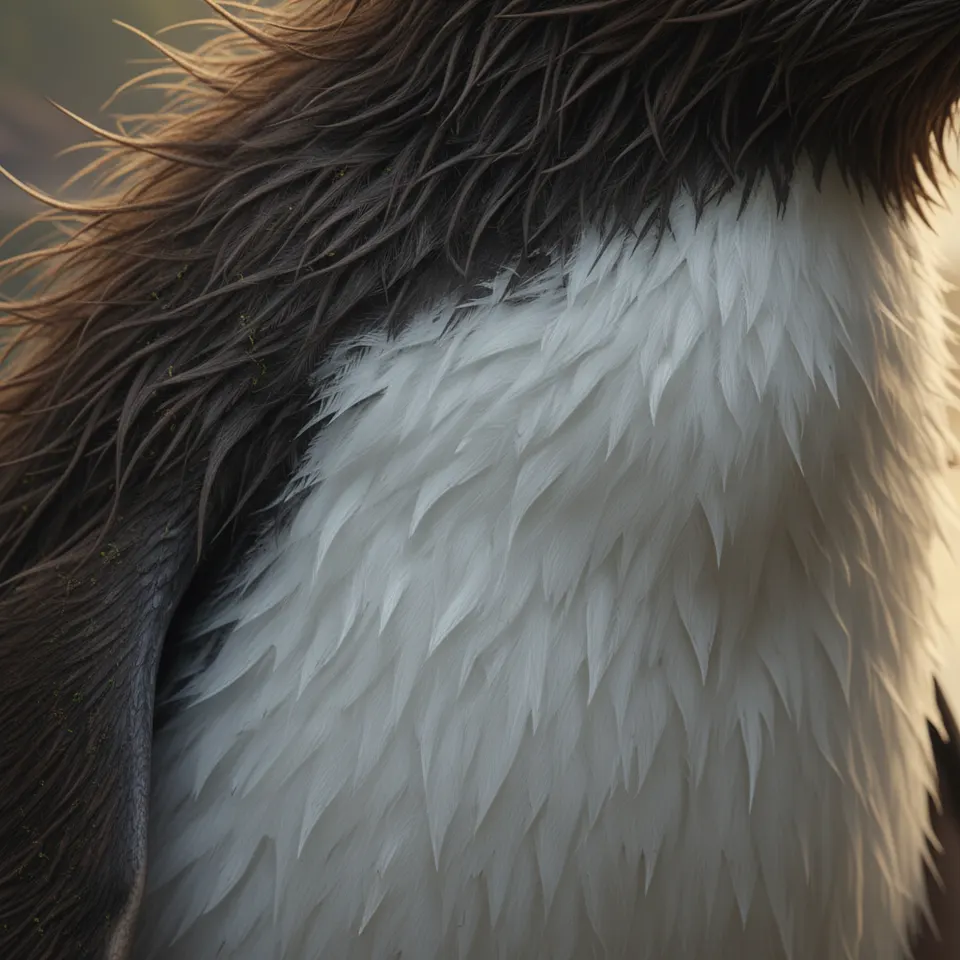
- 🔬 Its feathers, though dense and waterproof like a penguin's, are shaggy and earthy-toned on its back, providing excellent camouflage in forest undergrowth, contrasting with a surprisingly clean white belly.
- 🔬 Pengiwis have a unique call that starts as a high-pitched kiwi-like shriek, transitioning into a deeper, resonant 'honk' reminiscent of a penguin.
- 🔬 Despite their terrestrial nesting habits, Pengiwi chicks are instinctively drawn to water from a young age, often taking their first swims within days of hatching, guided by their parents.