Pandotter
Lutropan bambusae
Stats

Behavior
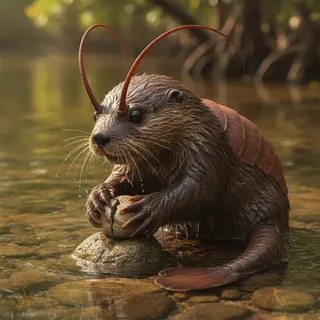
Pandotters are primarily solitary creatures, though mothers will raise their young in small, playful family units for up to two years. They are most active during the twilight hours, foraging along riverbanks and in the water for food. Despite their size, they possess remarkable agility both in and out of the water, utilizing their powerful tails for propulsion and balance. They communicate through a series of chirps, growls, and high-pitched whistles.

Their daily routine involves extended periods of playful exploration in the water, where they dive for fish and aquatic plants, followed by leisurely sunbathing on rocky outcrops or riverine bamboo thickets. They are known for their meticulous grooming habits, spending considerable time polishing their thick, water-resistant fur. Pandotters create cozy dens within hollow logs, under tree roots, or in burrows dug into soft riverbanks, often lining them with soft moss and bamboo leaves.
Fun Facts
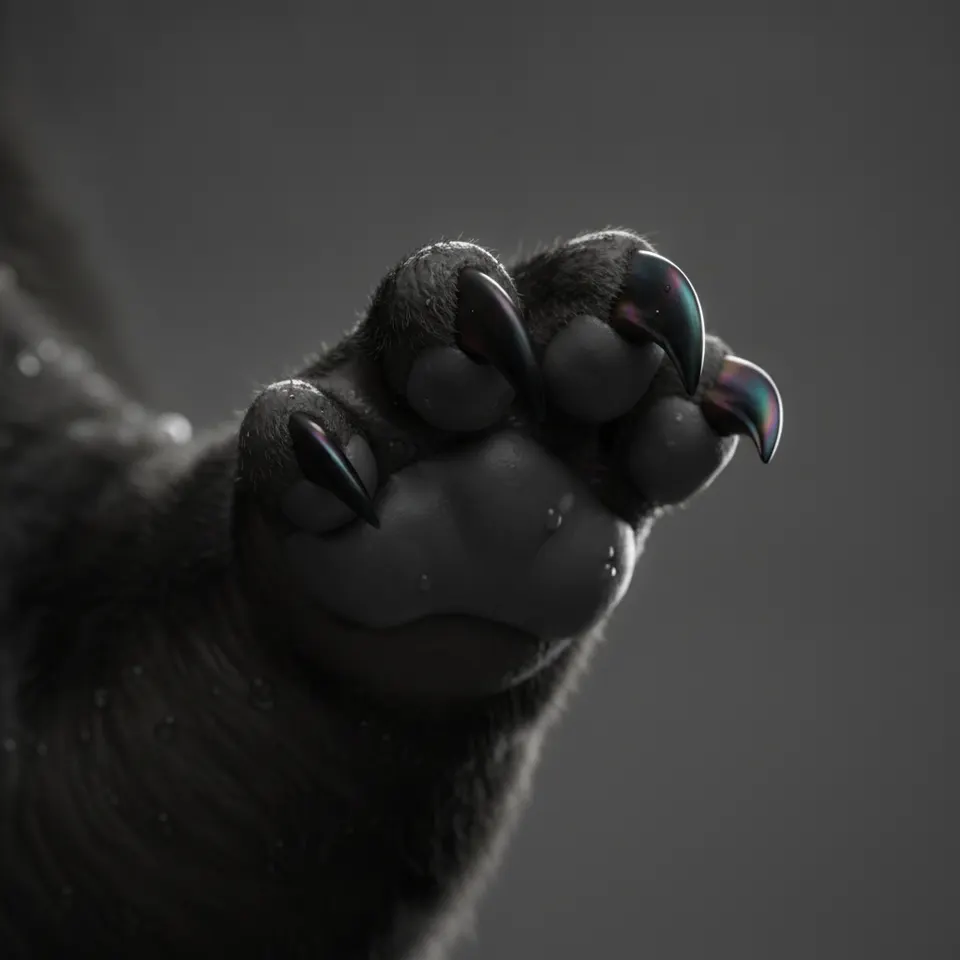
- 🔬 Pandotters have evolved unique, paddle-like front paws with retractable claws, allowing them to both grip slippery bamboo stalks and propel themselves gracefully through swift currents.
- 🔬 Their fur is a distinctive pattern of black and white patches, reminiscent of a panda, but with the sleek, dense, and oily texture of an otter's pelt, making them perfectly waterproof.
- 🔬 When resting, Pandotters often float on their backs in the water, holding bamboo shoots to munch on, a charming blend of otter relaxation and panda dietary habits.