Cetrilutra
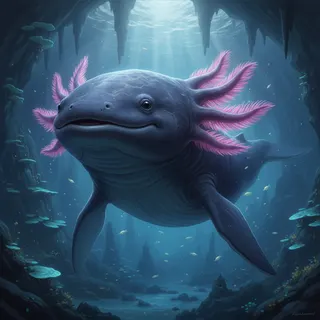
Lutracetus maximus
Stats

Behavior
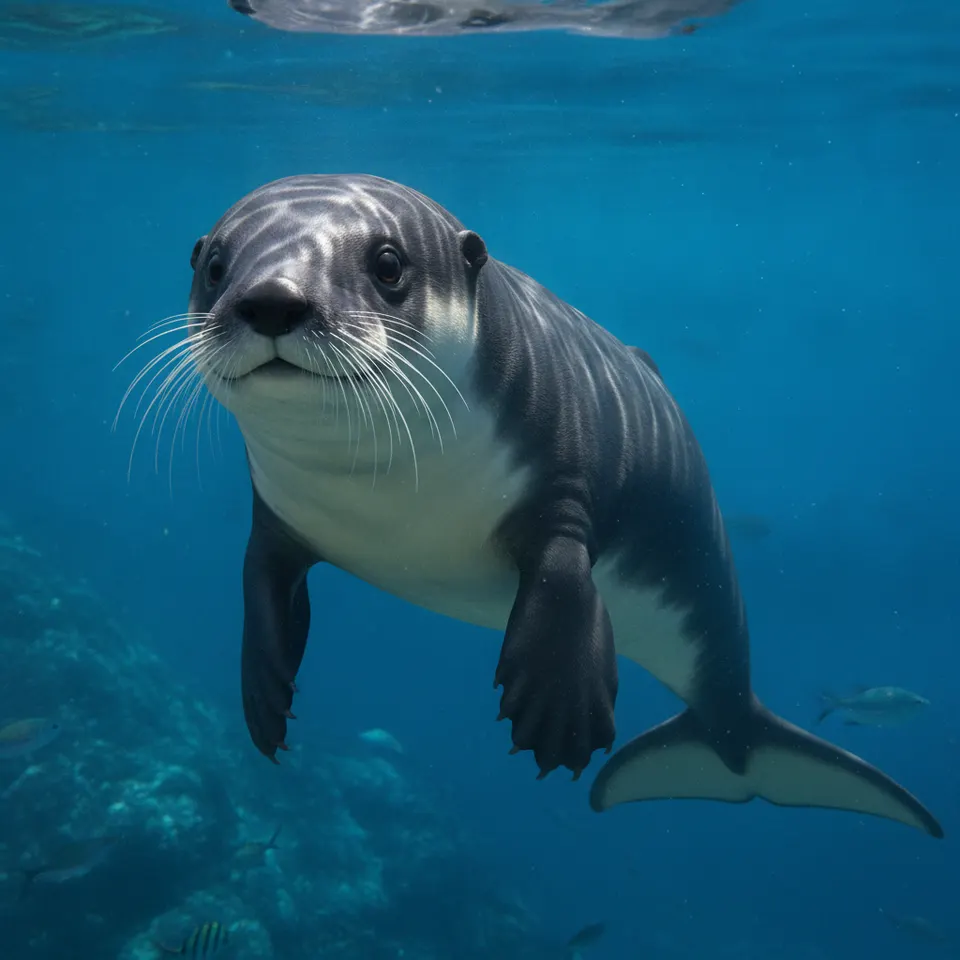
Cetrilutras are known for their profound intelligence and playful social structures. They typically live in small, familial pods of 3-7 individuals, communicating through a complex array of clicks, whistles, and purrs reminiscent of both otters and small cetaceans. They are incredibly curious, often observed interacting with other marine life and even approaching slow-moving vessels with cautious interest. Their movements are a graceful blend of an otter's agile dives and a dolphin's powerful bursts of speed.
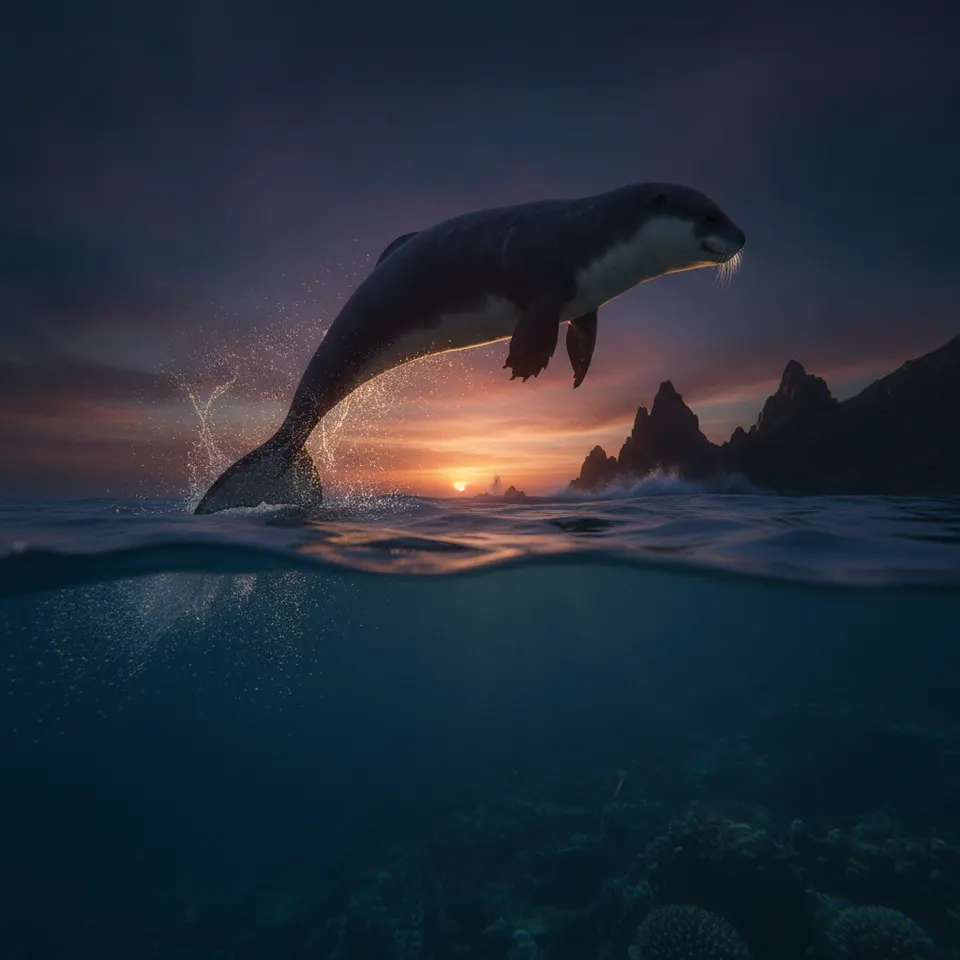
These majestic hybrids inhabit cold, nutrient-rich coastal waters, particularly favoring areas with kelp forests and rocky shorelines where prey is abundant. They are expert foragers, utilizing their keen sense of smell and dexterous forepaws to root out crustaceans and mollusks from the seabed, while also pursuing schooling fish with their streamlined bodies and powerful flukes. They build temporary dens in underwater caves or kelp beds for resting and sheltering their young, often carrying prized smooth stones or shells for play and tool use, much like their otter ancestors.
Fun Facts
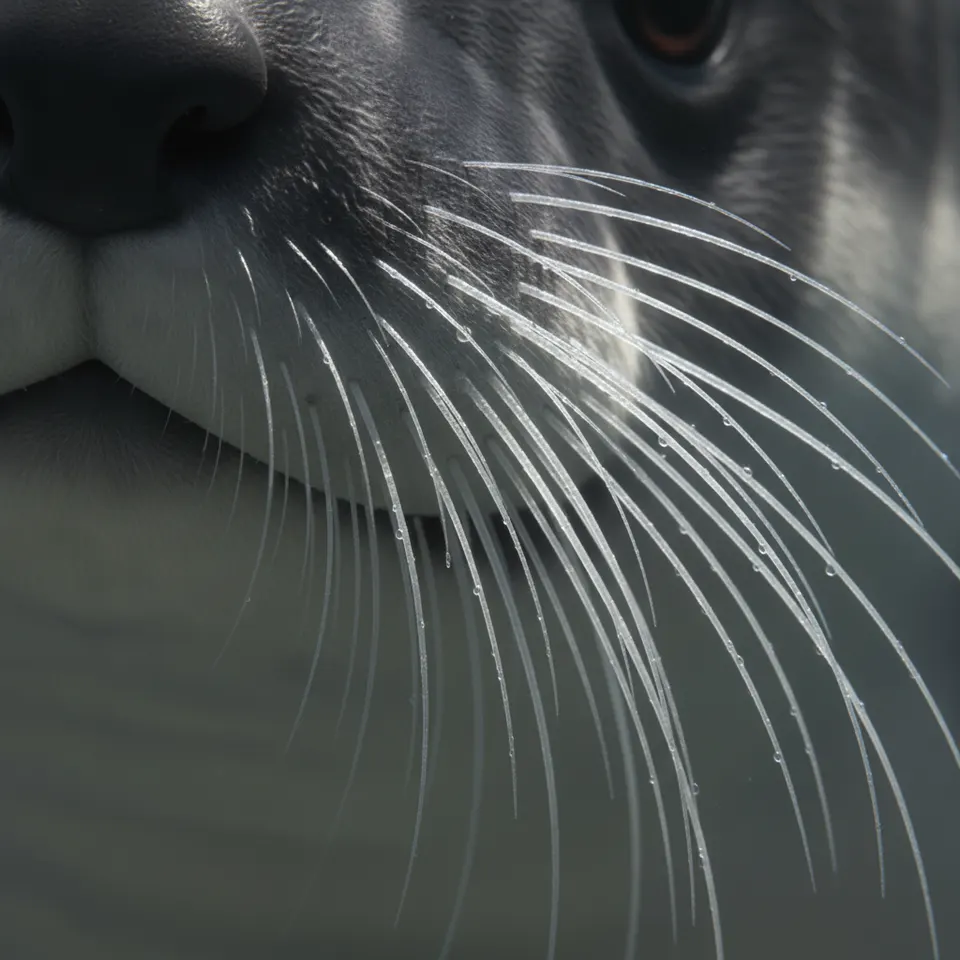
- 🔬 Cetrilutras possess a unique sensory organ: a highly developed whisker array around their snout, capable of detecting minute changes in water pressure and vibrations, allowing them to 'see' in murky depths and hunt effectively in darkness.
- 🔬 Despite their formidable size, they are incredibly buoyant, capable of floating effortlessly on their backs for extended periods while grooming their dense, insulating fur, which must be meticulously maintained to prevent hypothermia.
- 🔬 Ancient coastal legends speak of Cetrilutras guiding lost sailors through treacherous waters, their playful nature often masking an underlying wisdom and connection to the ocean's deepest mysteries.