Riverhorn
Lutralces fluvialis
Stats

Behavior
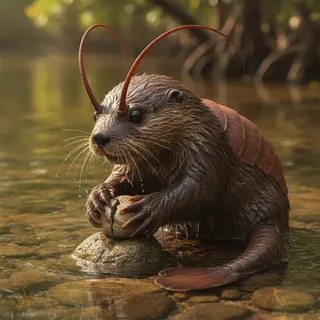
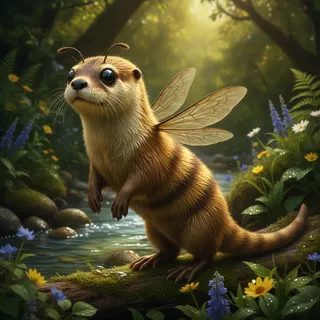
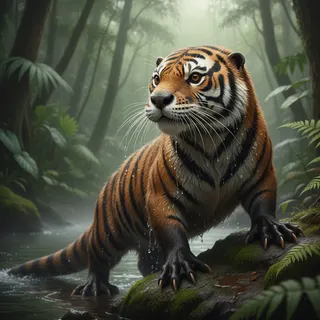
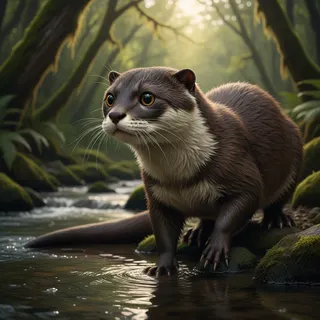
The Riverhorn is a majestic yet elusive creature, spending most of its life in or near cold, deep freshwater bodies. Unlike its solitary moose relatives, Riverhorns often live in small, familial pods of 3-5 individuals, displaying complex social behaviors, including synchronized fishing expeditions and playful aquatic displays. They are surprisingly agile in water, using their powerful, rudder-like tails and partially webbed feet to navigate strong currents, and their streamlined antlers to part dense underwater foliage.

During the day, Riverhorns can be found grazing on submerged aquatic plants in shallower waters or diving for fish and crustaceans in the deeper sections of lakes and rivers. At night, they retreat to elaborate, multi-chambered dens dug into riverbanks or under submerged logjams, often with underwater entrances to deter predators. Their dense, double-layered fur provides exceptional insulation against the frigid northern waters, allowing them to remain active even in the harshest winters.
Fun Facts
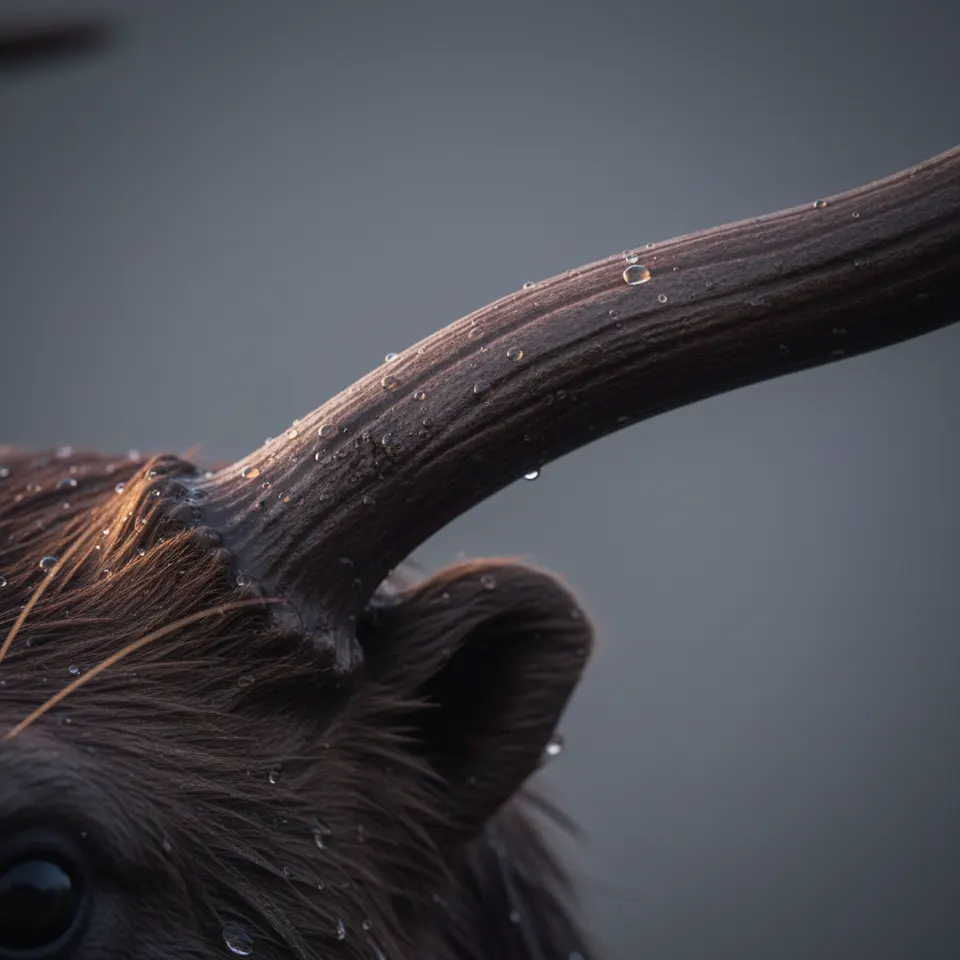
- 🔬 Their antlers, while smaller and more streamlined than a typical moose's, are surprisingly sensitive and used as underwater sensors to detect fish movements and navigate in murky waters.
- 🔬 A Riverhorn's powerful hind legs and webbed feet allow it to propel itself through water at speeds up to 15 mph, making it an incredibly efficient aquatic hunter.
- 🔬 They communicate through a series of low-frequency hums and chirps that can travel long distances underwater, allowing pod members to stay connected across vast territories.