Ursinicrab
Ursa carcinos
Stats

Behavior
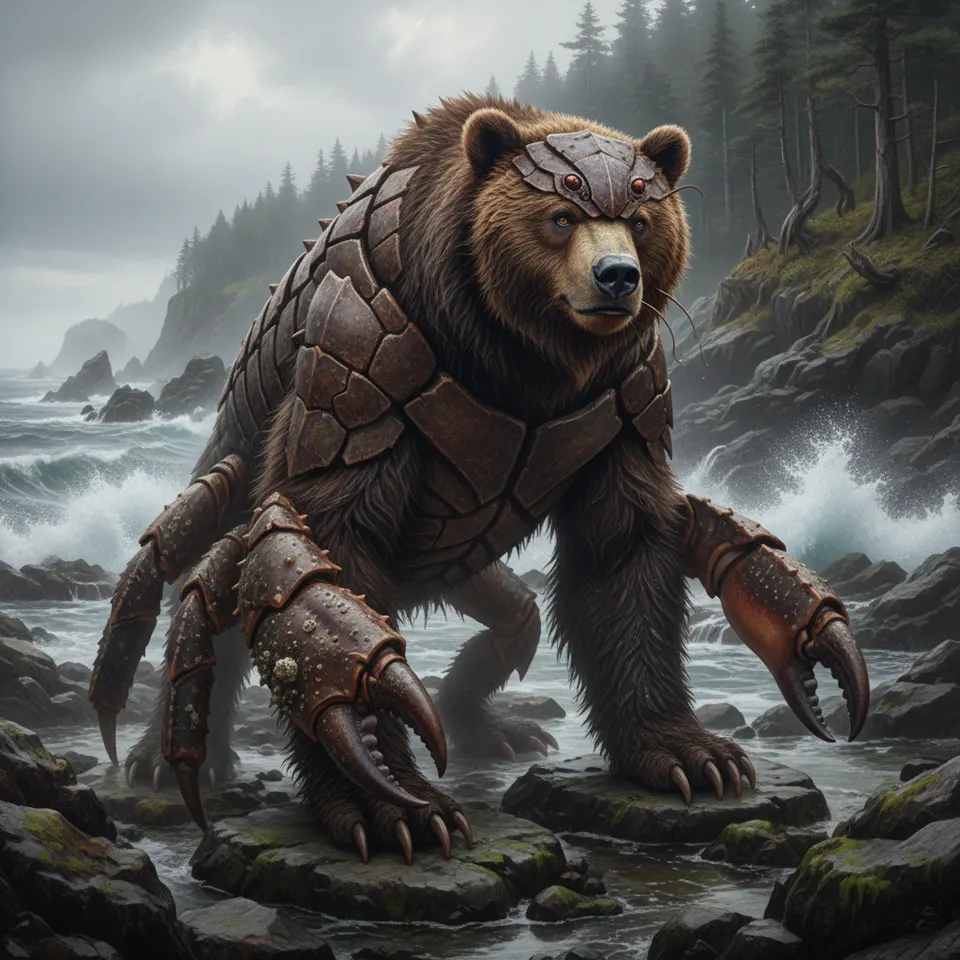
The Ursinicrab is a solitary and territorial creature, known for its surprising agility despite its heavy carapace. It moves with a unique shuffling gait on its six powerful legs, using its massive front pincers for both defense and to crack open tough prey. While generally reclusive, it can be fiercely aggressive if provoked, emitting a deep, rumbling growl that echoes from its chitinous throat. Unlike most bears, it does not truly hibernate, but enters periods of torpor during harsh winters, retreating to deep coastal caves.

Preferring the liminal zones where forest meets ocean, Ursinicrabs establish vast territories along rocky coastlines, estuaries, and dense coastal forests. They are adept at both terrestrial foraging and shallow water hunting, often seen sifting through tide pools with their smaller hind pincers or ambushing fish and seals. They are mostly nocturnal, emerging at dusk to forage, and mark their territories by carving deep gouges into trees and rocks with their formidable claws.
Fun Facts
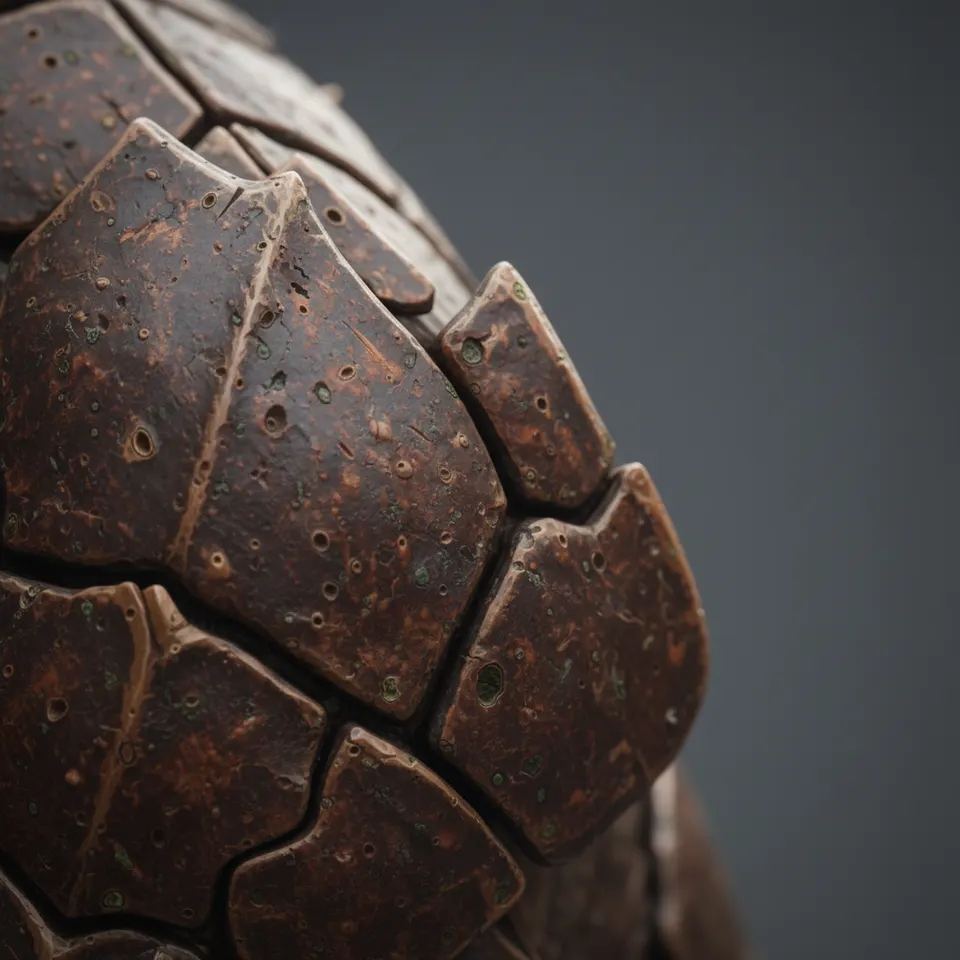
- 🔬 The Ursinicrab's exoskeleton is incredibly dense, providing natural armor against predators and the crushing pressures of its coastal environment, allowing it to withstand impacts that would shatter lesser creatures.
- 🔬 During mating season, males engage in elaborate 'claw dances,' displaying the size and strength of their pincers to attract females, often accompanied by complex vocalizations that combine roars and clicking sounds.
- 🔬 They have an unusual digestive system that allows them to process both tough plant matter and the resilient shells of crustaceans, sometimes even consuming their own molted exoskeletons to recover vital calcium.