Grumphant
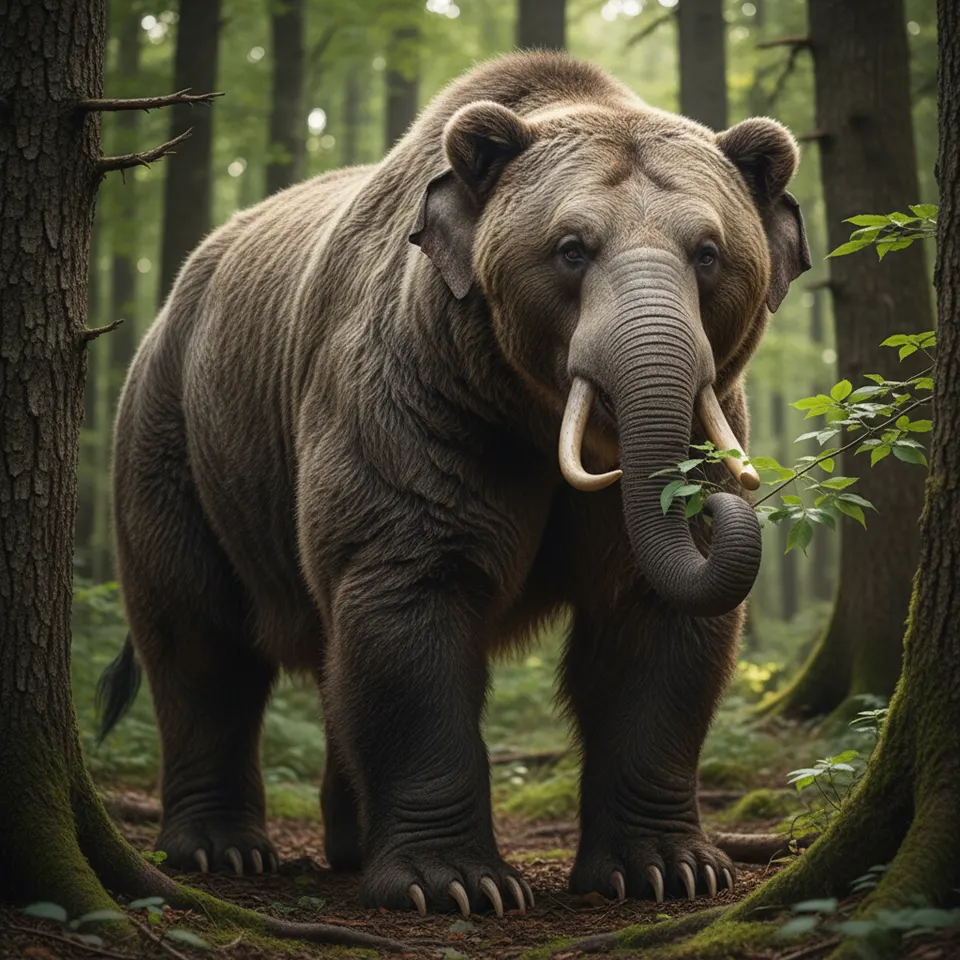
Ursus pachydermis
Stats

Behavior
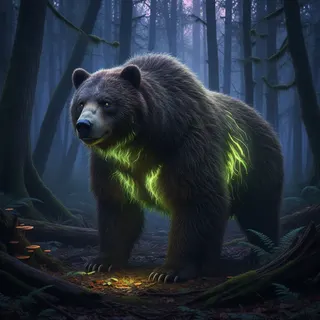
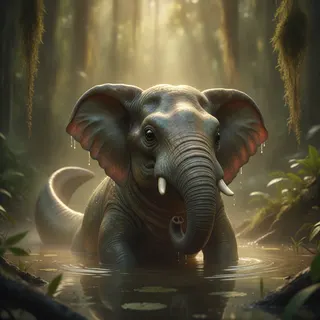
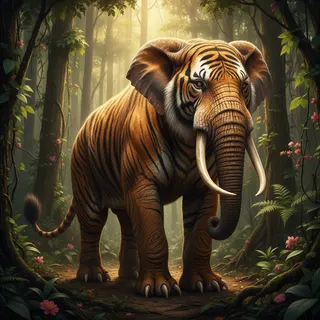
Grumphants are surprisingly agile for their size, capable of navigating dense forest undergrowth with ease. They typically live in small family units led by a matriarch, though solitary males are not uncommon. These intelligent creatures exhibit complex communication through rumbling sounds and trunk gestures, displaying a curious blend of bear-like solitary foraging habits and elephantine social bonding within their immediate family.

Known for their powerful sense of smell, they use their elongated, prehensile snout (a hybrid between a bear's muzzle and a short trunk) to sniff out tubers and roots, which they then excavate with their formidable claws. During cooler months, Grumphants may enter a state of torpor, similar to hibernation, reducing their metabolic rate and relying on stored fat reserves.
Fun Facts
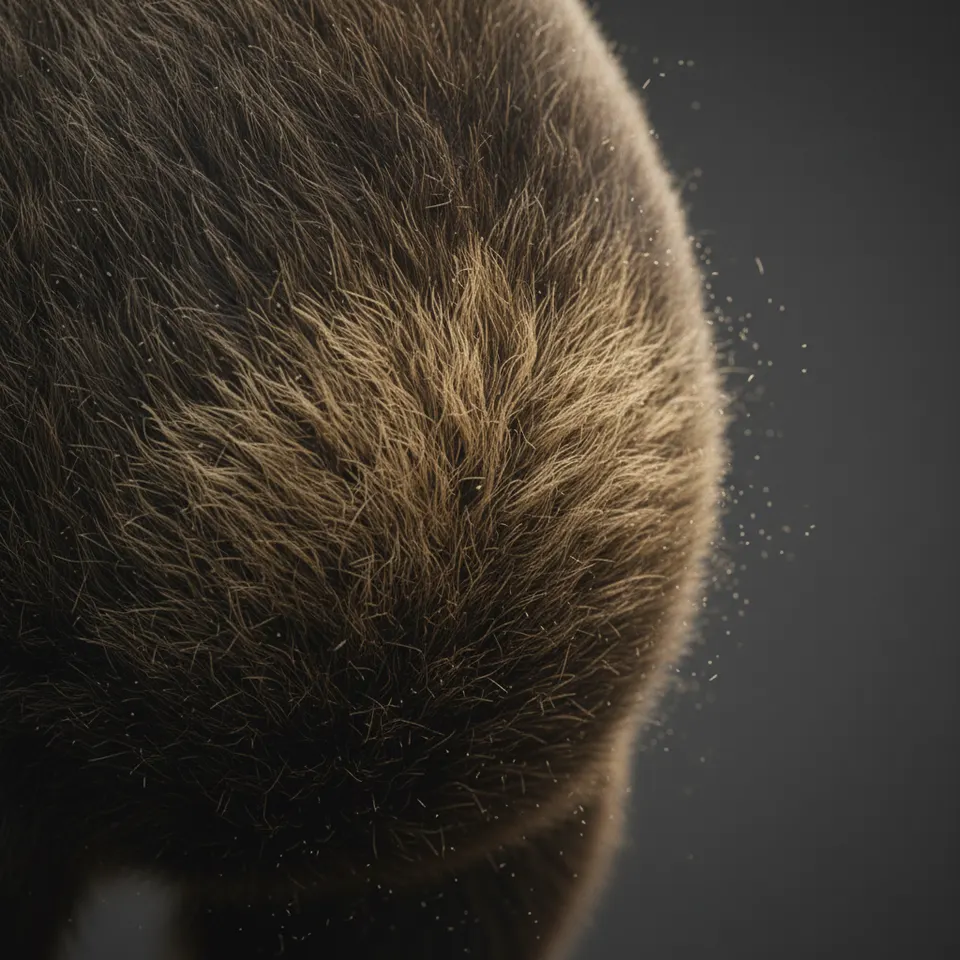
- 🔬 Their fur changes seasonally, growing thicker and darker in winter, and shedding into a lighter, coarser coat in summer, offering camouflage in varied environments.
- 🔬 The Grumphant's roar is a unique blend of an elephant's trumpet and a bear's growl, often described as a 'rumbling bellow' that can carry for miles through the forest.
- 🔬 Despite their intimidating size, Grumphants are observed to be quite playful, especially the juveniles, who engage in elaborate wrestling matches and trunk-tag within their family groups.