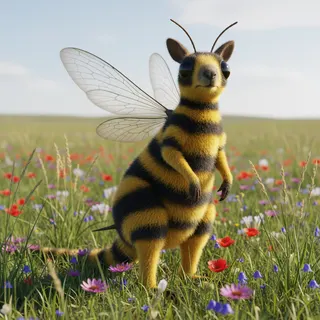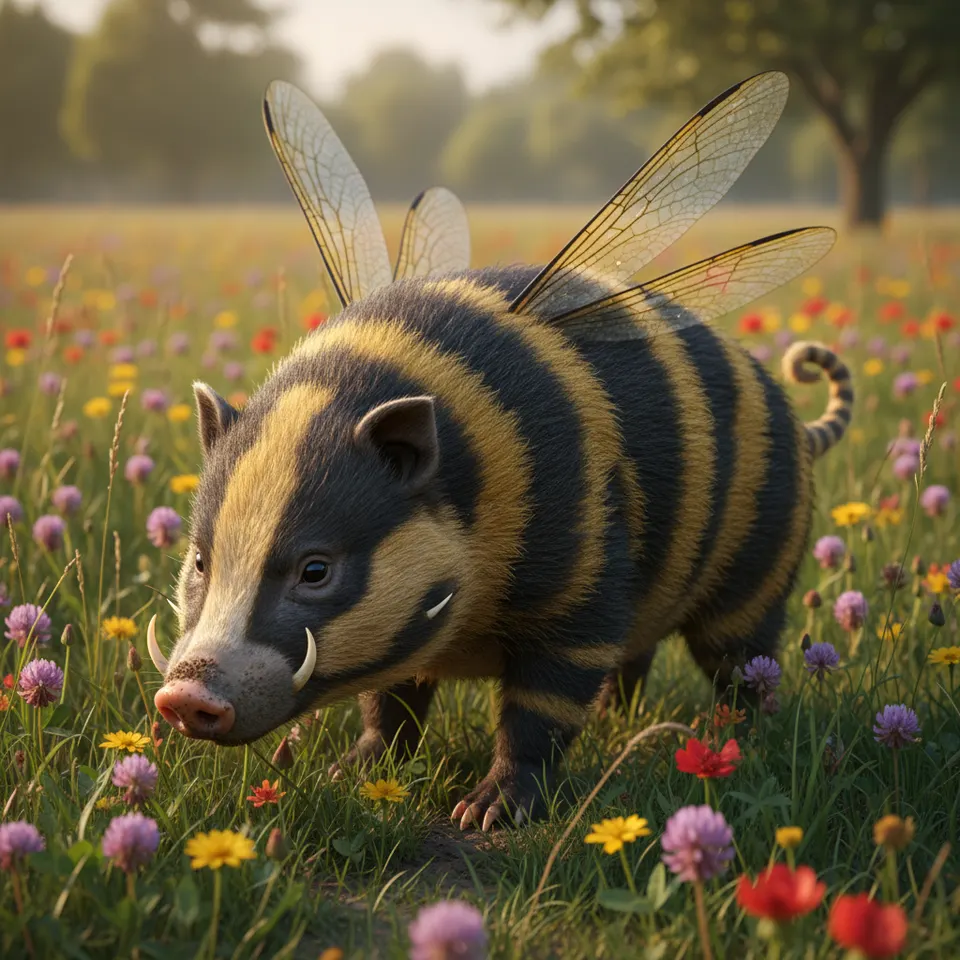
Honey-Hog
Bombus Suillus Mellifera
Stats

Behavior
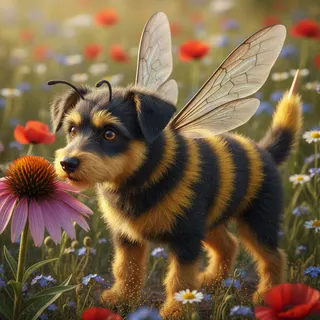
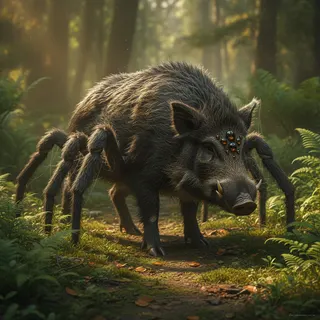
Honey-Hogs are surprisingly social creatures, often found in small 'grunts' (their term for a herd) of 3-7 individuals. They communicate through a complex series of snorts, squeals, and buzzing vocalizations, indicating everything from foraging locations to potential threats. During the day, they tirelessly forage, using their sensitive snouts to root out nutrient-rich tubers and fungi while simultaneously collecting nectar and pollen with specialized bristles covering their bodies.
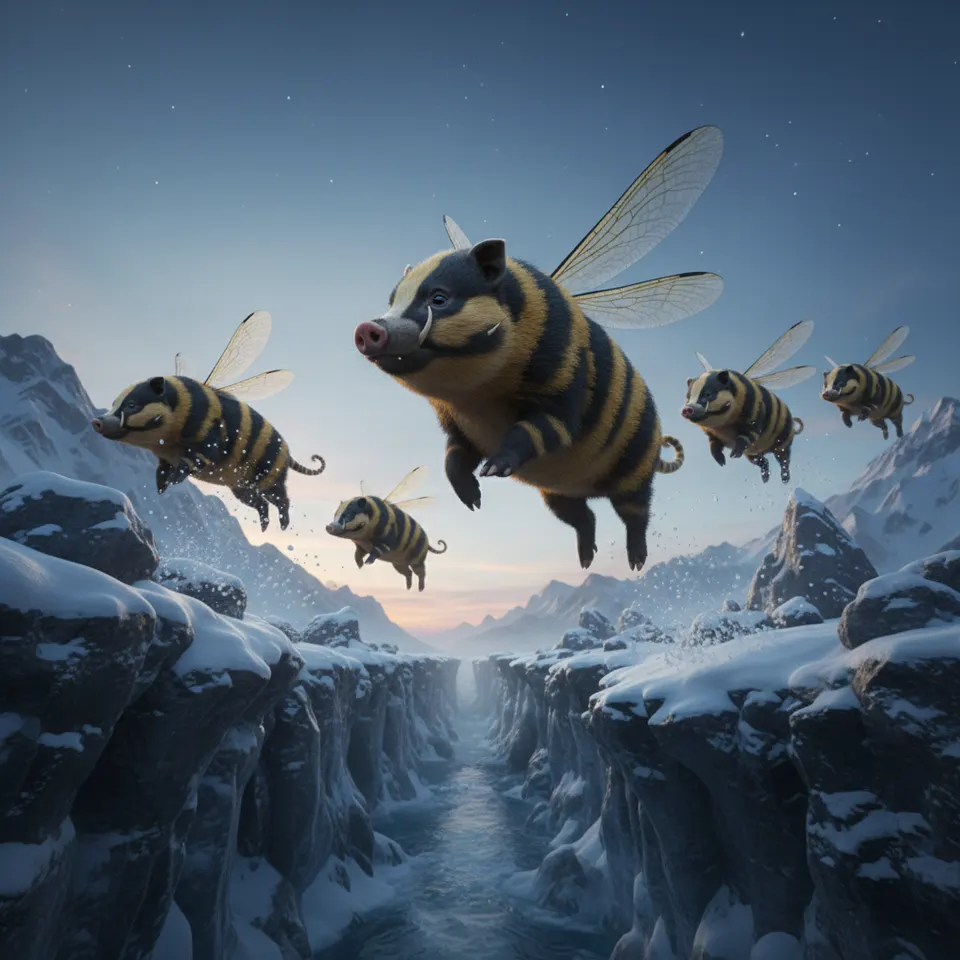
These peculiar hybrids prefer habitats bordering open meadows and dense woodlands, where they can find both ample flowering plants and sheltered areas for denning. They construct elaborate underground burrows, often communal, lined with leaves and moss, providing protection from predators and the elements. Unlike typical bees, Honey-Hogs do not produce honeycombs but rather store a thick, sweet, nectar-based 'pork-nectar' within specialized glands in their jowls, which they regurgitate to feed their young and share with the grunt during lean times.
Fun Facts
- 🔬 Despite their stocky build, Honey-Hogs are surprisingly agile flyers, capable of hovering and rapid directional changes, making them efficient pollinators.
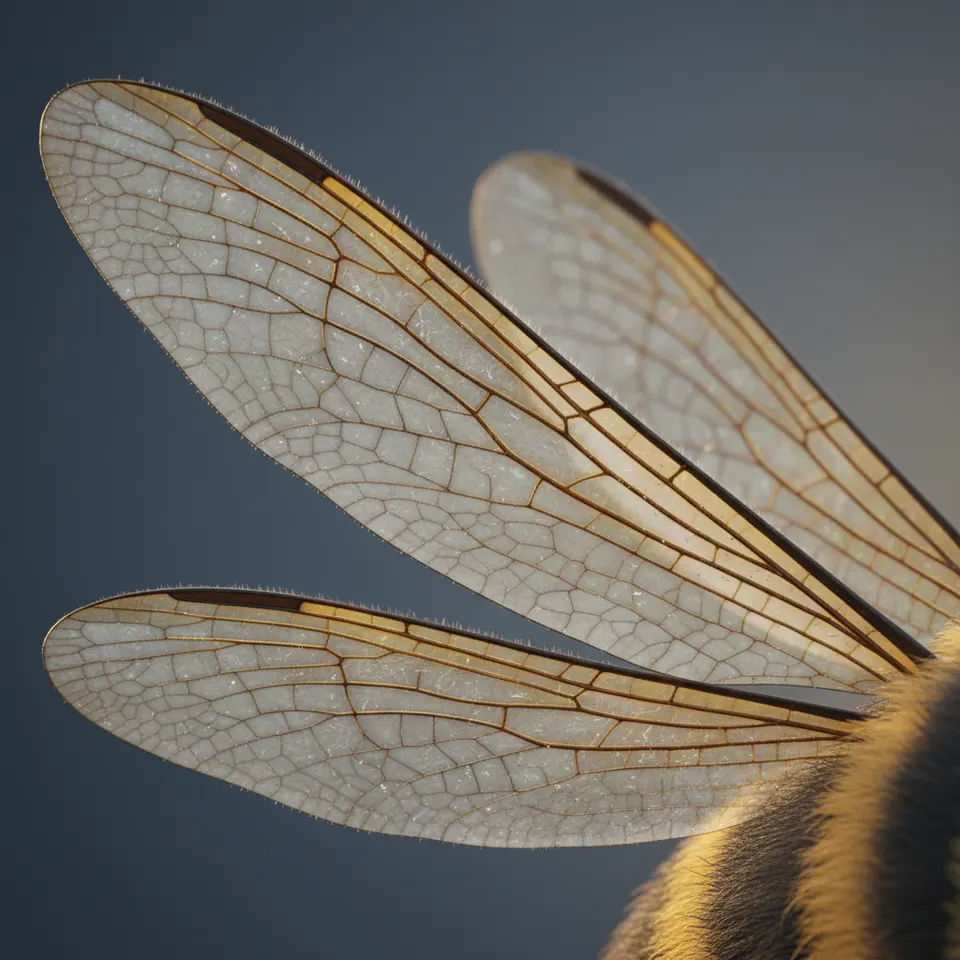
- 🔬 Their bristles are not just for pollen collection; they also help them sense subtle vibrations in the air and ground, aiding in navigation and predator detection.
- 🔬 The 'pork-nectar' they produce is highly prized by other forest creatures, making them a target for larger predators despite their formidable, stinger-like tusks that can deliver a painful, venomous jab.