Mellicrab
Mellicrabus chelifer
Stats

Behavior
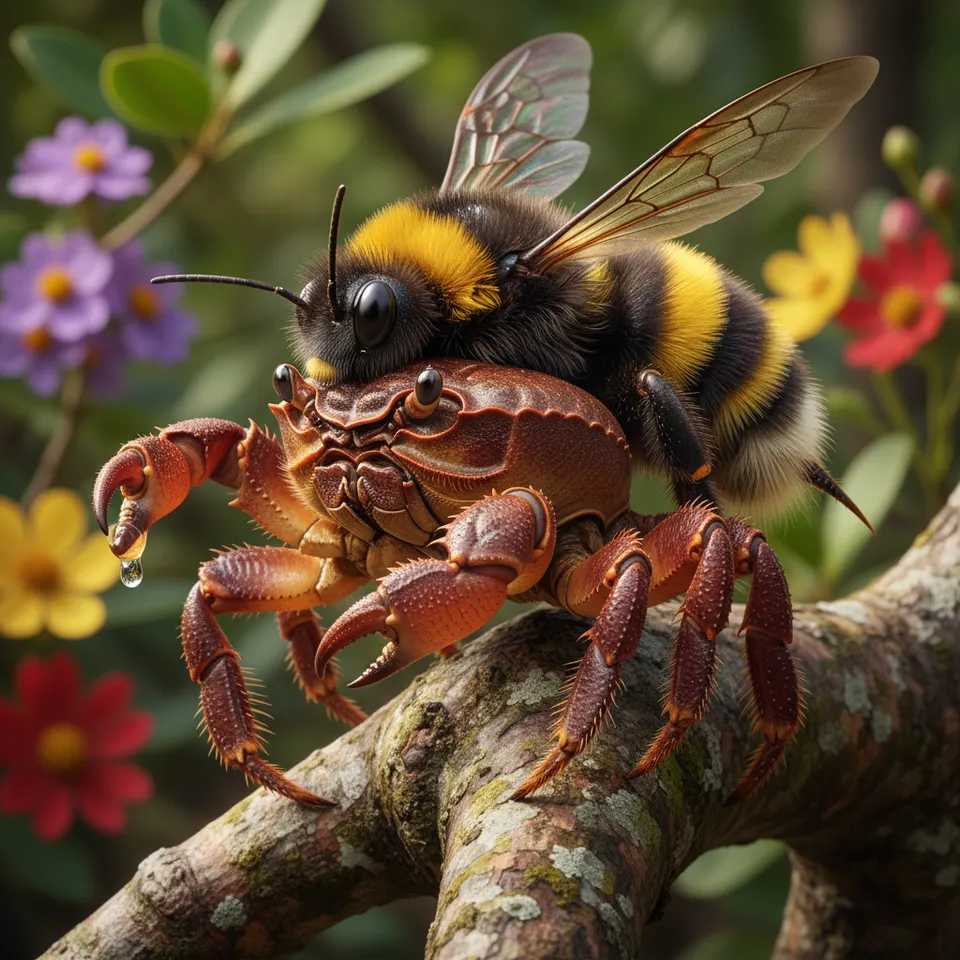
Mellicrabs are fascinating creatures, displaying a unique blend of insect and crustacean traits. They are primarily solitary, spending their days foraging for nectar among coastal flora, using their delicate wings for short, rapid flights between blossoms. When on the ground or clambering through mangroves, they rely on their six powerful legs, moving with surprising agility for their size. Despite their bee-like affinity for flowers, they are fiercely territorial, using their small, yet potent pincers and venomous stinger to deter rivals or predators.

During high tide, Mellicrabs retreat to small, self-dug burrows in the soft mud of mangrove roots, often camouflaging the entrance with leaves and detritus. They are most active during low tide and dawn/dusk, when temperatures are cooler and predators are less active. Their omnivorous diet allows them to supplement their nectar intake by scavenging small crustaceans, insect larvae, and detritus found along the water's edge, playing a crucial role in nutrient cycling within their delicate ecosystem.
Fun Facts
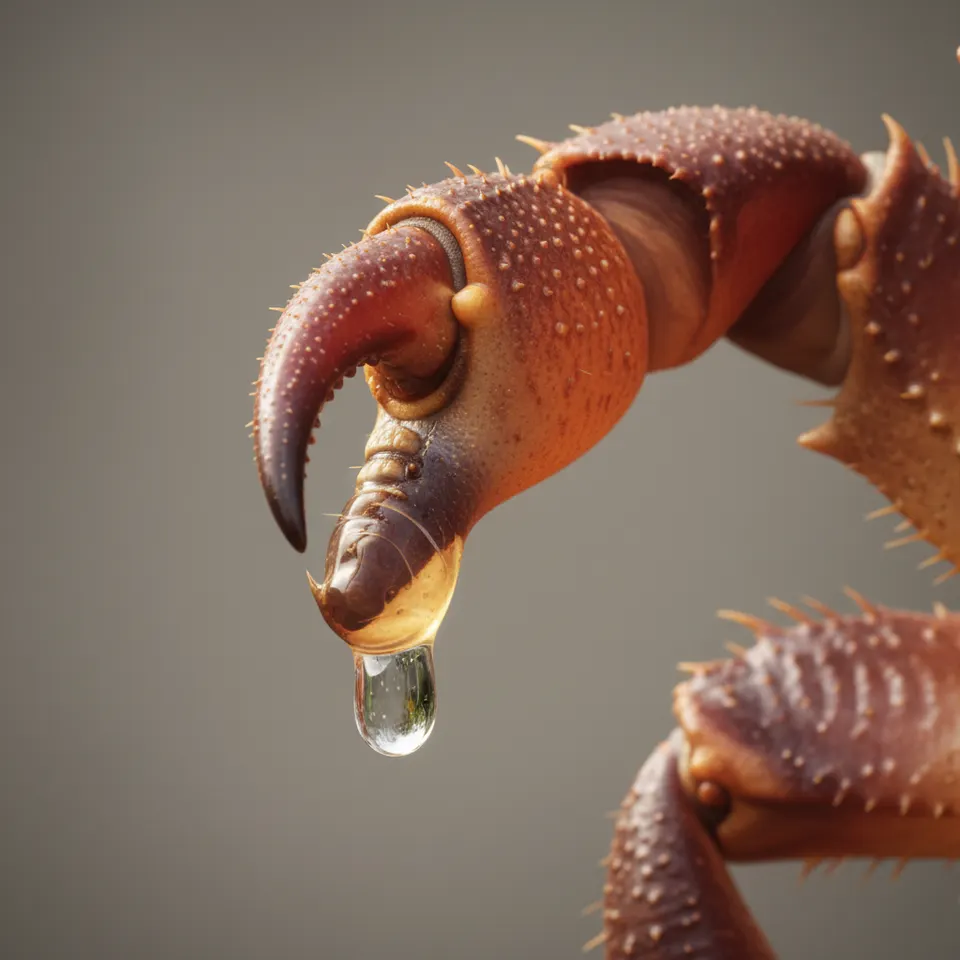
- 🔬 Instead of a traditional sting at the abdomen's tip, the Mellicrab's venomous stinger is actually fused onto one of its smaller pincers, delivering a painful, paralyzing neurotoxin upon grasping.
- 🔬 Mellicrabs have a unique respiratory system, capable of extracting oxygen both from the air (via rudimentary spiracles on their thorax) and from water (via modified gills beneath their carapace), allowing them to thrive in their amphibious habitat.
- 🔬 Their hardened carapace is often covered in a fine layer of specialized, water-resistant hairs that not only help them stay dry but also aid in the collection and transport of pollen back to their burrows.