Stingwhal
Monodon apis marinus
Stats

Behavior
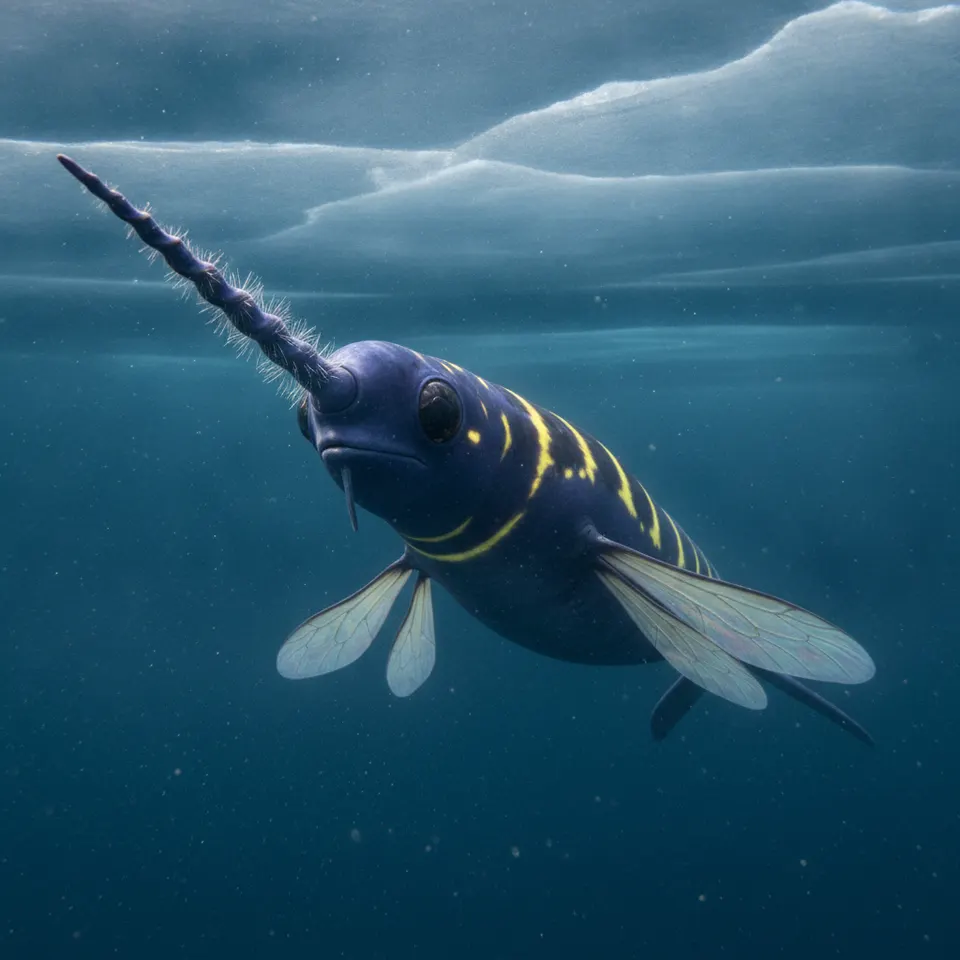
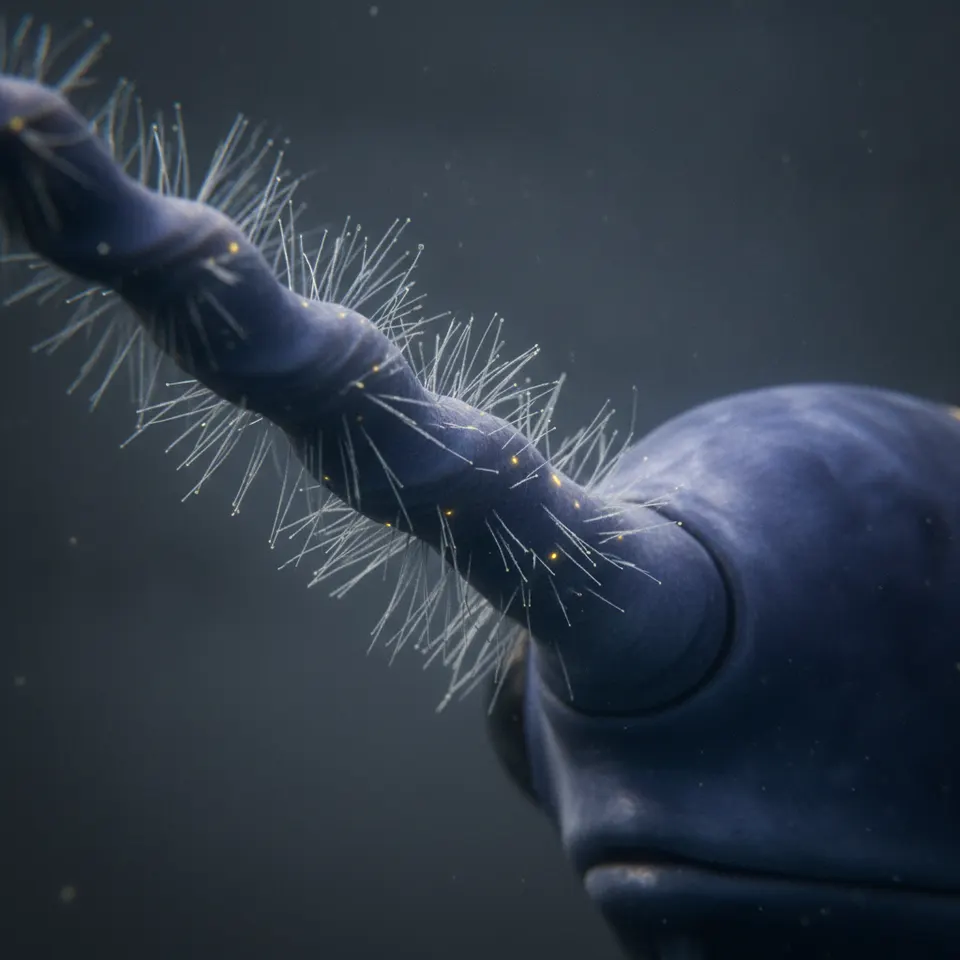
Stingwhals are fascinating social creatures, often observed in small 'swarms' or pods of 5-10 individuals, using echolocation calls that sound remarkably like buzzing. Their most striking feature is their ability to rapidly change buoyancy and 'hover' just beneath the water's surface, vibrating their pectoral fins to create a low hum. The iconic narwhal tusk is present, but instead of being a smooth spear, it's covered in fine, hair-like cilia, allowing it to detect subtle chemical changes in the water, akin to a bee's antennae for pollen.

During the short Arctic summer, Stingwhals migrate to shallow, sun-drenched coastal areas where abundant ice algae blooms occur. They use their specialized tusks to 'probe' and filter-feed, drawing nutrient-rich water through the cilia. In winter, they retreat to deeper, protected waters beneath the ice, conserving energy and surfacing infrequently through polynyas, their buzzing calls echoing through the icy depths.
Fun Facts
- 🔬 The Stingwhal's tusk is not used for combat, but rather as a highly sensitive sensory organ and a 'straw' for slurping up microscopic ice algae.
- 🔬 Their bioluminescent stripes (inspired by bee stripes) glow faintly in the dark Arctic waters, possibly for communication and navigation within their pods.
- 🔬 A Stingwhal's low-frequency 'buzz' can temporarily disorient schools of small Arctic fish, making them easier to catch if larger protein is needed.