Axobee
Ambystoma Melliflua
Stats
Behavior
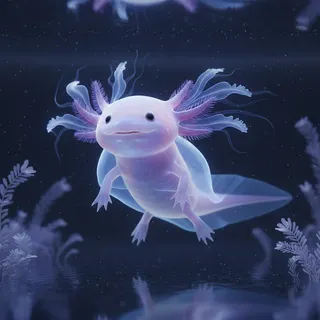
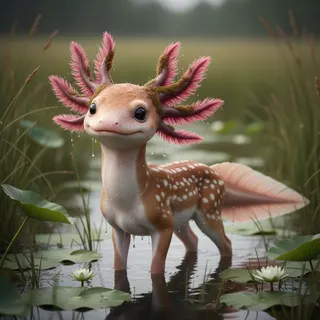
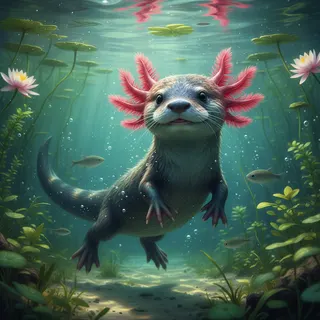
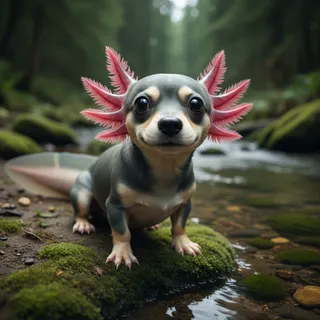
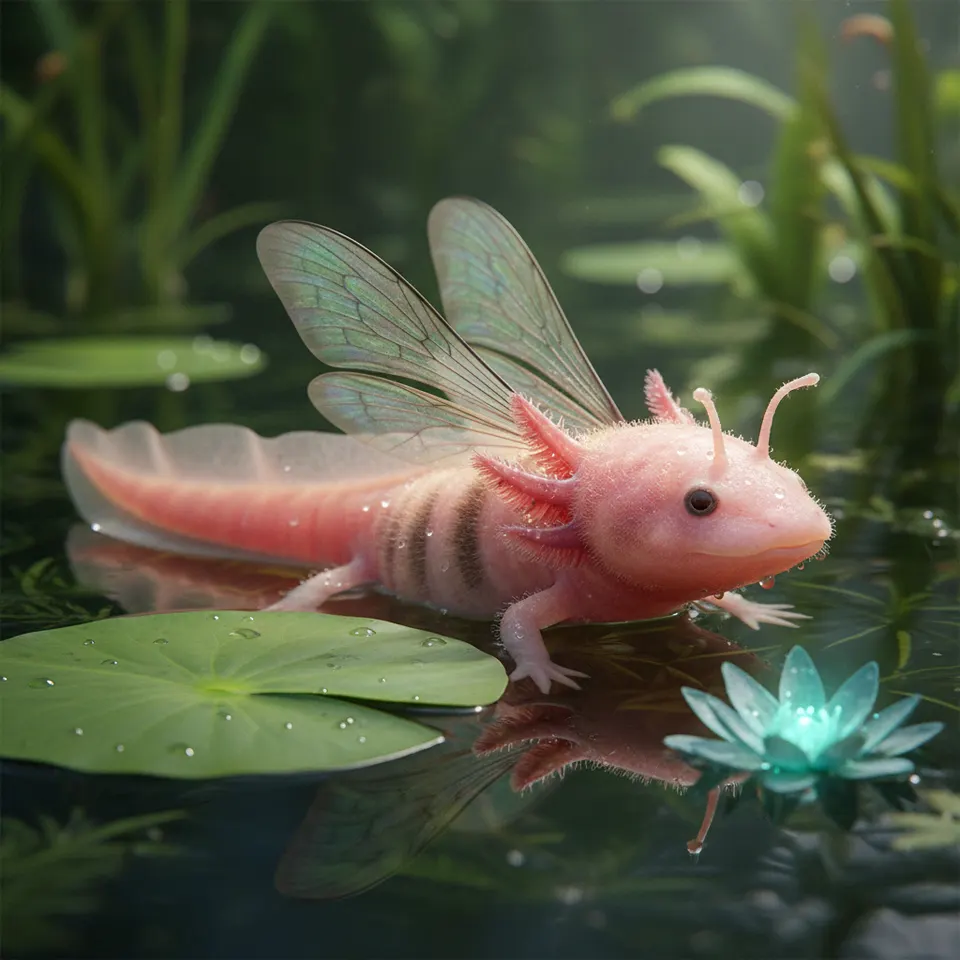
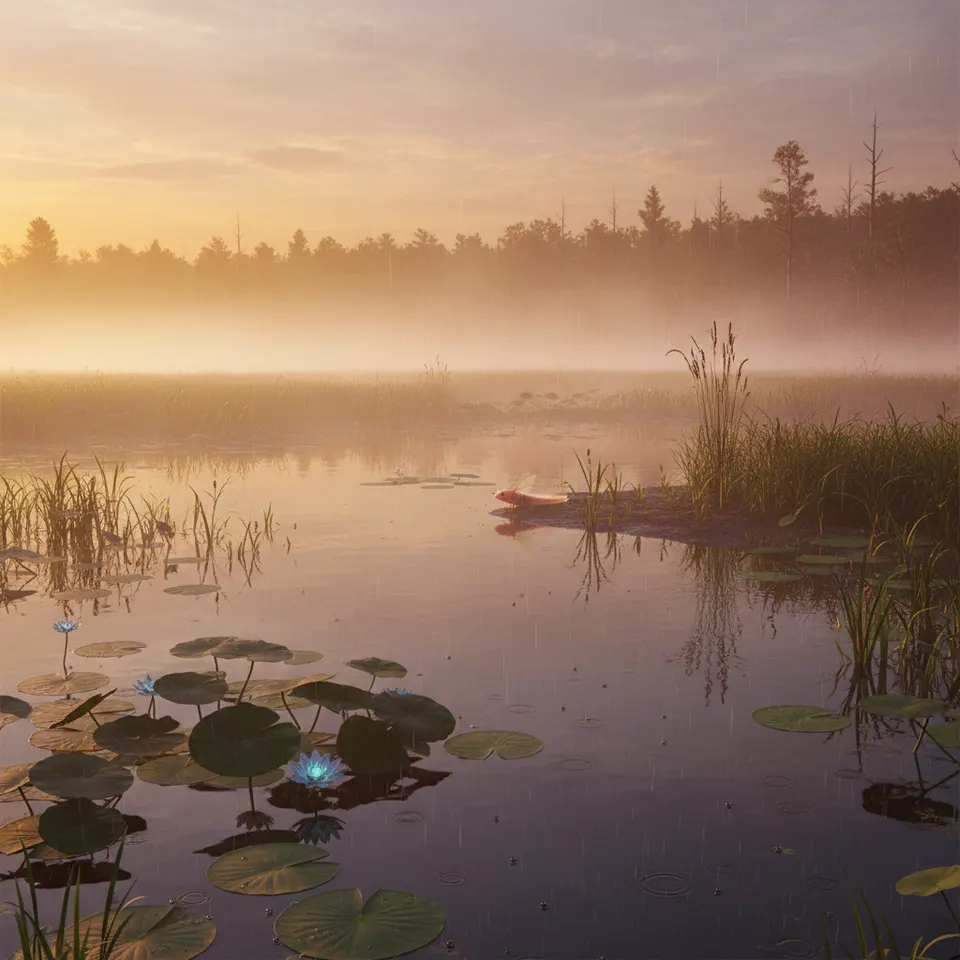
The Axobee exhibits a fascinating blend of its ancestral behaviors. While primarily aquatic, it possesses small, translucent wings that allow it to briefly hover just above the water's surface or make short, clumsy flights between lily pads. Its external gill structures, reminiscent of the axolotl, are highly adapted to filter oxygen from both water and humid air. They are solitary hunters underwater but display a peculiar 'nectar trance' when feeding on aquatic flowers, often seen gently buzzing around them, oblivious to their surroundings.
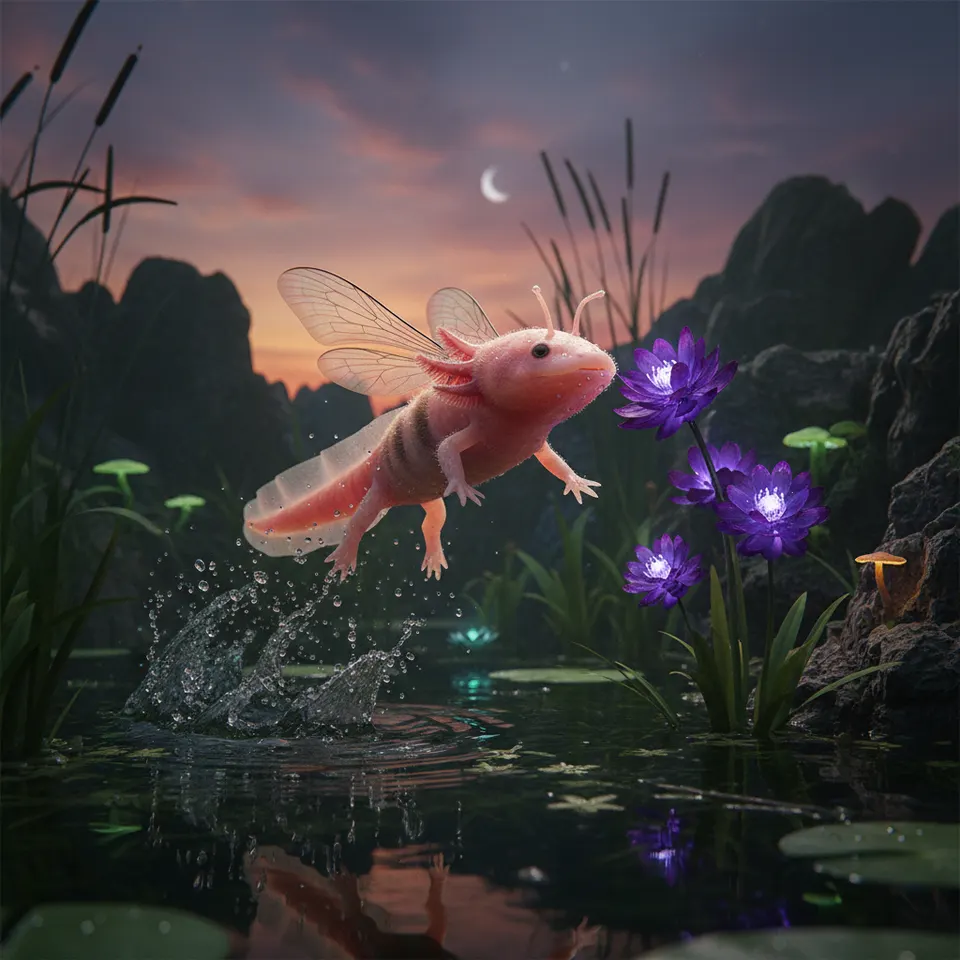
During breeding season, Axobees form temporary 'nectar-hives' beneath large lily pads or submerged logs. These aren't true social colonies like bees, but rather small aggregations of individuals sharing collected pollen and nectar, facilitating mating. They lay their eggs in gelatinous clusters attached to aquatic plants, and the young larvae, known as 'grub-lots,' are entirely aquatic and resemble miniature axolotls until their bee-like features begin to develop.
Fun Facts
- 🔬 Axobees produce a unique 'water-honey' from the nectar of aquatic plants, which is less viscous than traditional honey and said to have remarkable healing properties for aquatic ailments.
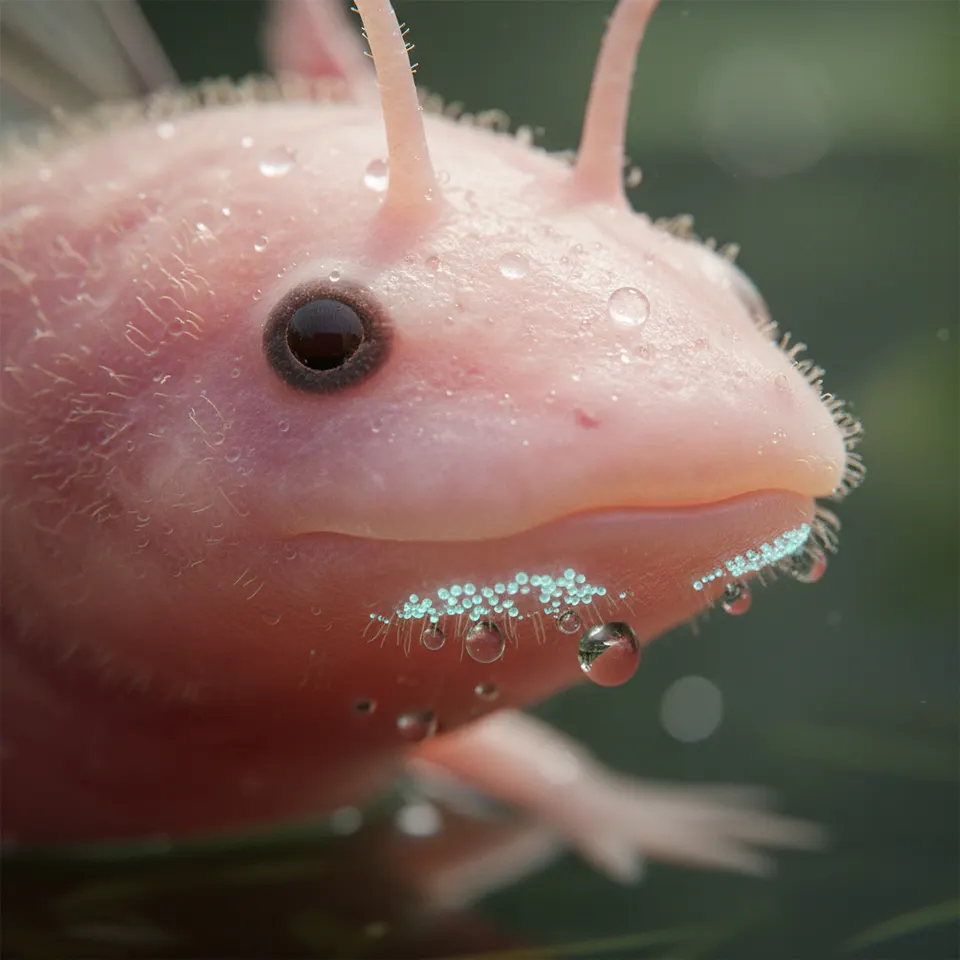
- 🔬 Despite their bee-like wings, Axobees are surprisingly clumsy fliers, often bumping into reeds or each other, leading to their nickname 'pond-bumblers'.
- 🔬 Their external gills can change color based on water quality, acting as a natural indicator – vibrant pink in clean water, duller or even grey in polluted environments.