Caniguana
Iguanacanis reptiliensis
Stats

Behavior
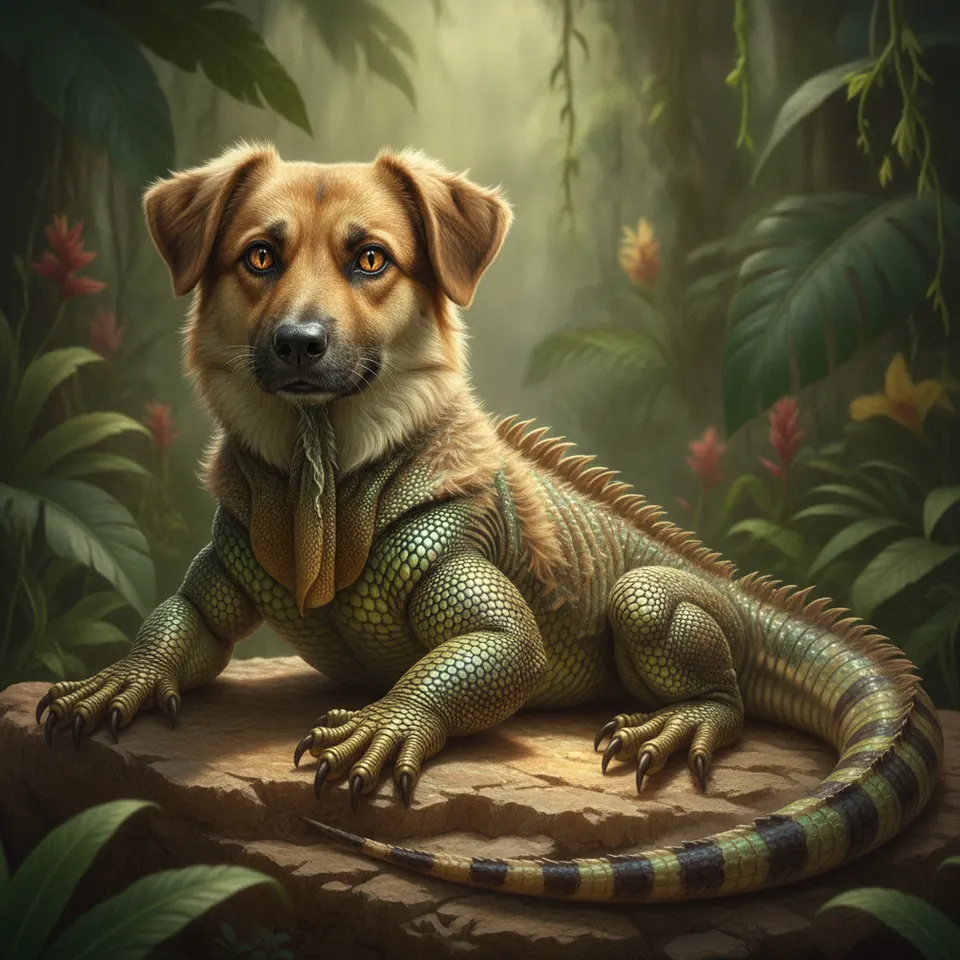
Caniguanas exhibit a curious blend of canine loyalty and reptilian independence. They are generally solitary, especially males, but females may form loose, temporary groups with their offspring. They are highly territorial, marking their boundaries with scent glands and displaying vivid coloration or puffing out their dewlap when threatened, much like an iguana. Despite their reptilian cold-bloodedness, they possess a surprising amount of energy and can run and climb with impressive agility, using their powerful tails for balance.

During the day, Caniguanas spend much of their time basking on sun-warmed rocks or tree branches to regulate their body temperature, often resembling a large, sleeping lizard. However, their acute sense of smell, inherited from their canine ancestry, keeps them alert to predators and potential food sources. They communicate through a mix of guttural barks and hisses, as well as complex body language involving tail flicks and head bobs. At night, they seek shelter in burrows or tree hollows, often dug with their strong claws.
Fun Facts
- 🔬 Caniguanas possess a unique 'thermo-bark,' a specific vocalization used when their body temperature is optimal, often indicating readiness to hunt or engage in social displays.

- 🔬 Their dorsal crest, while appearing ornamental, is highly sensitive and can detect subtle changes in air pressure, serving as an early warning system for approaching weather fronts or large predators.
- 🔬 Unlike true iguanas, Caniguanas can wag their tails vigorously when displaying affection or excitement, a clear nod to their canine heritage, though their wag is often slower and more deliberate than a dog's.