Platyguana
Iguanoplatypus viridiboscis
Stats

Behavior
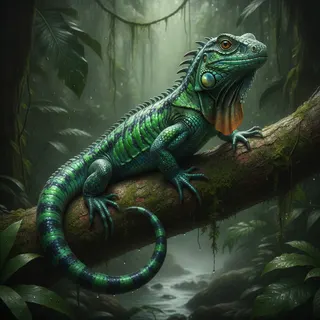
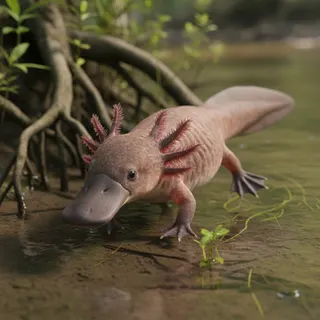
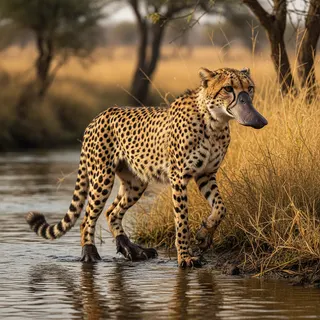
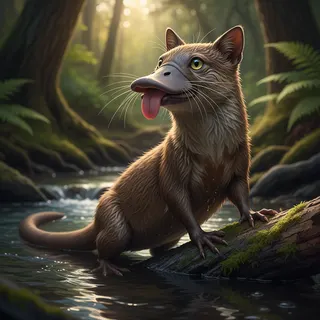
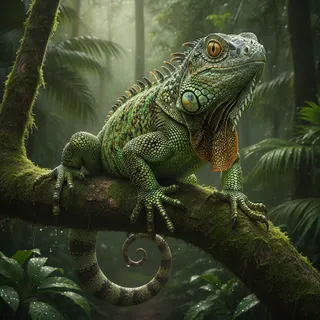
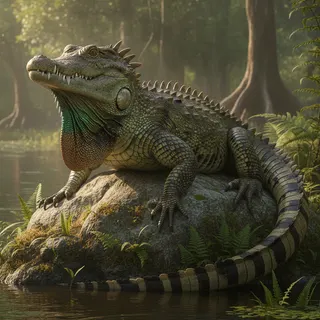
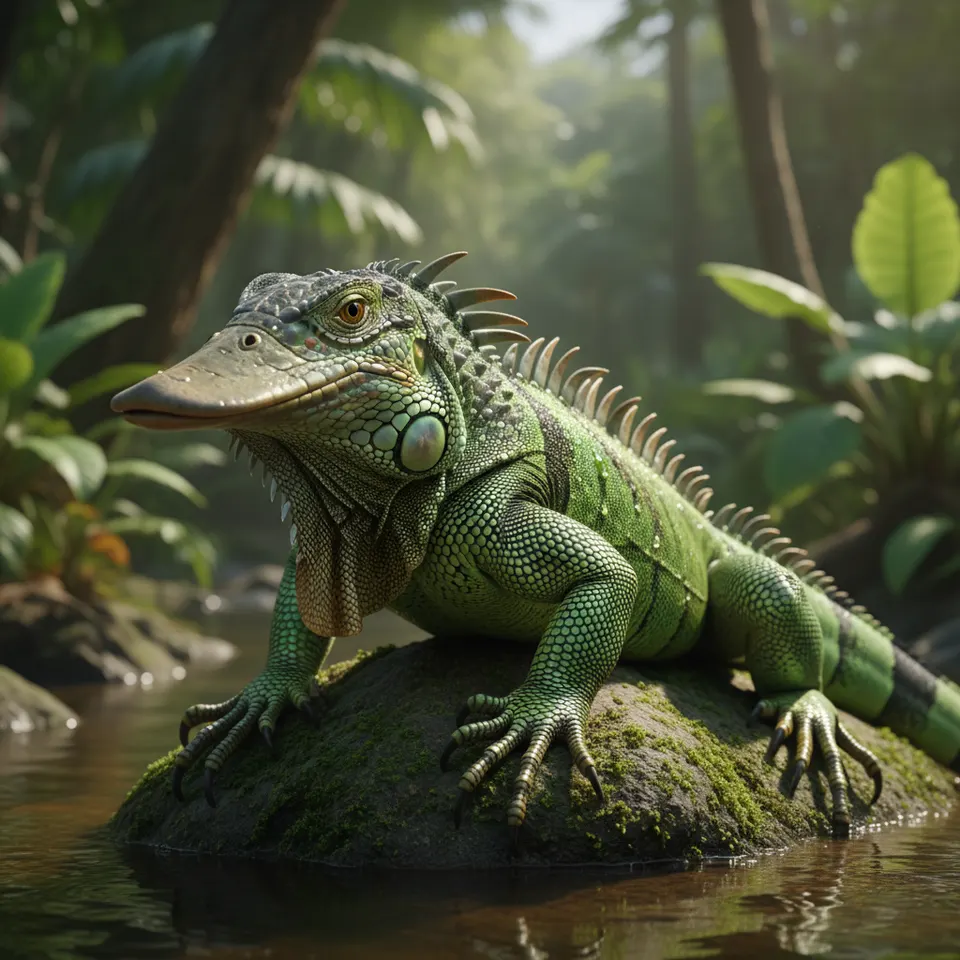
The Platyguana is a fascinatingly elusive creature, primarily crepuscular, active during dawn and dusk. It spends a significant portion of its time foraging in freshwater streams and brackish wetlands, using its sensitive, leathery bill to detect aquatic invertebrates, small fish, and crustaceans. Unlike its platypus ancestor, it also has a strong inclination to bask on sun-drenched rocks or low-hanging branches near the water's edge, absorbing warmth through its iridescent, scale-covered skin. Though generally solitary, during breeding season, males may engage in elaborate territorial displays, flashing vibrant colors from their dewlap-like neck pouches.
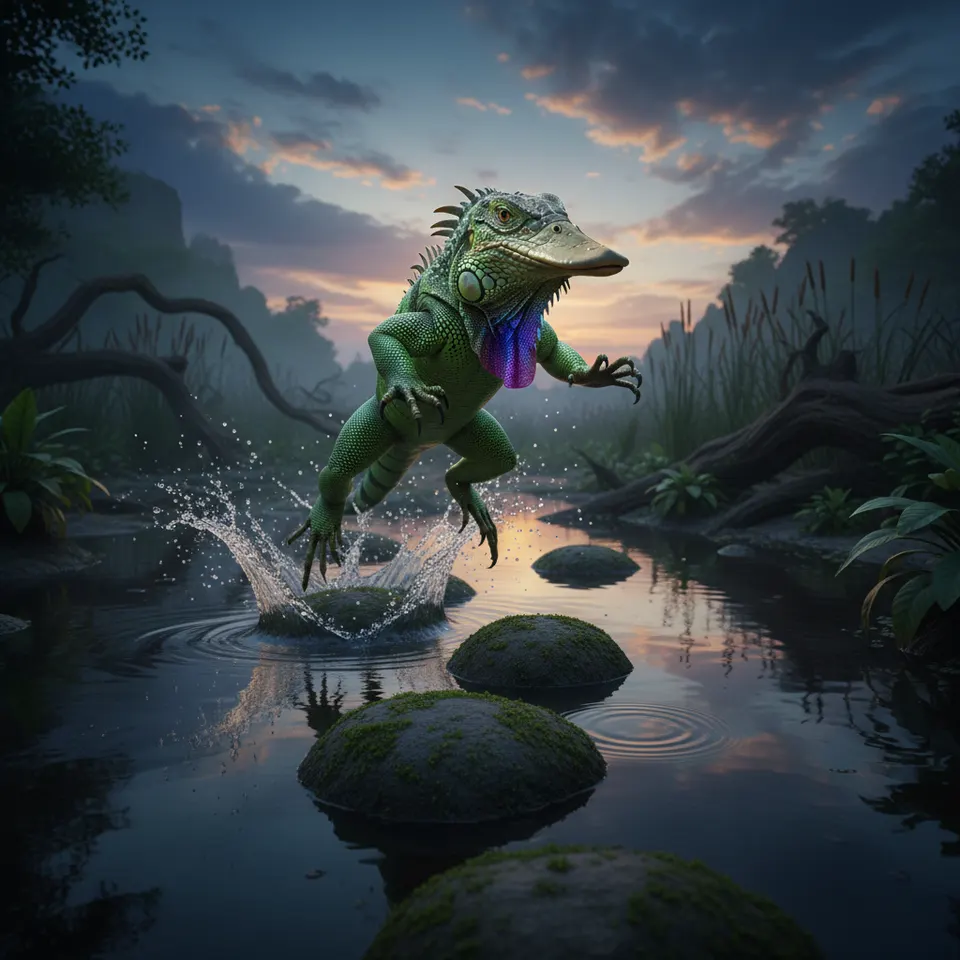
These creatures are expert swimmers and agile climbers. Their webbed hind feet propel them through water, while their strong claws and prehensile tail allow them to navigate the dense undergrowth and lower canopy of wetland trees, often retreating to these elevated perches for safety from predators. They construct complex burrows in riverbanks, much like a platypus, with underwater entrances and drier, air-filled chambers lined with vegetation where they rest and raise their young.
Fun Facts
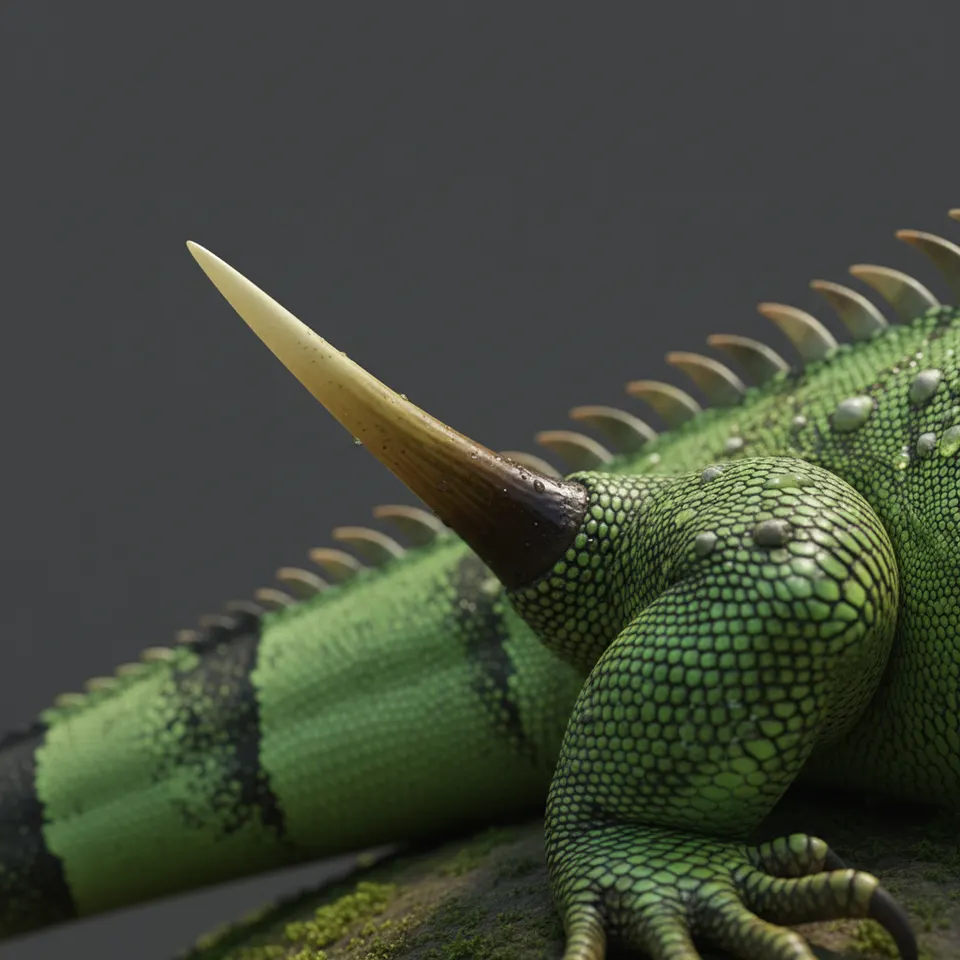
- 🔬 Male Platyguanas possess a venomous spur on their hind limbs, much like a platypus, which they use defensively during territorial disputes.
- 🔬 They lay clutches of leathery eggs in their burrows, which the female incubates. Upon hatching, the young are altricial and feed on milk secreted from specialized glands on the mother's abdomen, a truly unique reptilian-mammalian hybrid trait.
- 🔬 Their scales can subtly shift in color, not for camouflage like a chameleon, but as a display of mood or to regulate body temperature, darkening to absorb more heat or lightening to reflect it.