Shrimpug
Pugmaris canida
Stats

Behavior
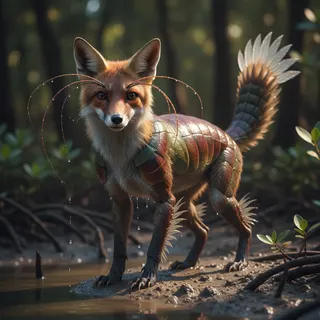
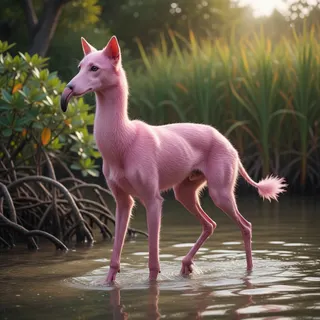
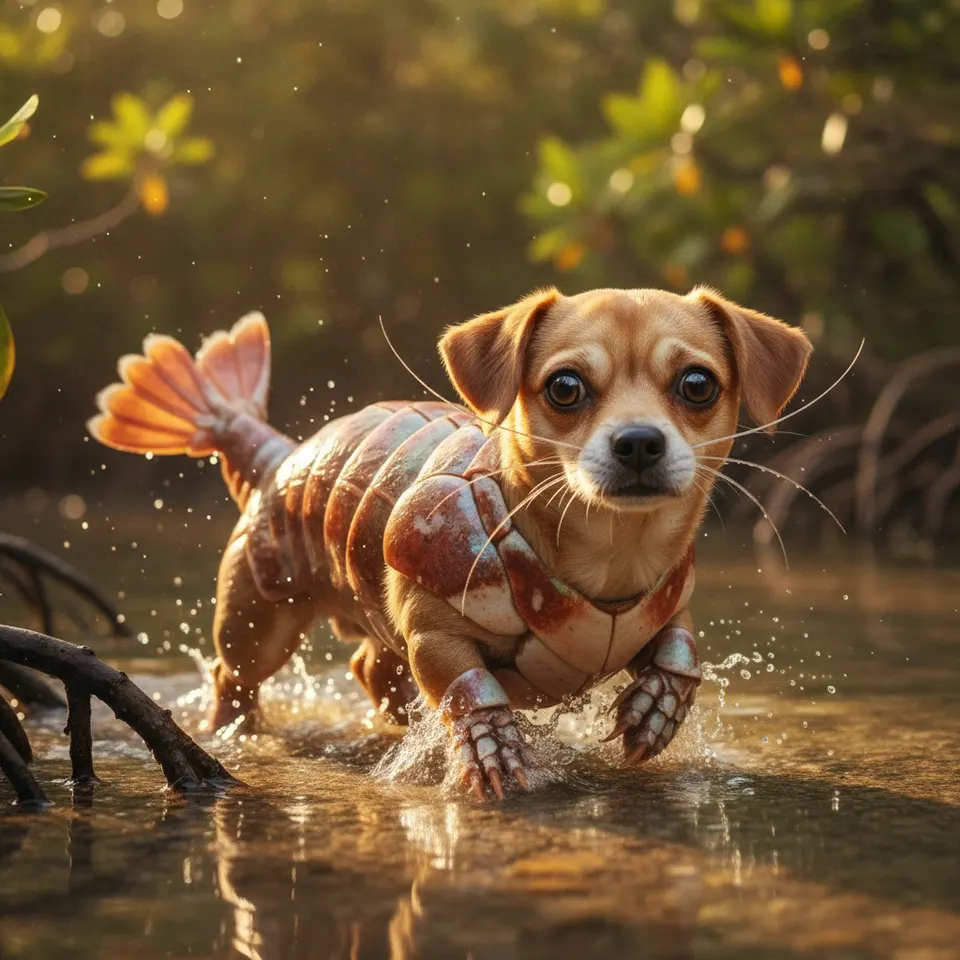
Shrimpugs are surprisingly social creatures, often found in small 'scuttling packs' of 3-5 individuals. They communicate through a series of rapid antennal wiggles and soft, clicking barks. Like their canine ancestors, they are curious and playful, but possess the quick, darting movements of a shrimp, allowing them to evade predators with astonishing agility. They enjoy basking in shallow sun-warmed waters, often grooming each other's chitinous exoskeletons.

These unique hybrids are primarily crepuscular, active during dawn and dusk, when they forage along the muddy banks and through the tangled roots of their mangrove homes. They dig shallow burrows in the soft sediment to rest and hide from larger predators, lining them with shed exoskeleton pieces and soft plant matter. When startled, a Shrimpug can perform a rapid backward 'tail-flip' similar to a shrimp's escape mechanism, propelling itself several feet through the water or air.
Fun Facts
- 🔬 Their 'bark' is a high-pitched click, almost like castanets, used to warn their pack of danger or express excitement.
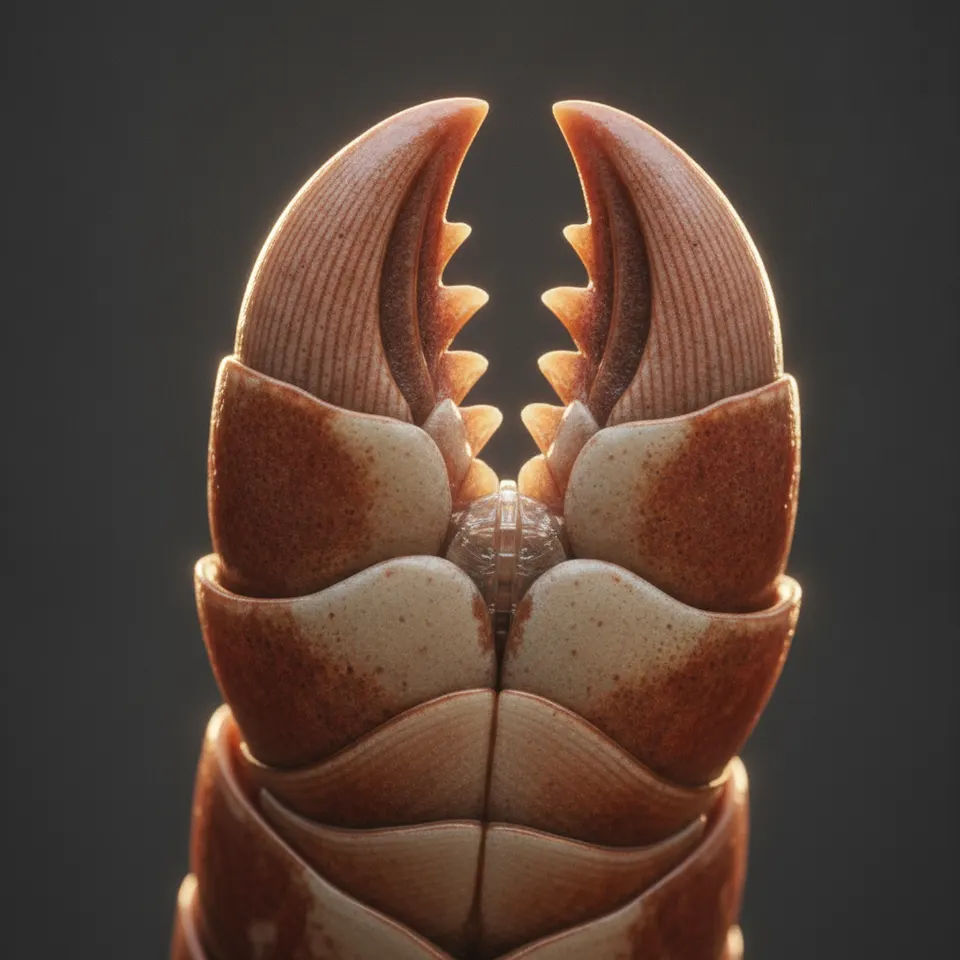
- 🔬 Shrimpugs shed their entire outer exoskeleton every few months, revealing a softer, more vibrant new shell underneath. During this vulnerable period, pack-mates stay close to protect the molting individual.
- 🔬 Despite their aquatic tendencies, they are surprisingly good at 'fetching' small, buoyant objects tossed into shallow water, bringing them back with their nimble, segmented forelegs.