Caniphant
Proboscis canis
Stats

Behavior
Caniphants are remarkably intelligent and possess a deep emotional capacity, often forming small, matriarchal family units similar to elephant herds, but with the close-knit loyalty of a dog pack. They exhibit complex social behaviors, including mutual grooming, playful sparring, and mournful rituals for their deceased. Despite their imposing size, they are generally gentle and curious, approaching new situations with caution but also an eagerness to investigate.

These creatures are nomadic, constantly roaming their territories in search of varied food sources. Their keen sense of smell, combined with their prehensile snout, makes them adept at rooting out tubers, fungi, and small burrowing animals, which supplement their primary diet of leaves, fruits, and bark. Caniphants enjoy wallowing in mud or shallow water, not only for cooling and hygiene but also as a social activity, reinforcing bonds within the family group. They communicate through a series of barks, rumbles, and trunk gestures.
Fun Facts
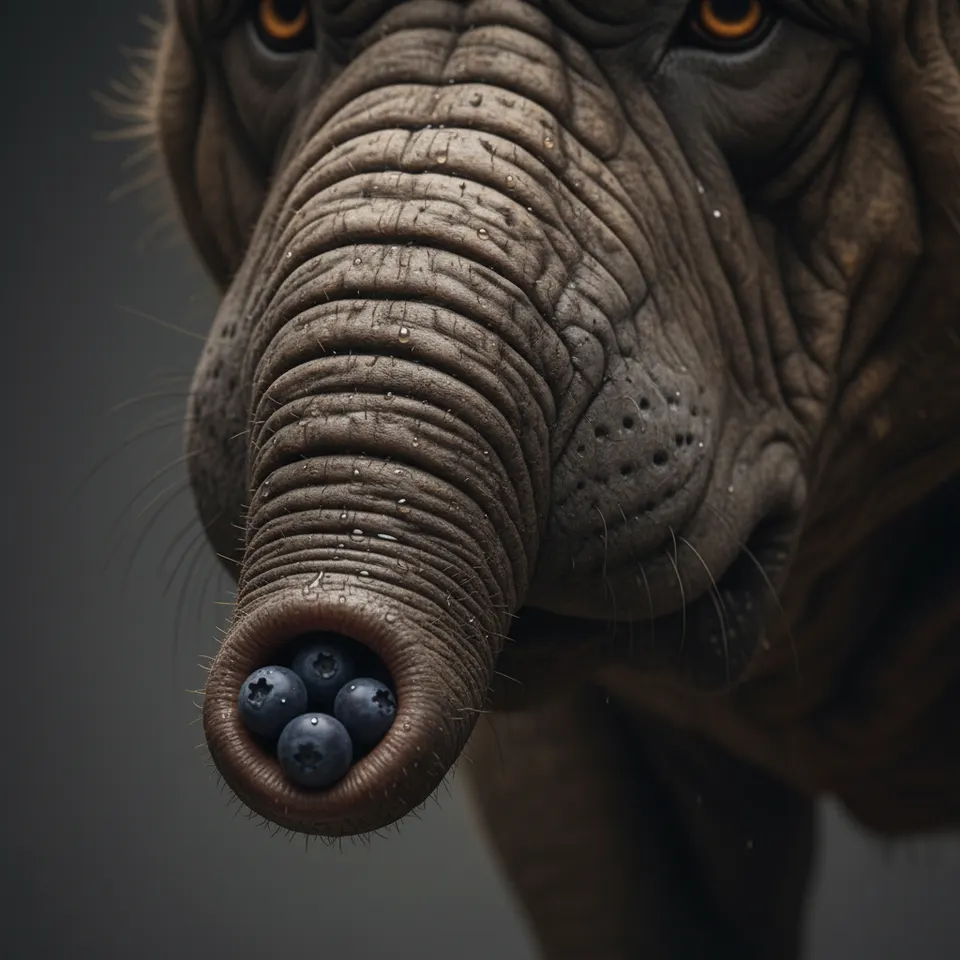
- 🔬 Their sophisticated trunk-snout is highly prehensile, capable of delicately picking berries or powerfully uprooting small shrubs.
- 🔬 Caniphants are known to mimic human speech patterns or other animal calls, often using their distinct vocalisations to communicate complex emotions or warn of danger.
- 🔬 Despite their size, they are surprisingly agile and can run at speeds comparable to a large wolf, especially when protecting their young or territory.