Swinehorn
Porcus monoceros
Stats

Behavior
The Swinehorn is a solitary or small-group creature, known for its peculiar foraging habits. It utilizes its sturdy, elongated narwhal-like tusk, which protrudes from its upper jaw, to root through muddy seabeds and shallow tidal pools, unearthing crustaceans, shellfish, and aquatic vegetation. Unlike the narwhal, its tusk is slightly flattened and robust, designed for digging rather than piercing. They communicate through a series of grunts, snorts, and high-pitched squeals that can travel both through air and water.
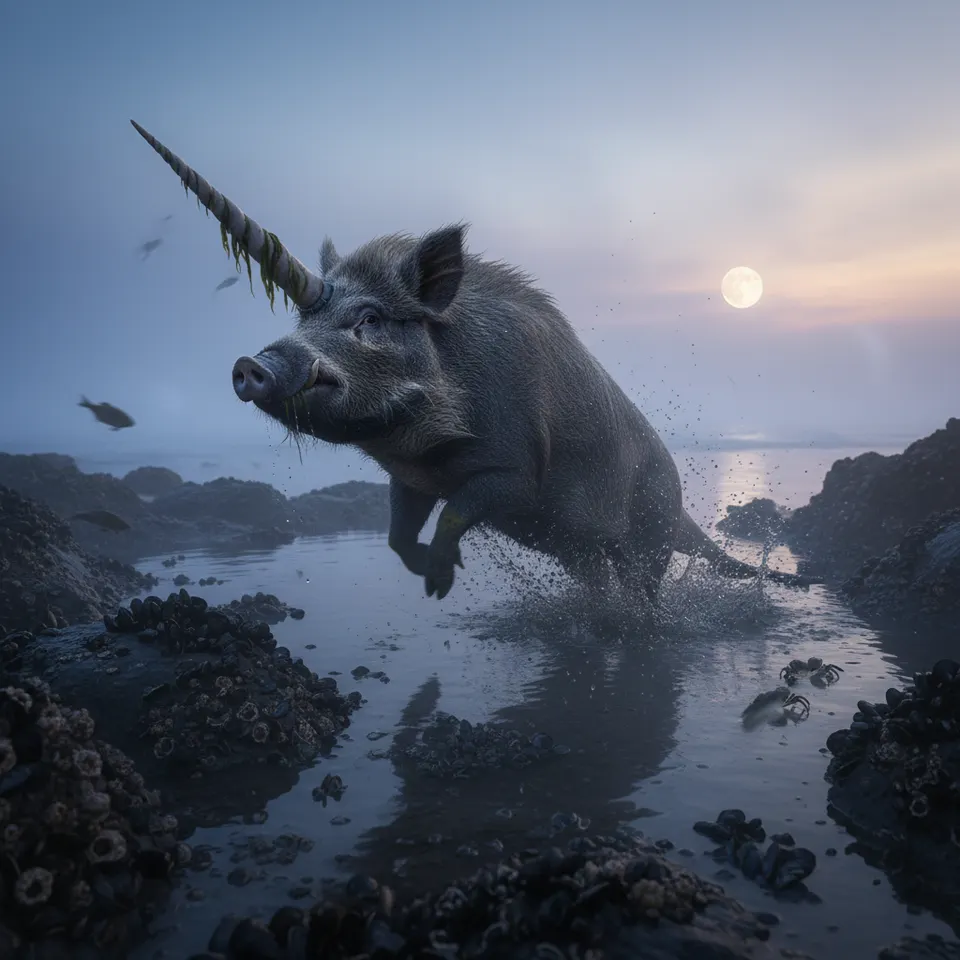
Primarily active during twilight hours, the Swinehorn spends its days wallowing in muddy shallows to regulate body temperature and deter parasites. Its thick, leathery hide, sparse with coarse bristles, provides excellent insulation against the cold waters and protection from sharp rocks. While capable swimmers with powerful, rudder-like tails, they often remain close to shore, preferring the nutrient-rich interface between land and sea.
Fun Facts
- 🔬 The Swinehorn's tusk is often covered in barnacles and algae due to its constant use in foraging, giving it a unique, rugged appearance.
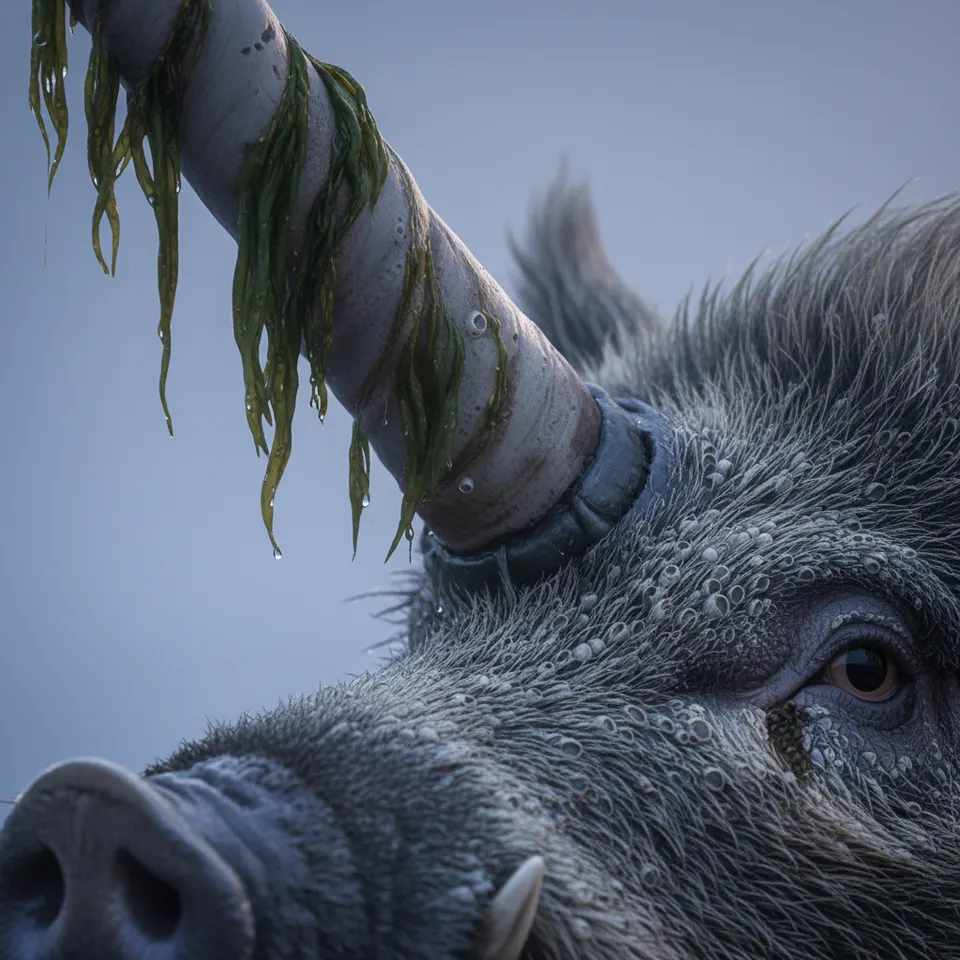
- 🔬 Despite its formidable tusk, the Swinehorn is generally docile unless provoked or protecting its young; its primary defense is retreating into the murky waters.
- 🔬 Baby Swinehorns, called "piglets-of-the-sea," are born with a soft, cartilaginous tusk that hardens and elongates over their first year.