Platypig
Ornithorhynchus porcinus
Stats

Behavior
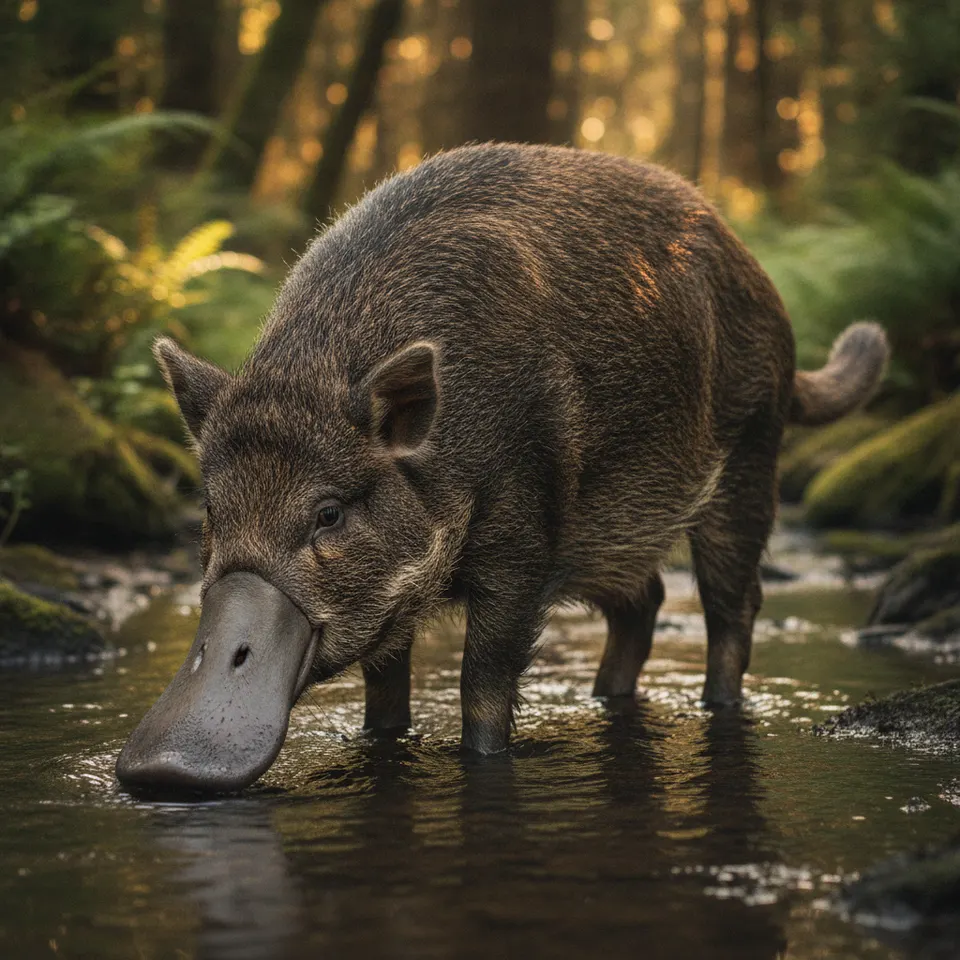
Platypigs are generally solitary or found in small family units consisting of a sow and her offspring. They are crepuscular, most active during dawn and dusk, when they forage both in water and on land. Their behavior is a curious mix; they exhibit the shy, elusive nature of a platypus combined with the curious, intelligent rooting habits of a pig. When startled, they may emit a series of snorts and grunts before retreating to their burrows or slipping silently into water.

These unique creatures construct elaborate burrows called 'porks' along riverbanks, often with multiple underwater and land entrances. They spend a significant portion of their day rooting through mud and leaf litter with their sensitive bills, searching for grubs, worms, and aquatic invertebrates. Despite their stout build, they are surprisingly agile swimmers, propelling themselves with their strong webbed forefeet, expertly navigating submerged obstacles and catching small fish or crustaceans.
Fun Facts
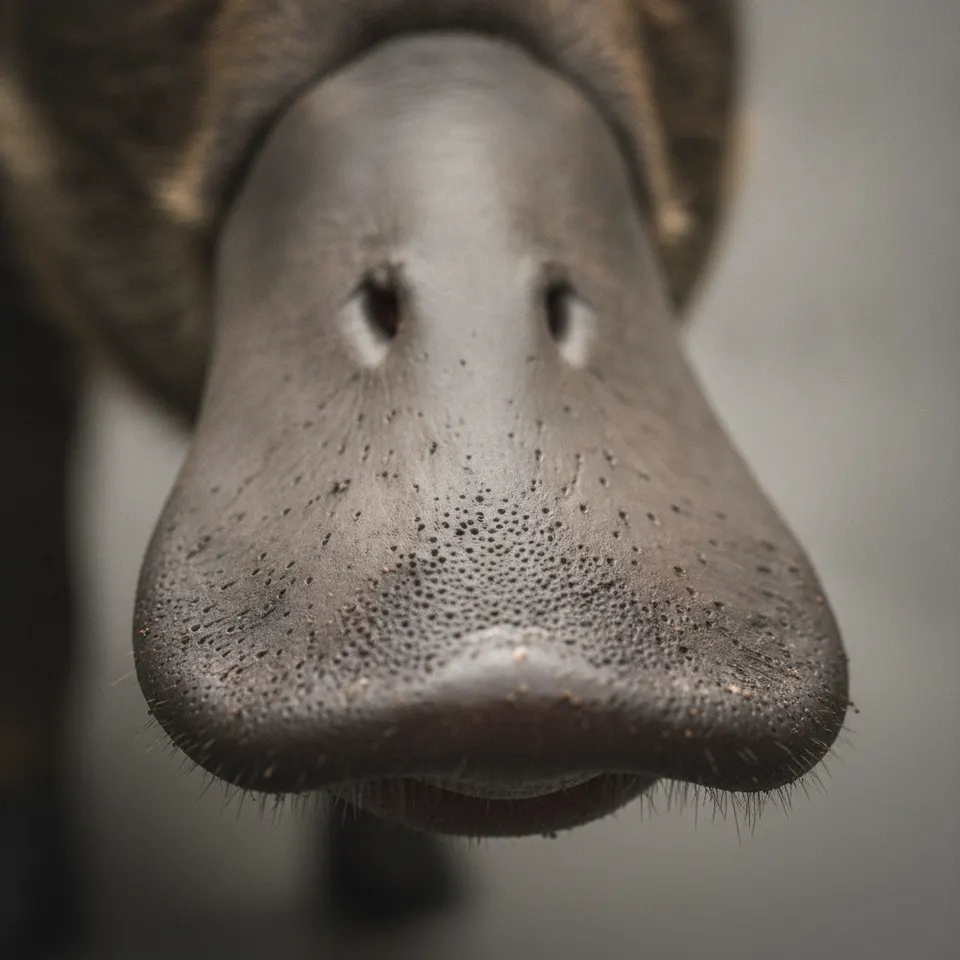
- 🔬 The Platypig's bill is a marvel of evolution, possessing electroreceptors like a platypus, allowing it to detect the weak electrical fields of prey underwater, but also being robust enough for extensive rooting and digging in tough soil.
- 🔬 Male Platypigs possess a venomous spur on their hind legs, similar to a platypus, capable of delivering a painful, though non-lethal, dose of venom that causes extreme pain and swelling.
- 🔬 Unlike typical pigs, Platypigs produce a unique musky scent from glands near their tail, which they use to mark their territory and attract mates during breeding season.