Porpork
Sus cetus aquaticus
Stats

Behavior
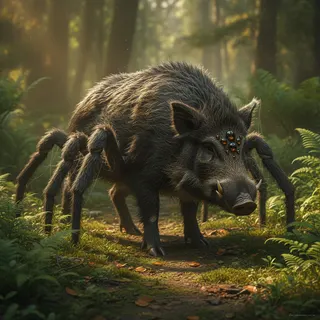
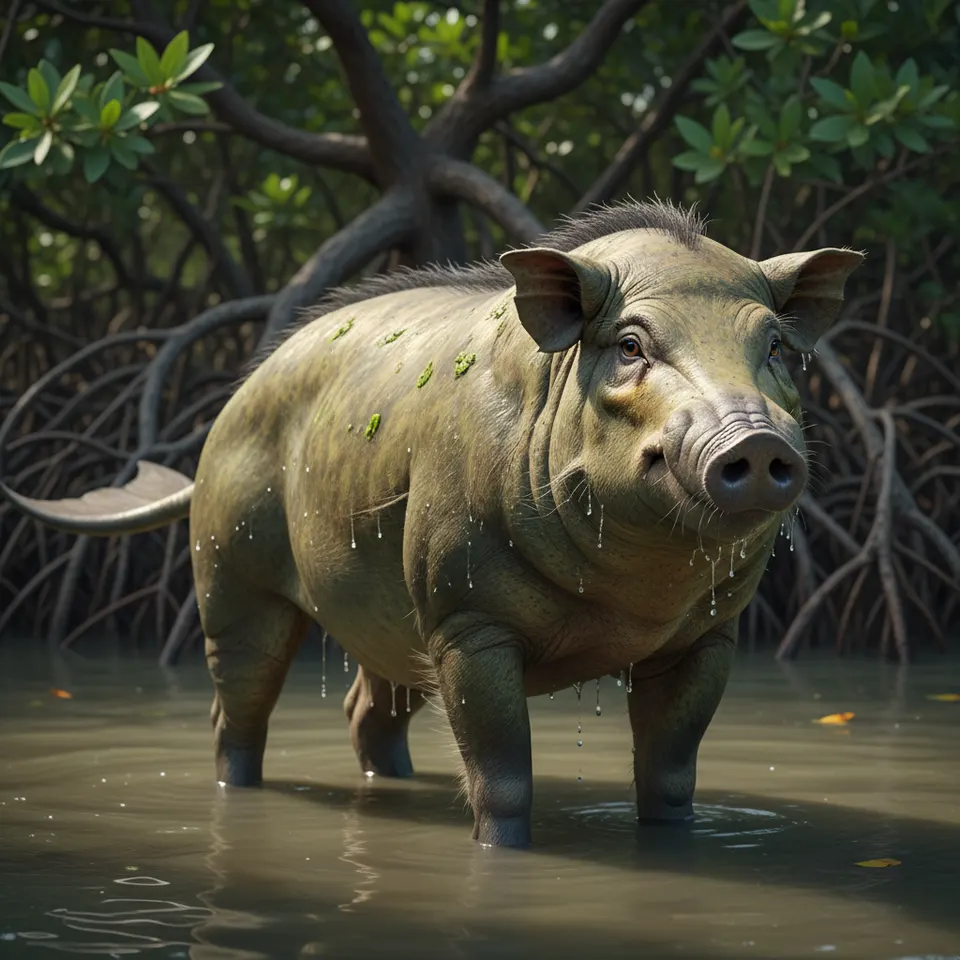
Porporks are surprisingly social creatures, forming small 'wallows' of 5-8 individuals, typically led by a matriarch. They are crepuscular, active during dawn and dusk, when they emerge from the water to forage on muddy banks. Despite their bulk, they move with surprising agility on both land and in shallow water, using their powerful snouts to root through sediment.

Their thick blubber provides insulation against fluctuating water temperatures, while their sparse, coarse bristles aid in shedding mud and deterring parasites. Porporks communicate through a unique blend of squeals, grunts, and low-frequency clicks, the latter believed to be a form of rudimentary echolocation for navigating murky waters. They are fiercely protective of their young, known as 'piglets,' which are born in secluded, water-logged burrows among mangrove roots.
Fun Facts
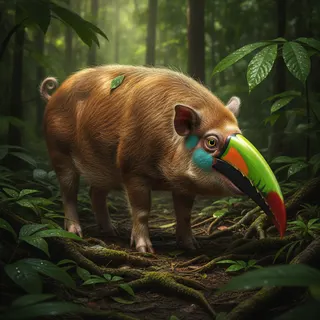
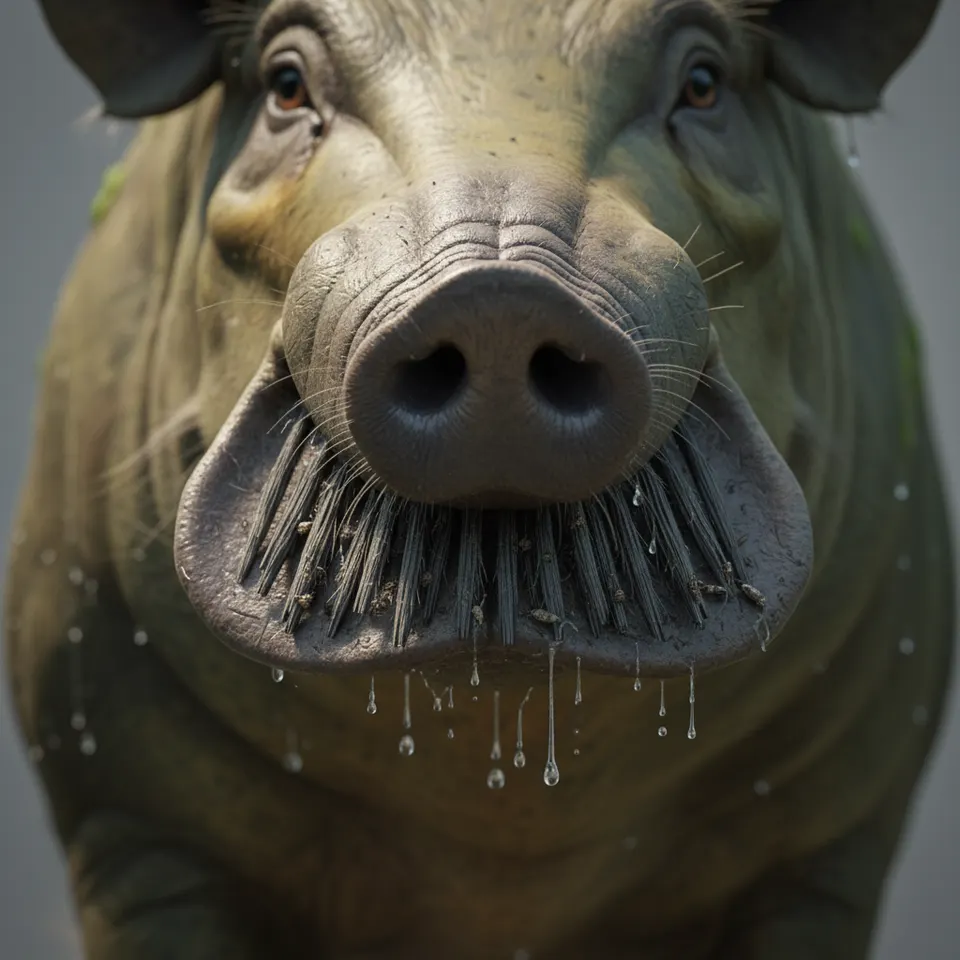
- 🔬 Porporks possess a unique mouth structure: a shovel-like snout for digging and a series of stiff, bristle-like keratin plates lining their upper jaw, akin to a rudimentary baleen, which they use to filter small crustaceans and aquatic worms from the mud.
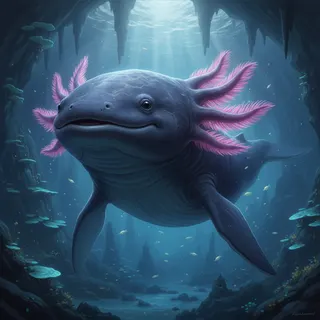
- 🔬 Despite having a powerful, horizontal fluke tail for swimming like a whale, they also retain four stumpy, hoofed limbs that allow them to waddle effectively on land and even climb over small obstacles in their marshy habitats.
- 🔬 Their skin often develops a greenish-brown hue due to a symbiotic relationship with specific algae strains that thrive in their brackish environment, providing excellent camouflage against muddy riverbanks and submerged vegetation.