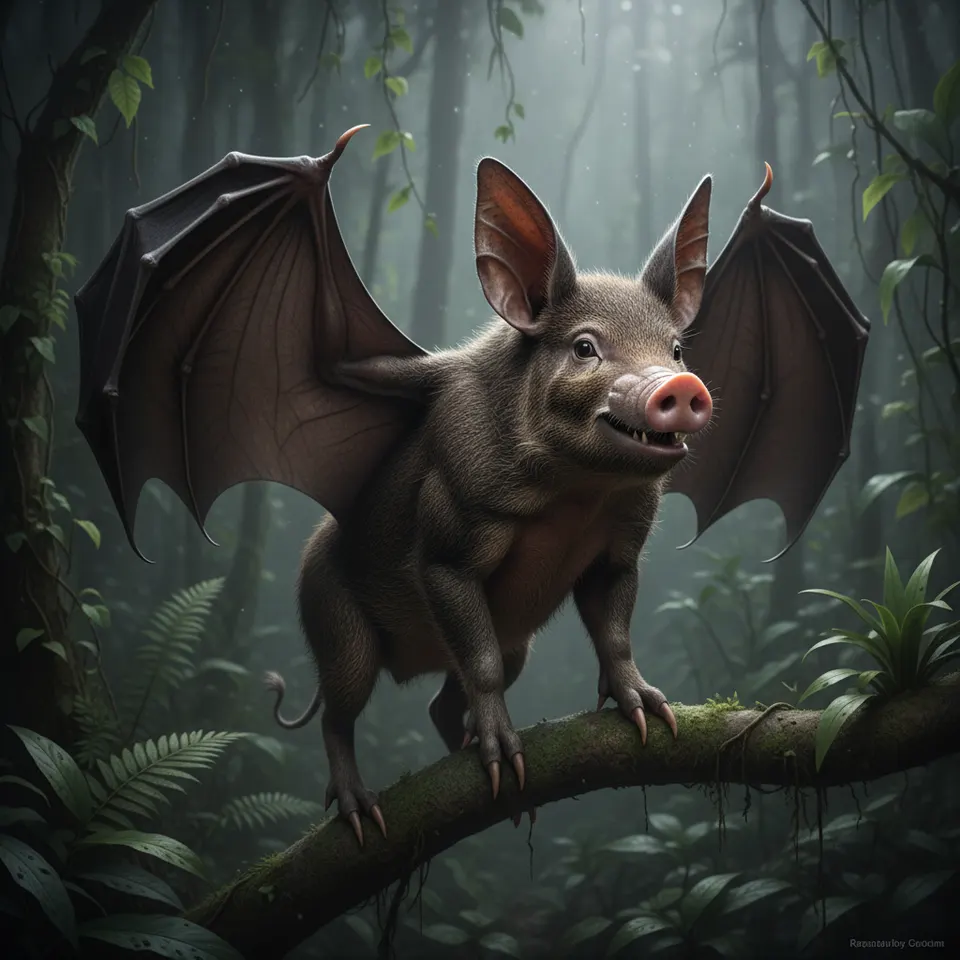
Hogwing
Pterosus nocturnus
Stats

Behavior
Hogwings are primarily nocturnal creatures, emerging from their roosts at dusk to forage. Despite their somewhat portly appearance, they are surprisingly agile flyers, capable of swift, silent glides through dense canopy. On the ground, they move with a characteristic waddle, using their strong snouts to root around for food. They are social animals, living in small, tight-knit colonies called 'squeals', often communicating through a complex array of grunts, snorts, and high-frequency squeaks that serve as both echolocation and social cues.
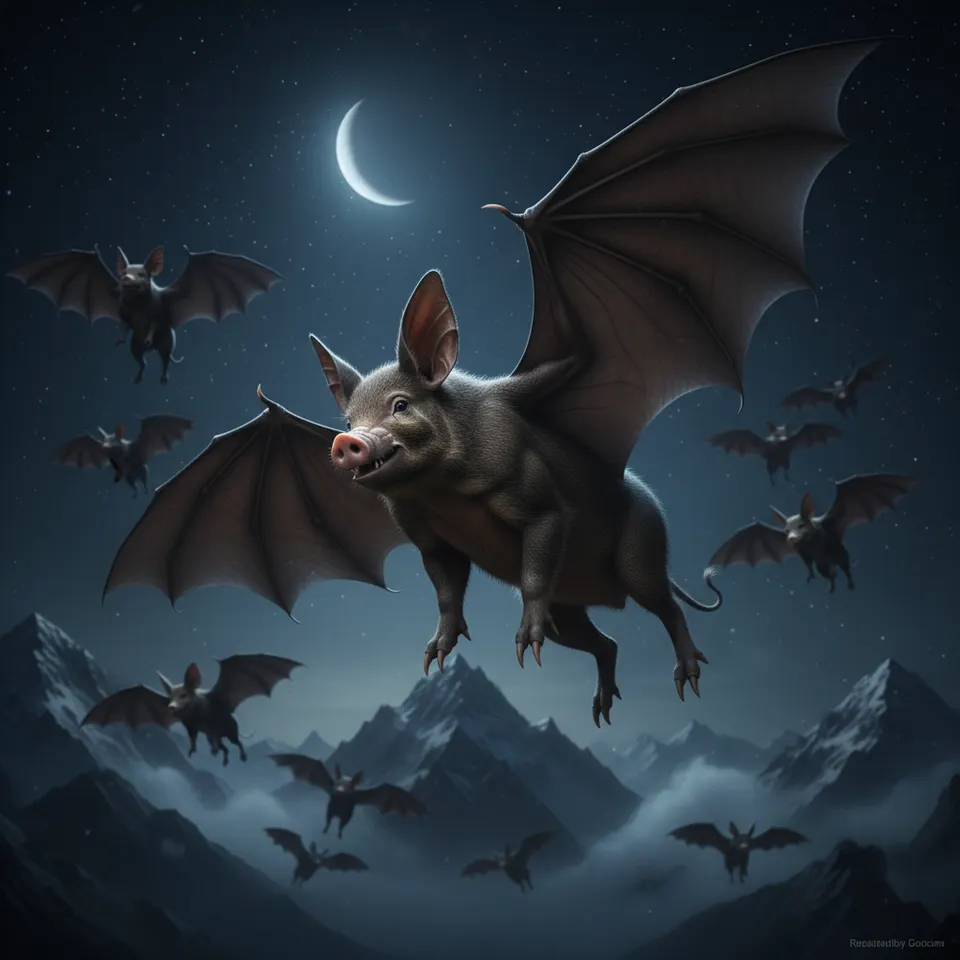
These creatures make their homes in large, humid caves or hollowed-out ancient trees, often sharing their roosts with other bat species, though their larger size means they typically occupy the lower, more spacious sections. During the day, they hang upside down, using their powerful hind claws to grip surfaces, often blending into the dark cave walls. They have a particular fondness for fermented fruits found on the forest floor, which can sometimes lead to rather boisterous, if not outright clumsy, nocturnal escapades.
Fun Facts
- 🔬 A Hogwing's 'squeal' (colony) can consist of up to 20 individuals, often led by the oldest and largest female.
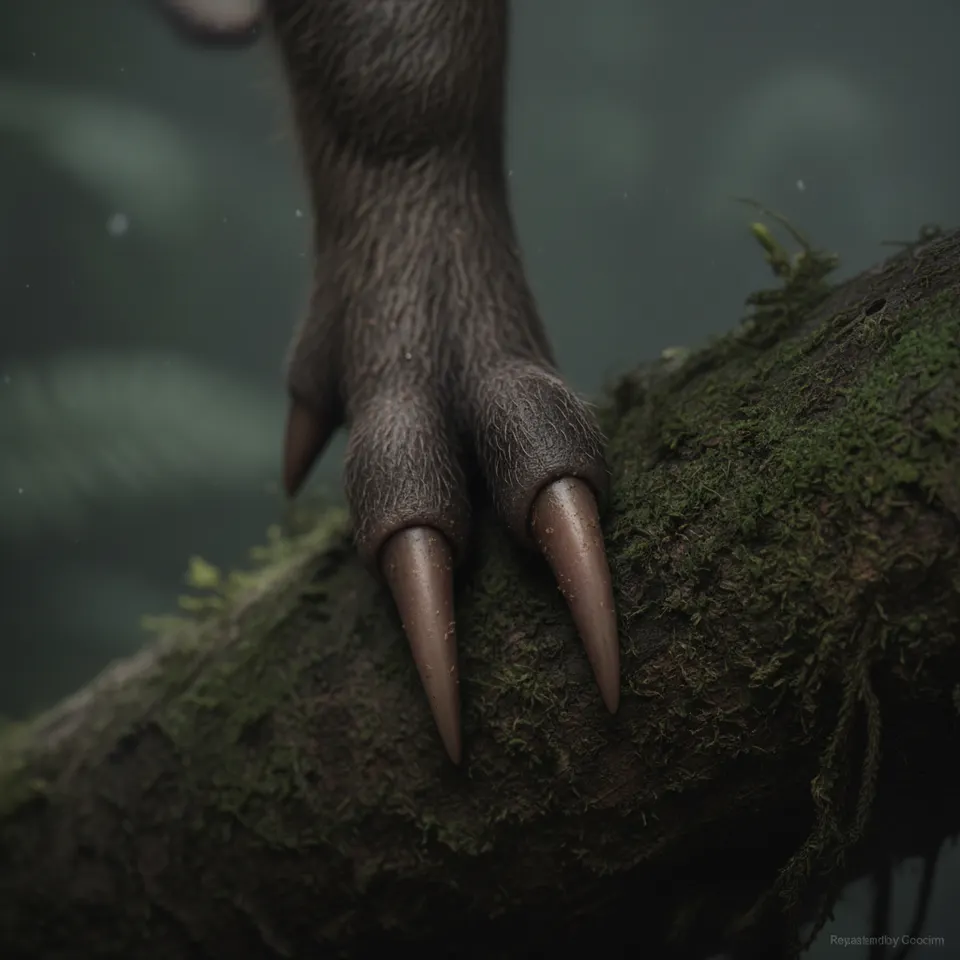
- 🔬 Their wings are surprisingly durable, covered in a fine, coarse hair that aids in water repellency and provides a degree of camouflage against tree bark.
- 🔬 Hogwings possess a unique form of echolocation, combining the high-frequency clicks of bats with low-frequency grunts, allowing them to navigate both open air and dense undergrowth effectively.