Narachnid
Monodon arachnida
Stats
Behavior
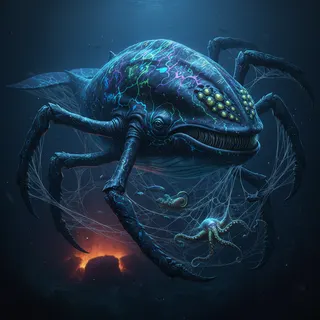
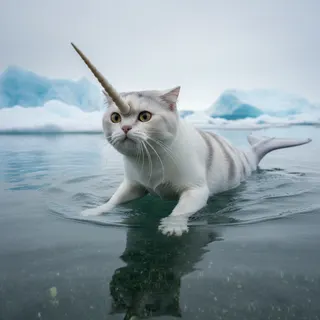
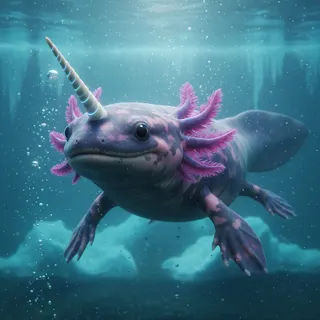
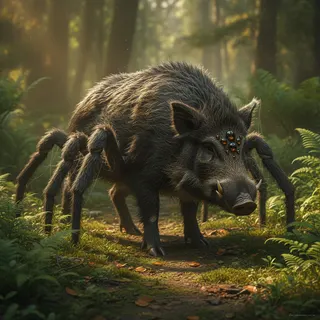
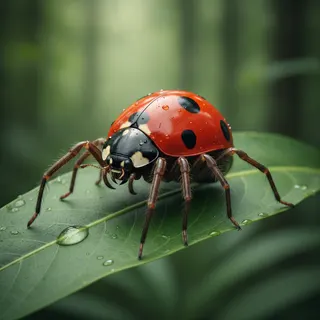
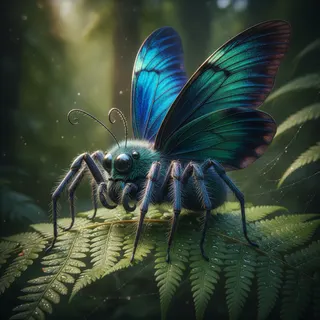
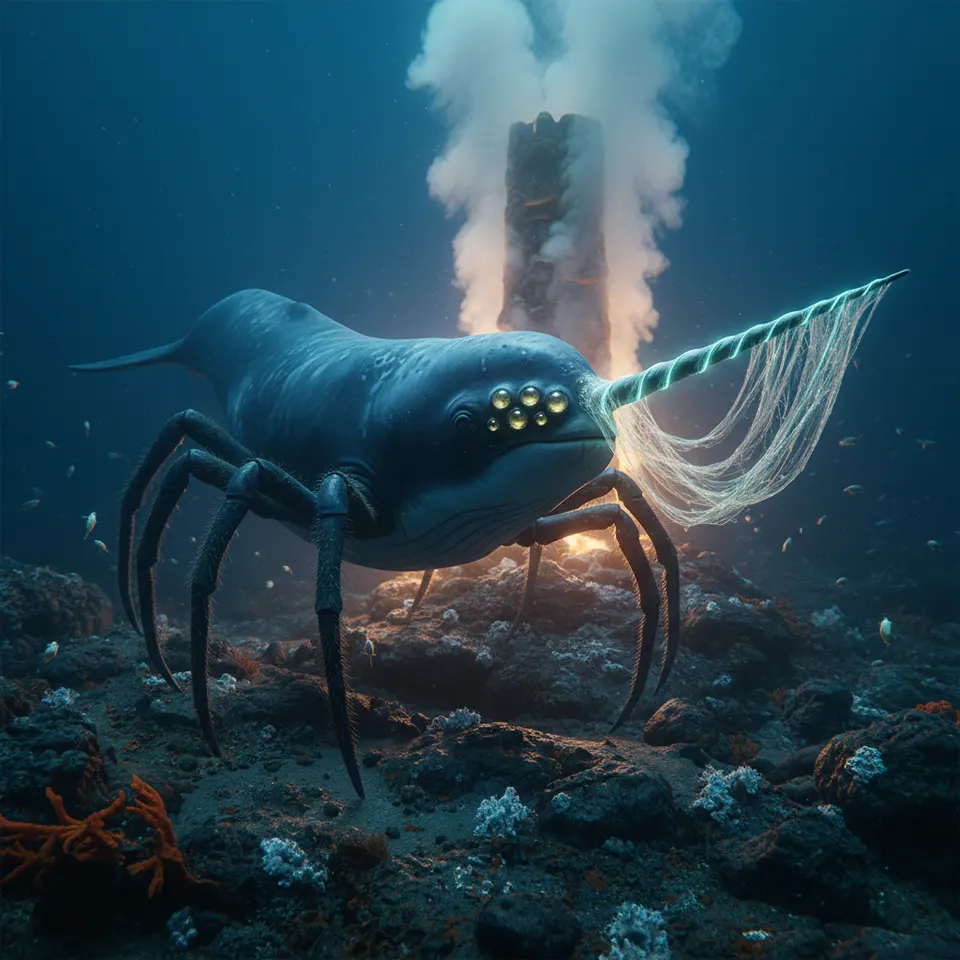
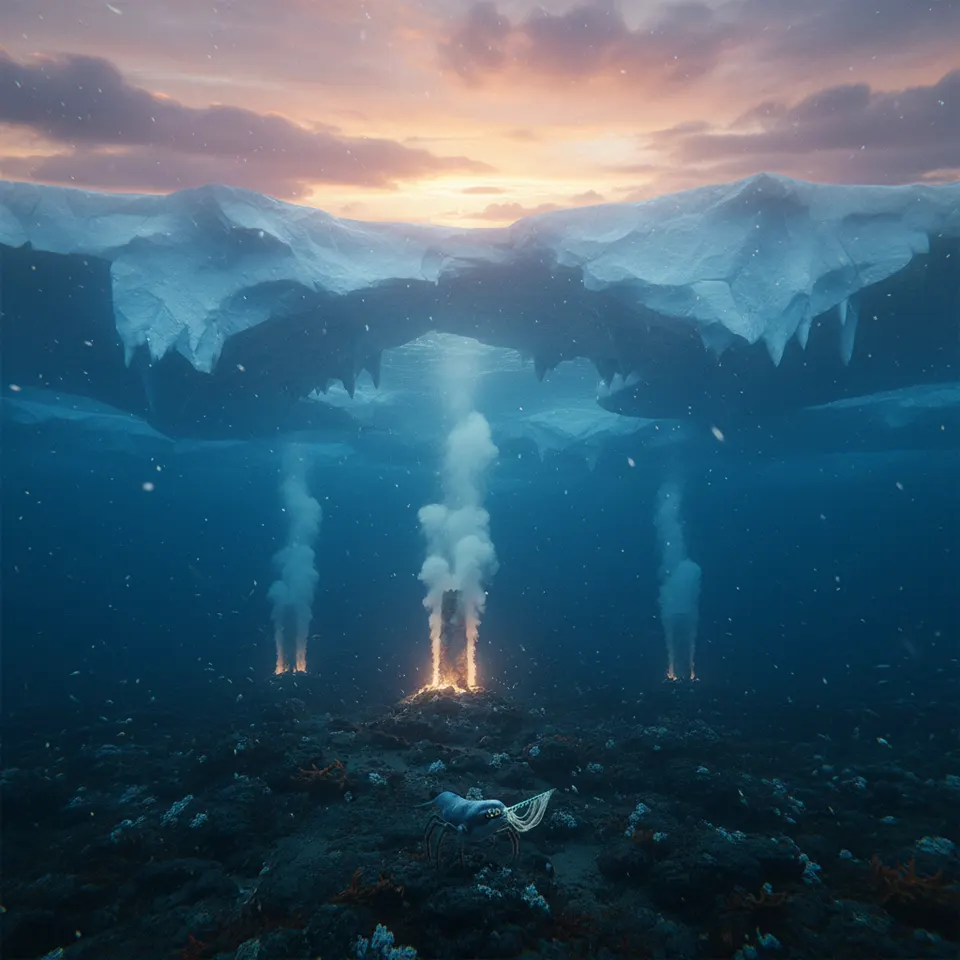
The Narachnid is a solitary, ambush predator of the abyssal Arctic. It navigates the crushing depths using an array of highly sensitive chemoreceptors on its eight sturdy, jointed legs, which propel it across the seabed or allow it to cling to underwater rock formations and ice caverns. Its most striking feature is its elongated tusk, which, uniquely, secretes a bio-luminescent, incredibly strong silk that hardens upon contact with cold water. This silk is used to weave intricate, almost invisible traps between vent structures or suspend itself upside-down from the underside of ice sheets, waiting for unsuspecting prey.
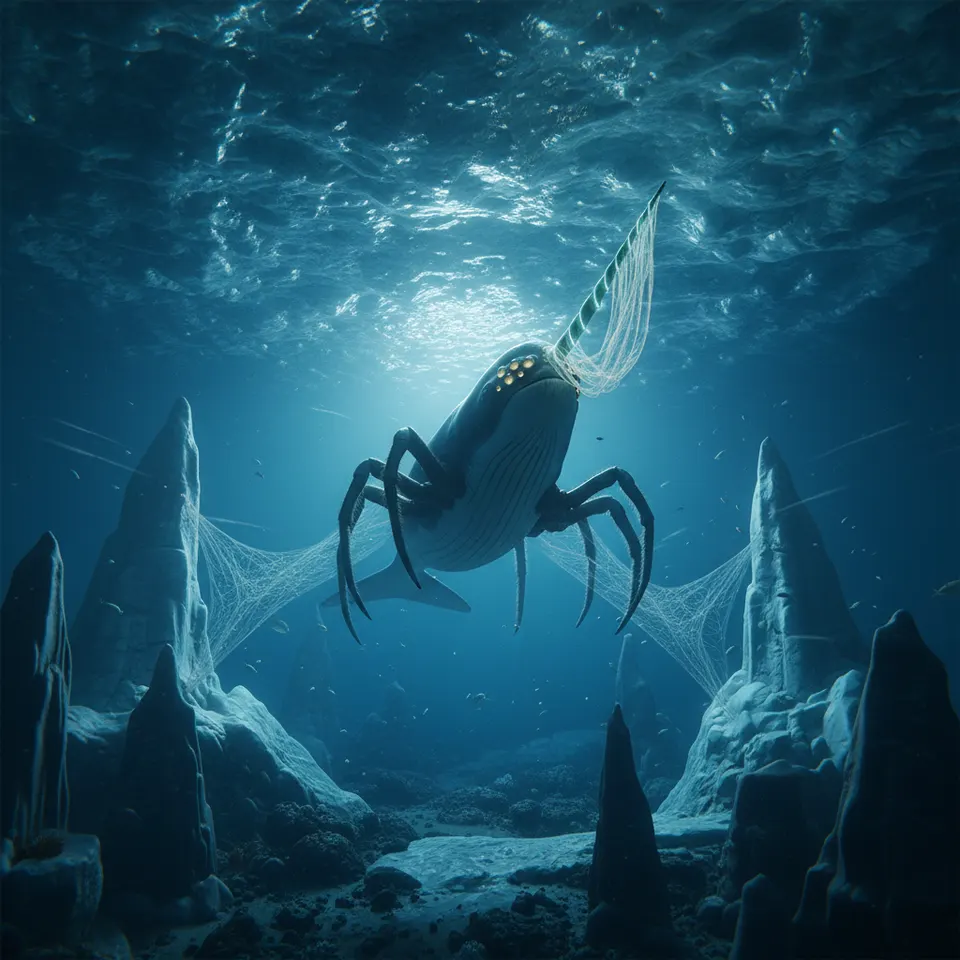
Unlike most arachnids, Narachnids are not terrestrial, nor do they form colonies. Each individual stakes out a vast hunting territory, meticulously mapping out currents and prey pathways using its tusk and leg sensors. They communicate through a series of subtle vibrations transmitted through their silk webs and low-frequency sonic pulses. Mating rituals are complex and involve the male weaving elaborate, glowing silk displays to attract a female, who will then lay clutches of gelatinous eggs on the silk structures.
Fun Facts
- 🔬 The Narachnid's tusk can extend up to 8 feet and is not only a sensory organ and silk dispenser but also hollow, allowing it to siphon nutrients from deep-sea vent fluid when food is scarce.
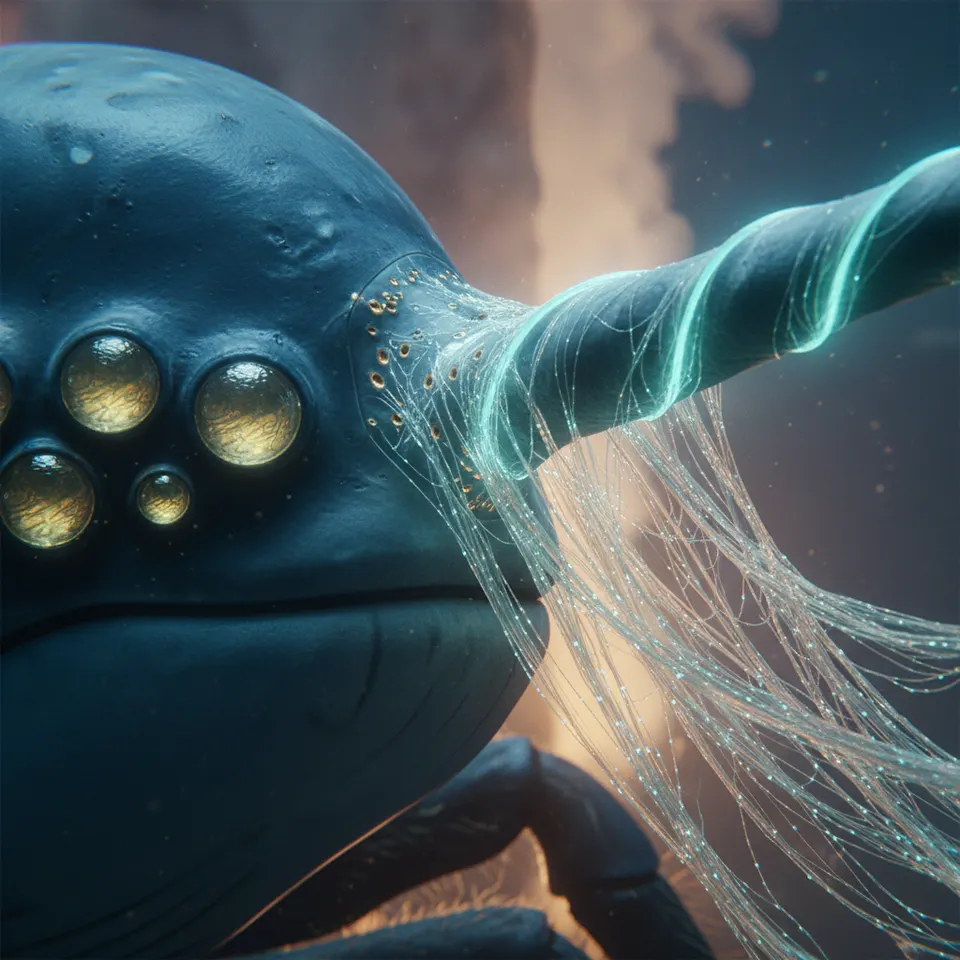
- 🔬 Despite living in perpetual darkness, Narachnids possess multiple, light-sensitive ocelli along their dorsal body, which can detect the faintest bioluminescence of their prey or predators.
- 🔬 Their silk is so resilient that ancient Inuit legends speak of 'sea-ropes spun from star-light' that could moor entire icebergs, believed to be Narachnid silk.