Kiwder
Apteryx arachnobella
Stats

Behavior
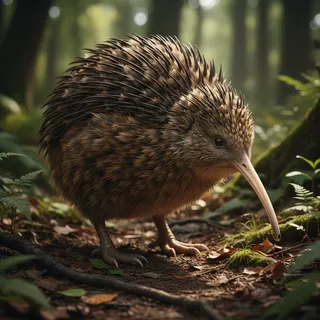
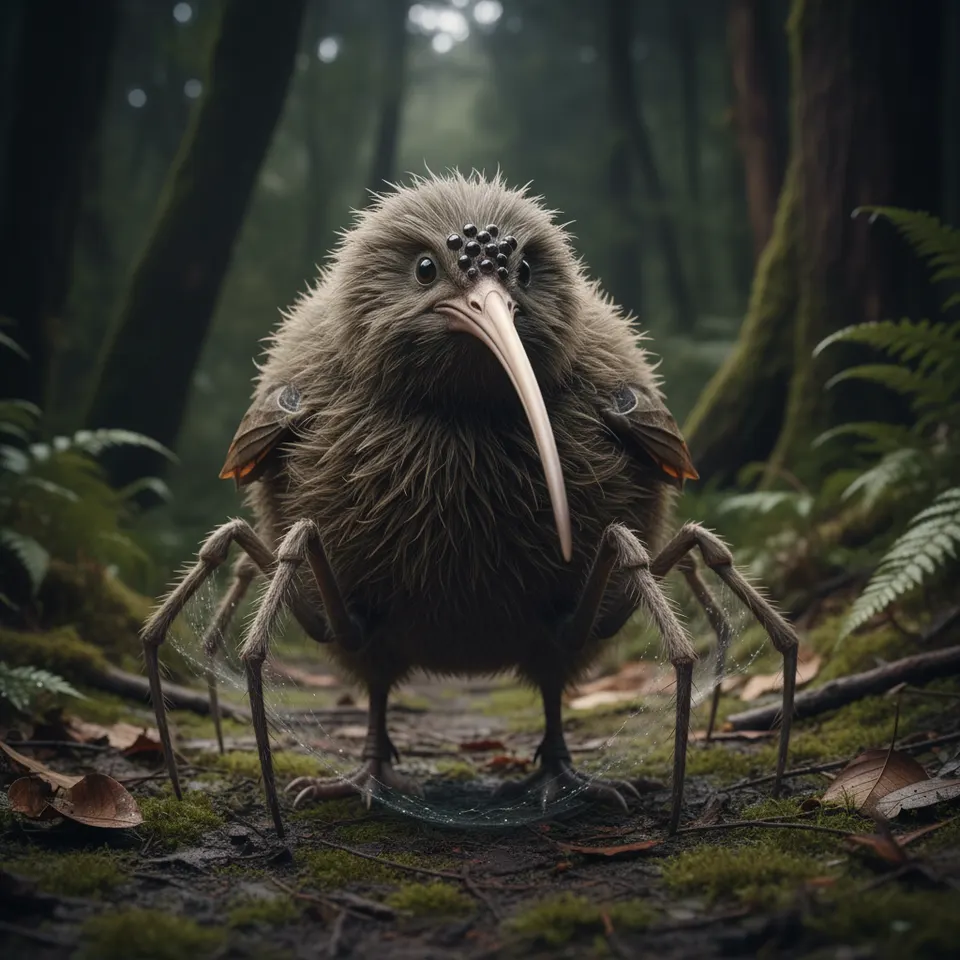
The Kiwder is a nocturnal, solitary predator. It possesses the keen sense of smell of a kiwi, using its long, sensitive beak to probe the forest floor for hidden prey, but its primary hunting method involves intricate ground-level tripwires made of incredibly strong silk. Unlike arboreal spiders, Kiwders don't spin aerial webs, instead creating a complex network of invisible strands across its territorial hunting grounds, sensing the slightest vibration of passing prey through its multiple, highly sensitive leg joints.

These elusive creatures are notoriously shy, avoiding human contact and preferring the deepest, most undisturbed parts of the forest. They construct concealed burrows, similar to a kiwi's, lined with a soft, insulating layer of their own spun silk. When threatened, a Kiwder can secrete a sticky, irritant fluid from specialized glands near its spinnerets, which it can fling with surprising accuracy using its beak or front legs, giving it time to retreat into its burrow or disappear into the undergrowth.
Fun Facts
- 🔬 A Kiwder's long, flexible 'beak' is actually a highly modified arachnid palp, equipped with nostrils at the tip and sensitive hairs for detecting both scent and minute vibrations.
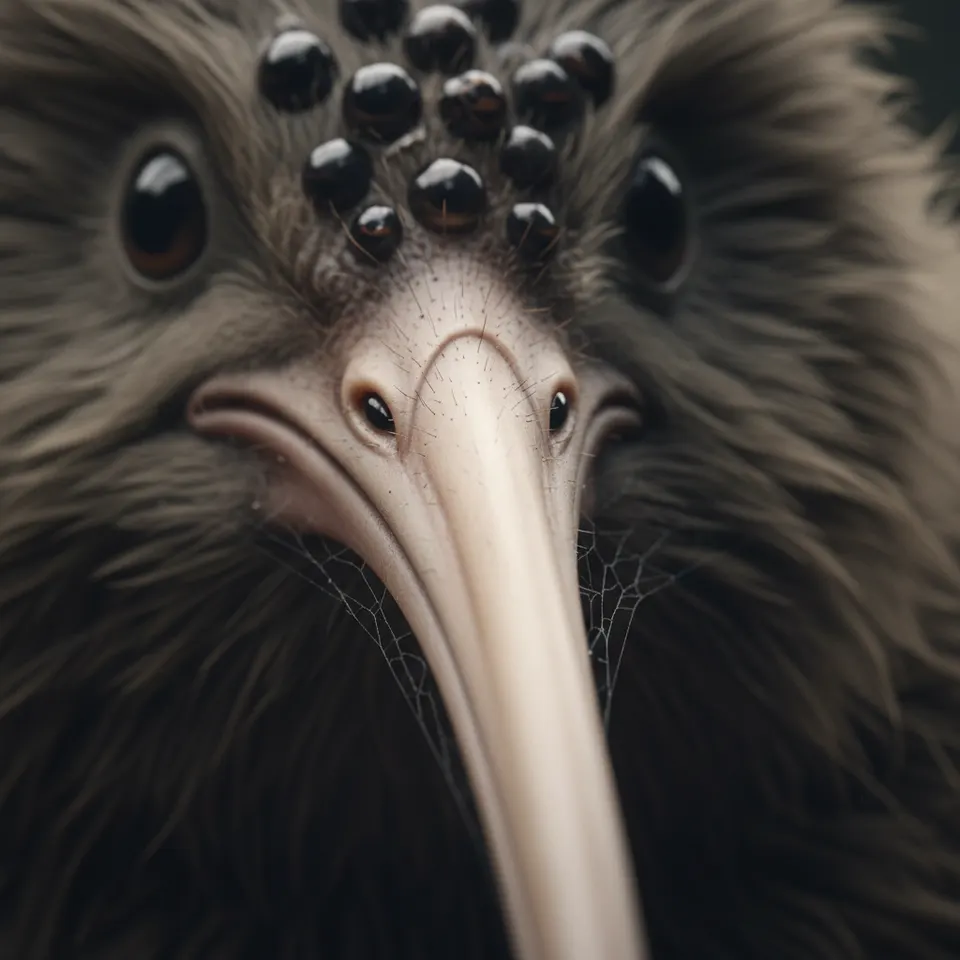
- 🔬 Their 'feathers' are coarse, hair-like bristles, reminiscent of a kiwi's plumage, but are actually sensory bristles connected to a chitinous exoskeleton, similar to a spider's.
- 🔬 Kiwder silk is exceptionally strong and elastic, capable of holding prey many times the creature's own weight. Locals have sometimes mistaken discarded strands for natural plant fibers, only to find them impossible to break.