Pincerweb
Arachnocancerus reticulatus
Stats

Behavior
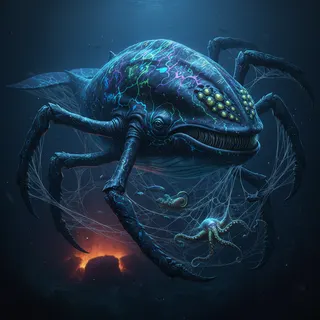
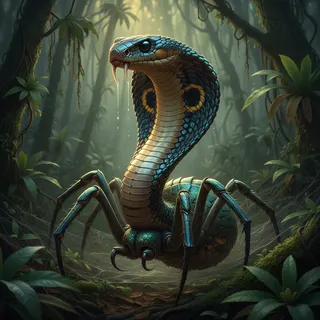
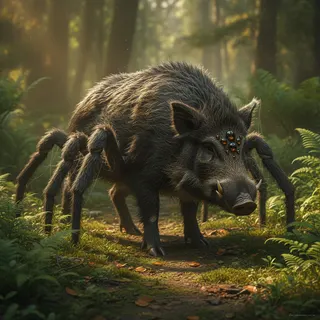
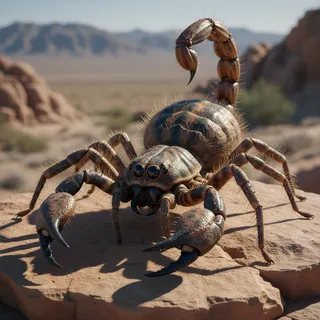
Pincerwebs are solitary, ambush predators known for their ingenious hunting strategies. They utilize their powerful, web-producing chelipeds (pincers) to construct intricate sticky nets between mangrove roots or across cave entrances. Once prey is snared, they swiftly emerge, using their eight strong, agile legs to scuttle across uneven terrain and deliver a venomous bite from specialized fangs hidden within their mouthparts. Their movements are a graceful blend of a spider's quick scurrying and a crab's deliberate side-to-side gait, making them incredibly adaptable on both land and in shallow water.

These elusive creatures prefer the murky, sheltered environments of mangrove forests, where their mottled, dark carapaces provide excellent camouflage amongst the roots and shadows. During the day, they often retreat into complex burrows dug into the mud or deep within coastal caves, emerging at dusk to hunt. Pincerwebs undergo a dramatic molting process, shedding their old exoskeleton to grow, during which they are particularly vulnerable and will often seal themselves within a fortified web chamber until their new shell hardens.
Fun Facts
- 🔬 A Pincerweb's venom is potent enough to paralyze medium-sized prey instantly, allowing it to subdue struggling victims efficiently.
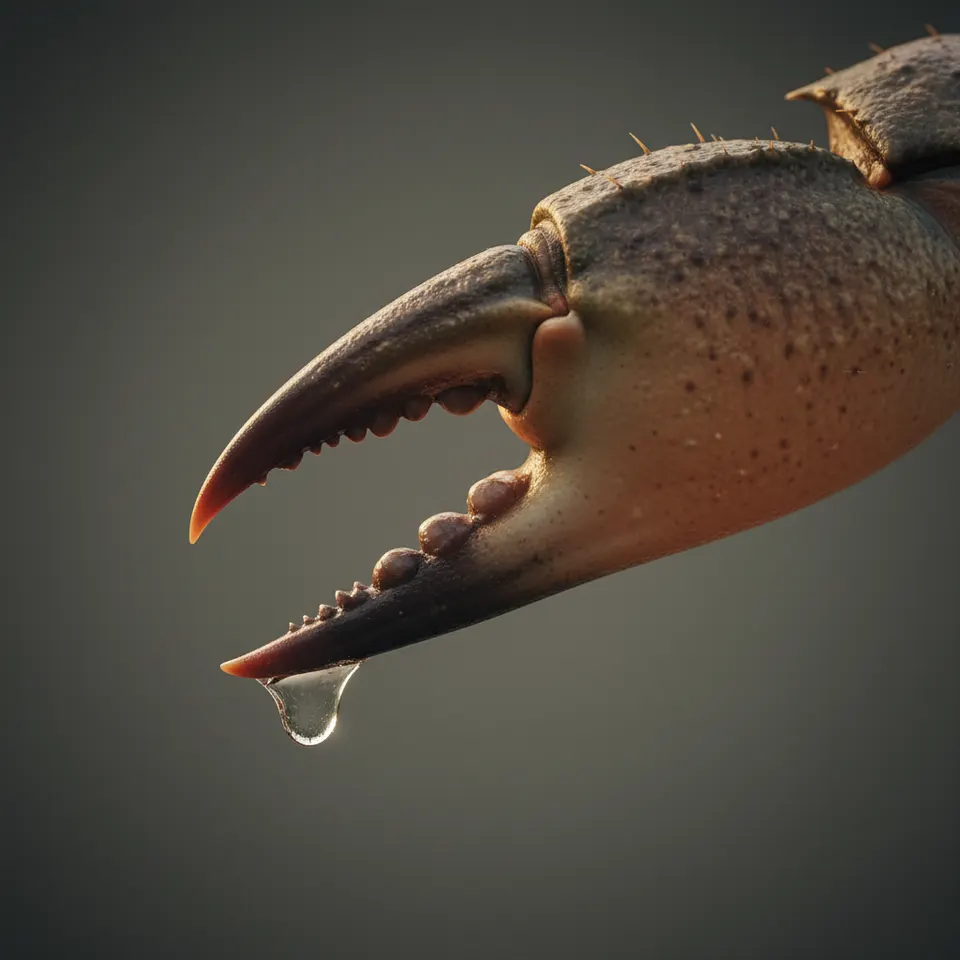
- 🔬 Their primary chelipeds not only serve as formidable weapons but also house specialized silk glands, allowing them to weave incredibly strong, adhesive webs that can withstand significant force.
- 🔬 The eyes of a Pincerweb are a fascinating blend: two large, compound crab-like eyes provide a wide field of vision, supplemented by six smaller, simple spider-like ocelli for detecting subtle movements and changes in light.