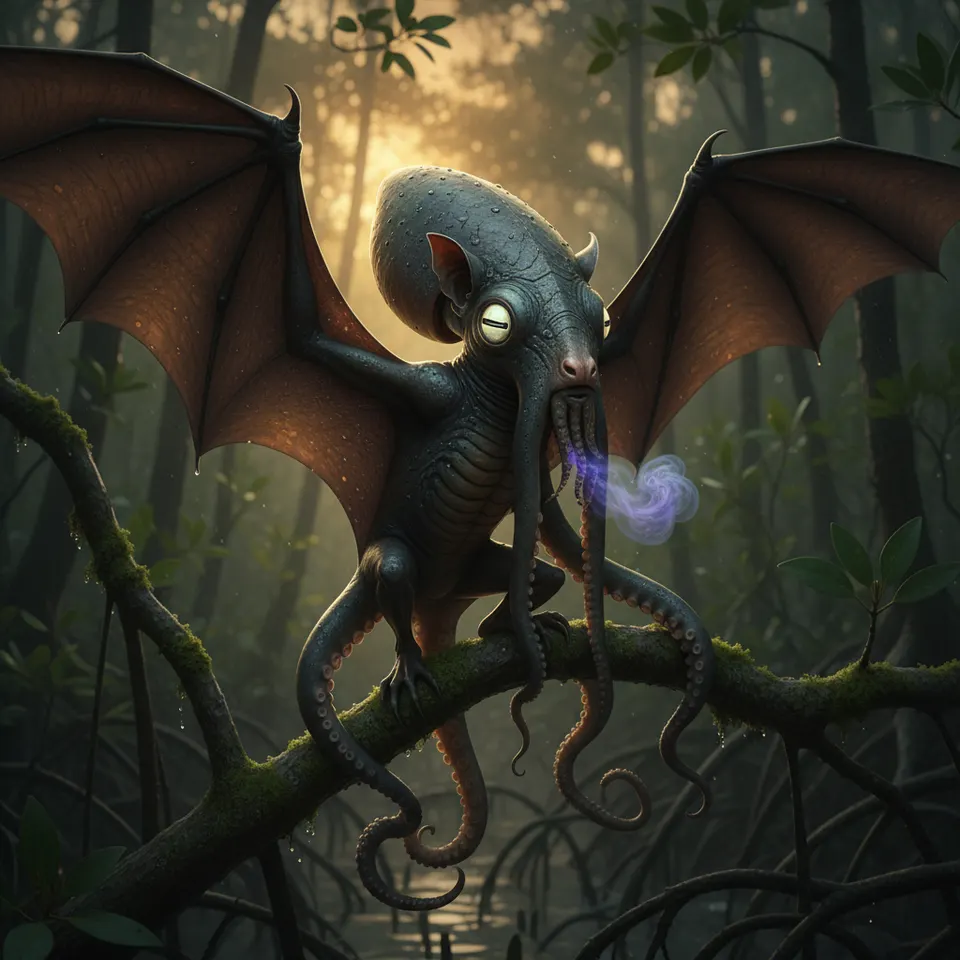
Chiroctopus
Chiroctopus volans
Stats

Behavior
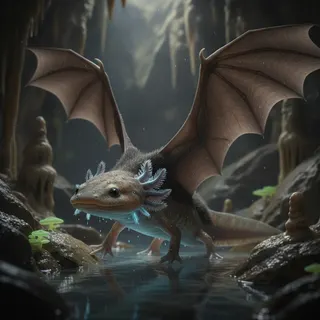
The Chiroctopus is a highly agile aerial predator, primarily nocturnal, using sophisticated echolocation inherited from its chiropteran lineage to navigate its dark cave habitats and hunt in dense mangrove canopies. Unlike most bats, it possesses eight prehensile tentacles; two are fused into powerful, membrane-like wings, while the remaining six are highly dexterous for grabbing prey, scaling surfaces, and even manipulating objects. They are largely solitary hunters, only congregating during mating seasons.
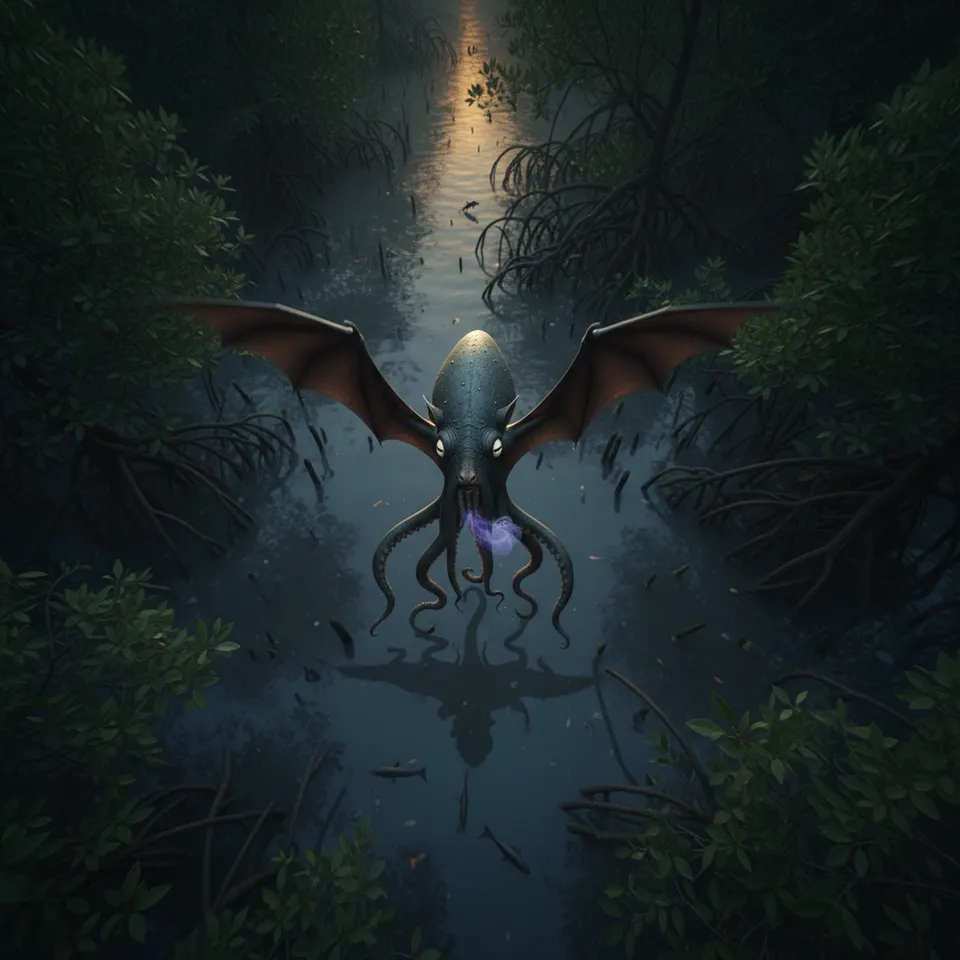
During the day, Chiroctopi retreat deep into coastal caves or hollowed-out mangrove trees, hanging upside down using specialized suction cups on their tentacle tips. At dusk, they emerge to patrol the water's surface, snatching fish with startling speed, or flitting through the trees to capture large insects, frogs, and even small arboreal mammals. They are known to squirt a thick, iridescent ink not only for defense but also as a blinding agent for incapacitated prey, adding another layer to their predatory prowess.
Fun Facts
- 🔬 The Chiroctopus possesses a unique dual sensory system: high-frequency echolocation for aerial navigation and a keen sense of smell, complemented by light-sensitive chromatophores on its skin, allowing it to rapidly change color for camouflage against various backgrounds.
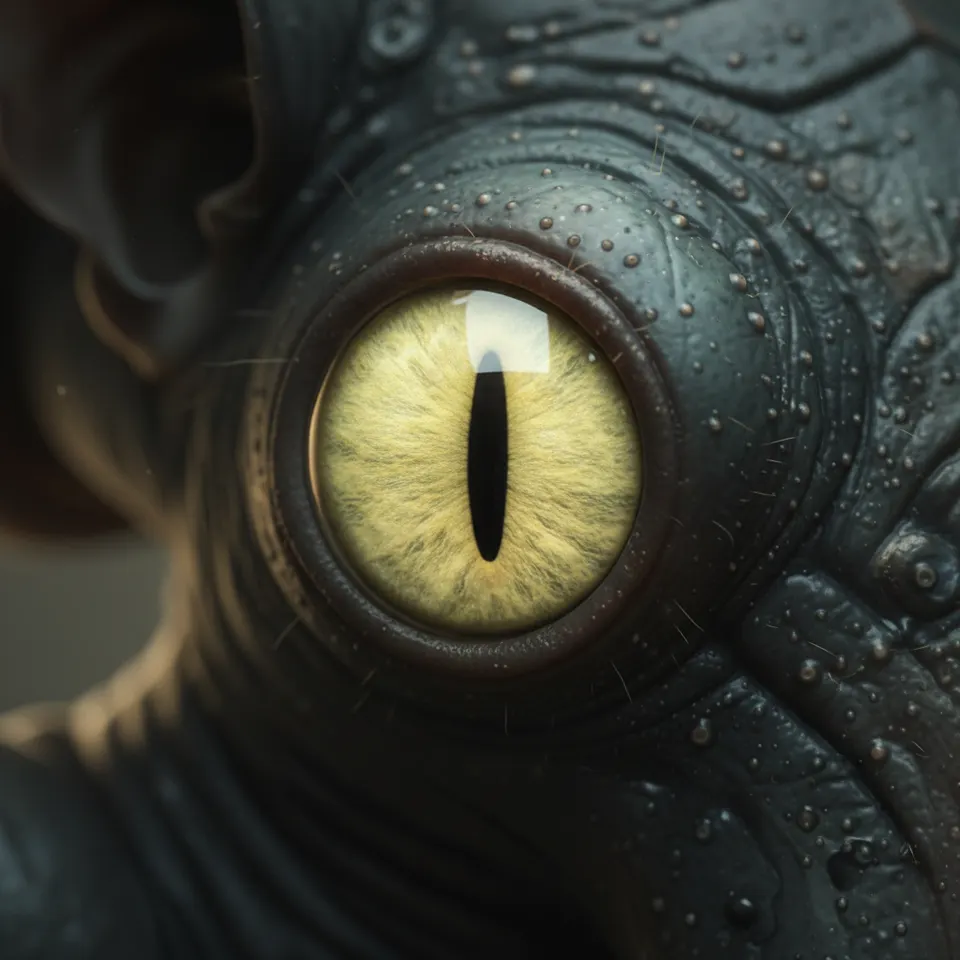
- 🔬 Its ink, besides being a defensive measure, is bioluminescent, creating a dazzling display in dark caves that serves as a warning to potential predators and a mesmerizing, albeit disorienting, lure for curious prey.
- 🔬 Young Chiroctopi, known as 'Squidlings,' are born live and cling to their mother's underside using their developing tentacles, learning to fly and hunt within weeks of birth.