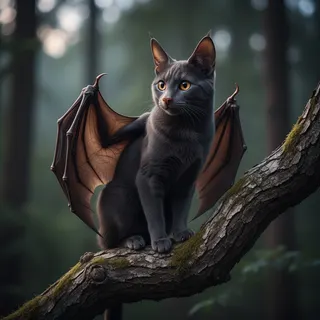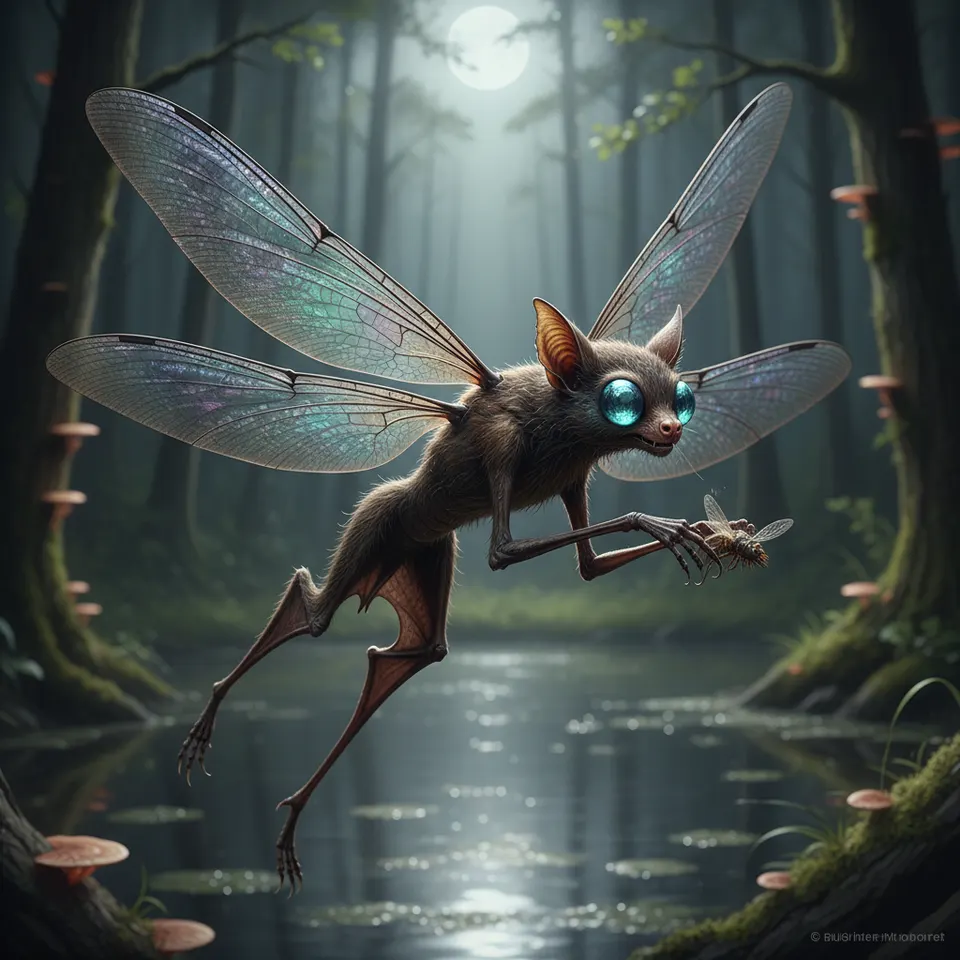
Vesperfly
Chiropterodraco odonatus
Stats

Behavior
The Vesperfly is a crepuscular and nocturnal hunter, exhibiting a fascinating blend of its ancestral behaviors. Unlike its dragonfly lineage which hunts primarily by sight during the day, the Vesperfly uses a combination of highly acute echolocation, inherited from bats, and the unparalleled compound vision of its dragonfly forebears to navigate and hunt insects in low light. It's an incredibly agile flyer, capable of hovering, darting, and executing complex aerial maneuvers with precision, often seen patrolling over water bodies at dusk. They tend to be solitary hunters but may gather in loose aggregations when food is abundant.
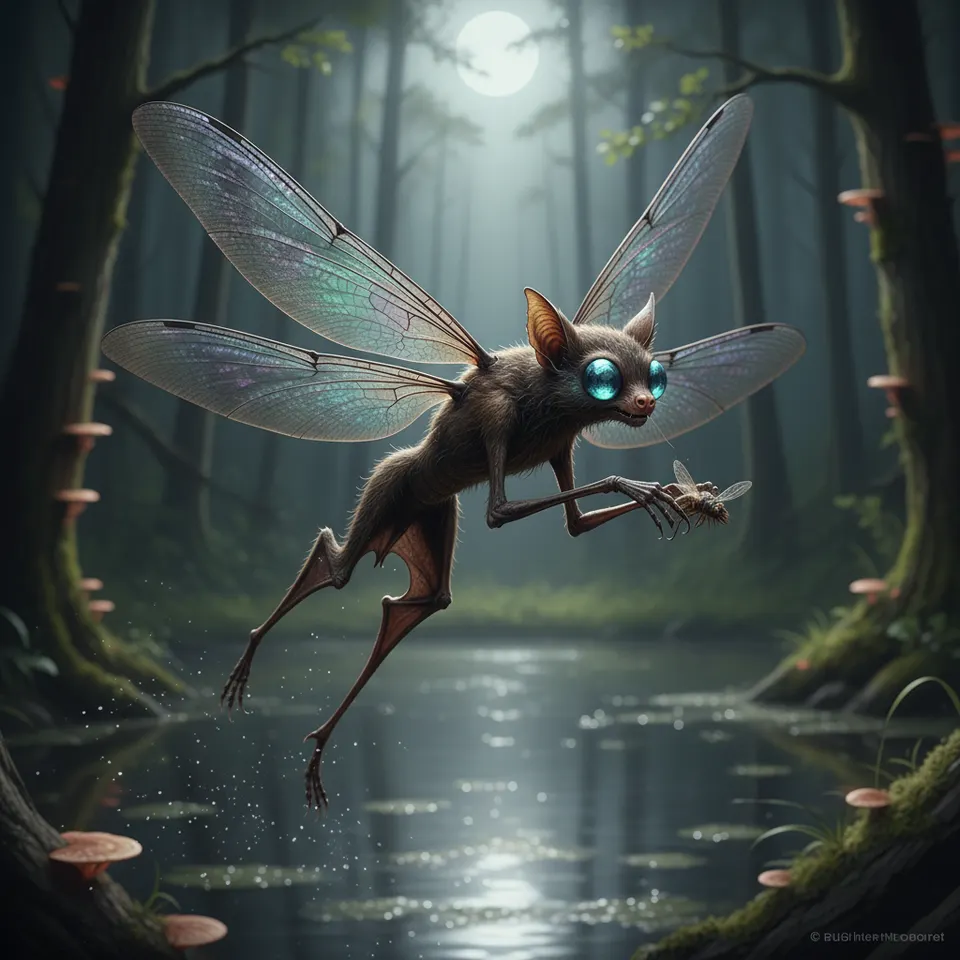
During the day, Vesperflies retreat to protected roosts, preferring the undersides of large leaves, hollow tree trunks, or small caves near water sources. They cling using their multi-jointed legs, which feature tiny, bat-like claws for grip, allowing them to hang upside down or cling horizontally. Reproduction involves aerial mating flights similar to dragonflies, followed by the female depositing eggs on or near the water surface. Larval stages are aquatic, resembling a robust dragonfly nymph, but with rudimentary echolocation capabilities for navigating murky waters.
Fun Facts
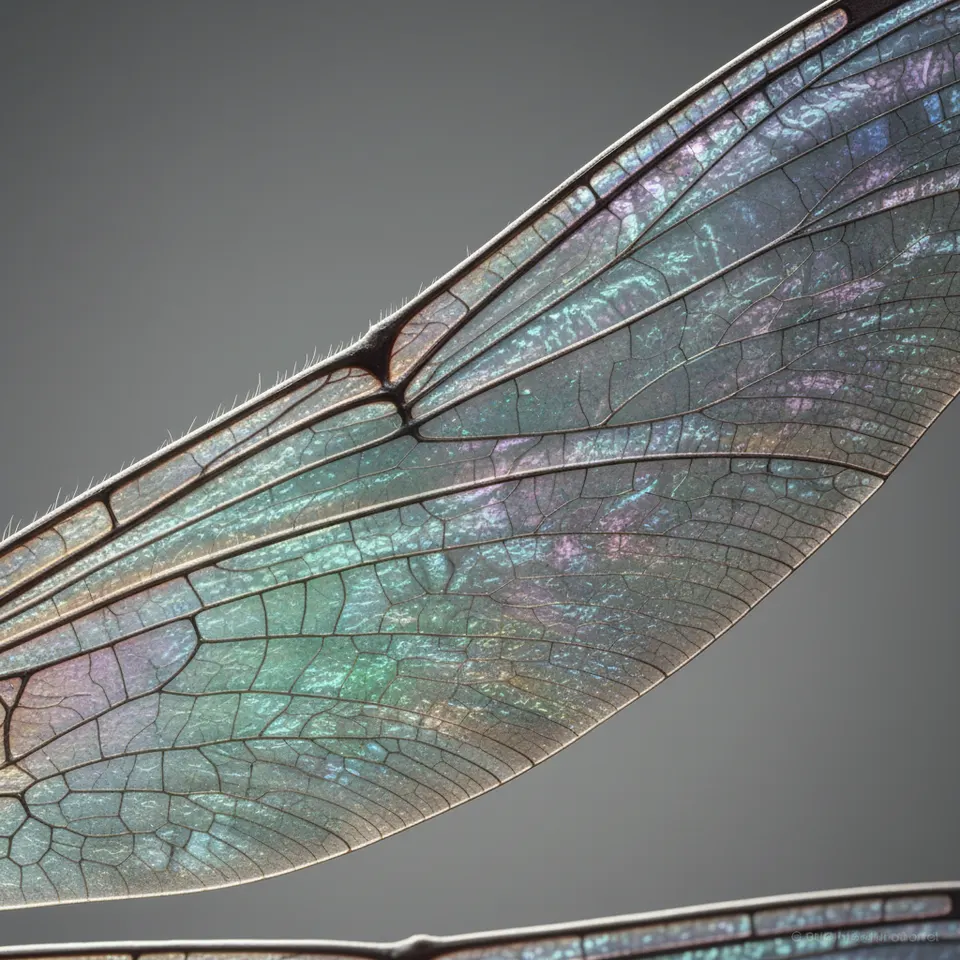
- 🔬 Their four iridescent, translucent wings beat at an incredibly high frequency, creating a soft, almost ethereal hum that is often the first sign of their presence in the fading light.
- 🔬 Vesperflies possess a unique form of 'sonar-vision,' where their echolocation data is processed in conjunction with their compound eye input, allowing them to essentially 'see' sound waves and pinpoint prey with astonishing accuracy even in total darkness.
- 🔬 Despite their fierce predatory nature, Vesperflies are attracted to the scent of certain night-blooming flowers, occasionally supplementing their insectivore diet with small sips of nectar.