Lobbat
Chiropterodecapoda volucrus
Stats

Behavior
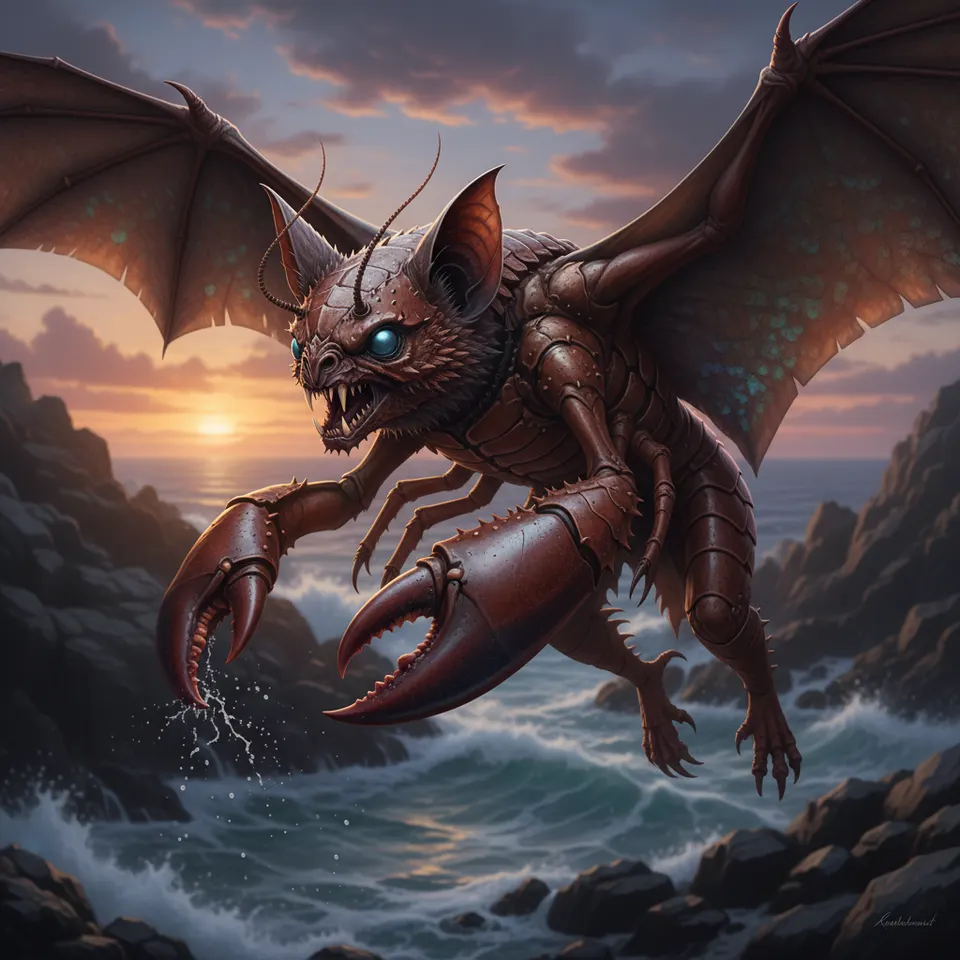
Lobbats are primarily nocturnal hunters, employing an unusual dual hunting strategy. In the air, they utilize sophisticated echolocation, inherited from their bat lineage, to pursue large insects and even snatch small, surface-swimming fish from the water's surface with surprising agility. When foraging along the shore or underwater, their powerful lobster claws become their primary tools, prying open shellfish or scuttling among rocks to ambush crabs and other marine invertebrates. They are generally solitary creatures, congregating only during seasonal mating rituals, performing elaborate aerial displays before descending to the rocky shores to mate.
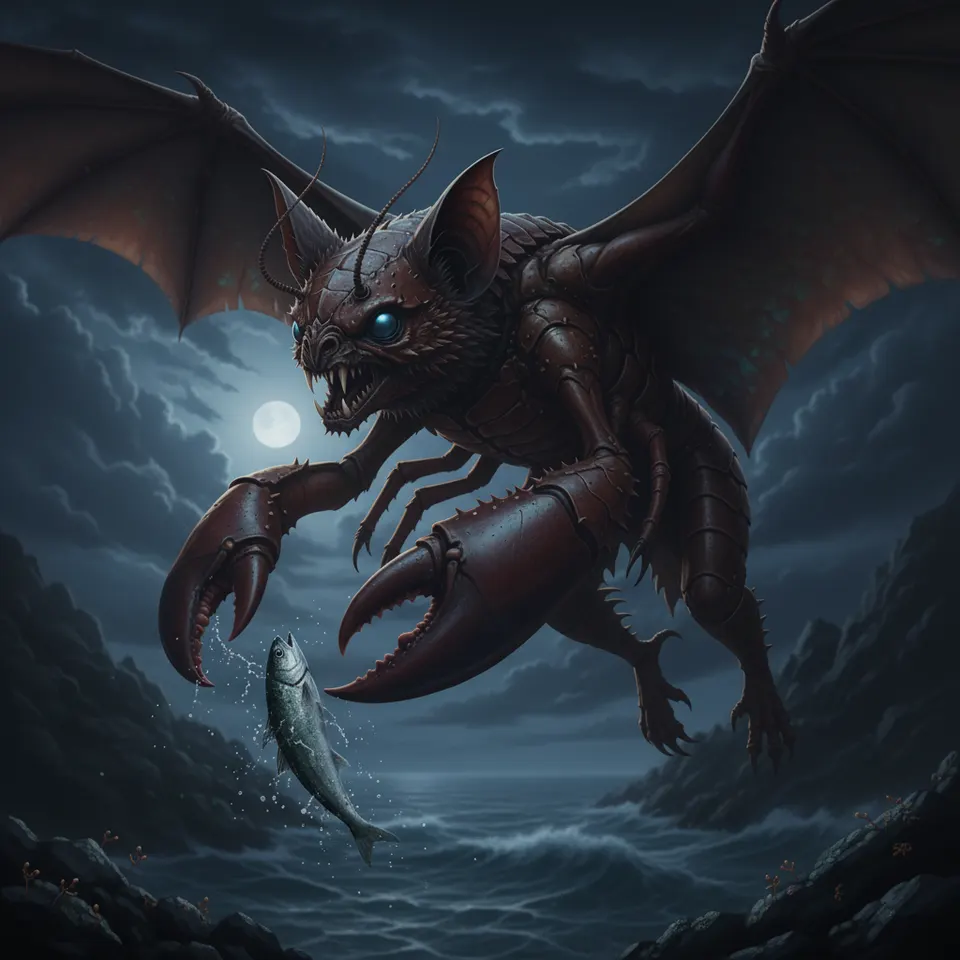
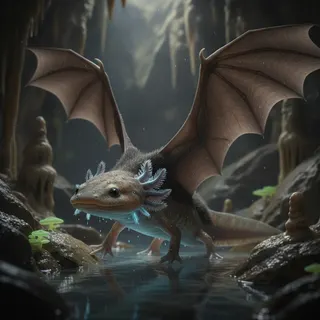
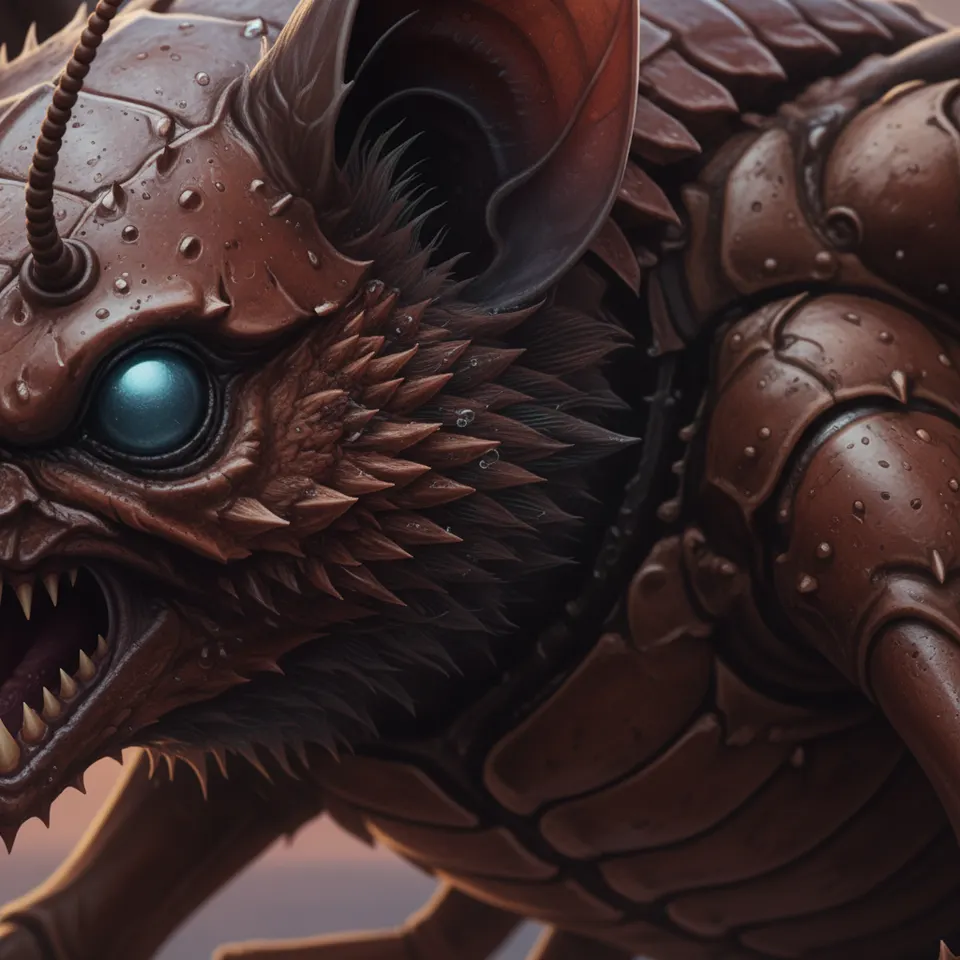
These unique hybrids spend their days roosting in the cool, dark crevices of coastal caves, often near freshwater sources for hydration. Their tough, segmented exoskeleton, reminiscent of a lobster's, provides excellent protection against predators and the harsh saline environment, though it necessitates regular molting. During molting, Lobbats are extremely vulnerable, retreating deeper into their cave systems until their new shell hardens. Their leathery, bat-like wings are surprisingly robust, adapted to handle the humid, salty air and occasional splashes, allowing for powerful, if somewhat clunky, flight.
Fun Facts
- 🔬 Lobbats possess a unique 'gill-lung' respiratory system, allowing them to breathe both air and water for short to moderate periods, crucial for their dual hunting strategy.
- 🔬 Their echolocation clicks are powerful enough to stun small prey both in the air and, to a lesser extent, under shallow water, creating a disorienting effect on their aquatic targets.
- 🔬 Despite their fearsome appearance and strong claws, Lobbats are surprisingly agile fliers, capable of intricate maneuvers and hovering, making them adept at navigating treacherous coastal terrain and snatching prey mid-flight.