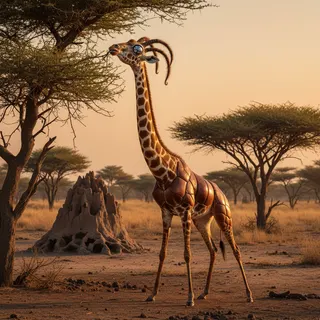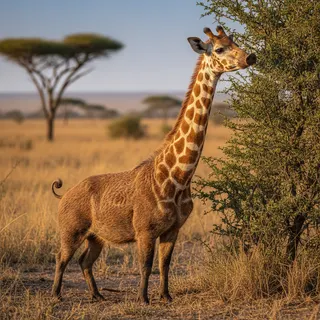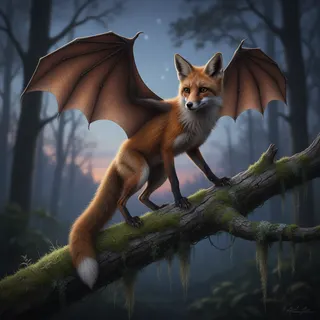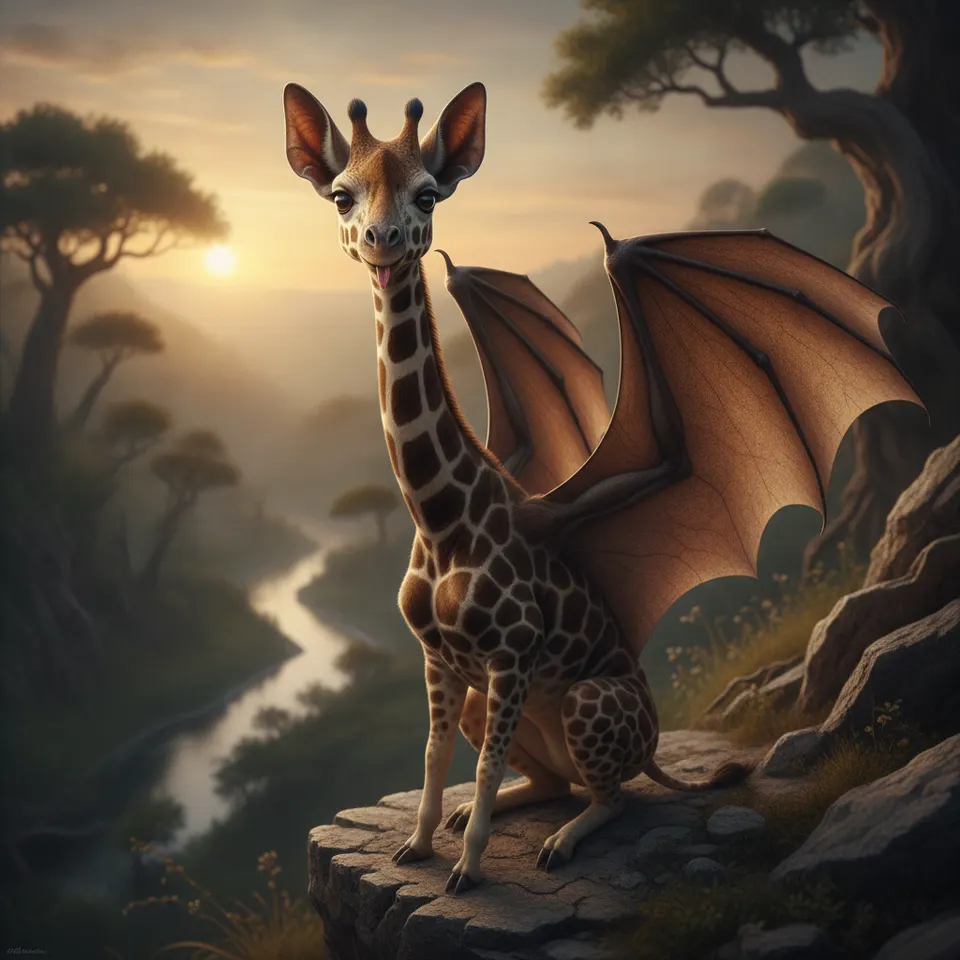
Chiropteraffe
Pterogiraffa nocturna
Stats

Behavior
Highly elusive and solitary, the Chiropteraffe is primarily crepuscular and nocturnal, preferring the low light of dawn and dusk or the cover of night to forage. They use their impressive height and wingspan to navigate dense tree canopies and cliff faces, often hanging upside down like bats for rest and digestion. Their long necks allow them to reach deep into flowering trees for nectar and fruit, while their echolocation skills guide them through dark environments.
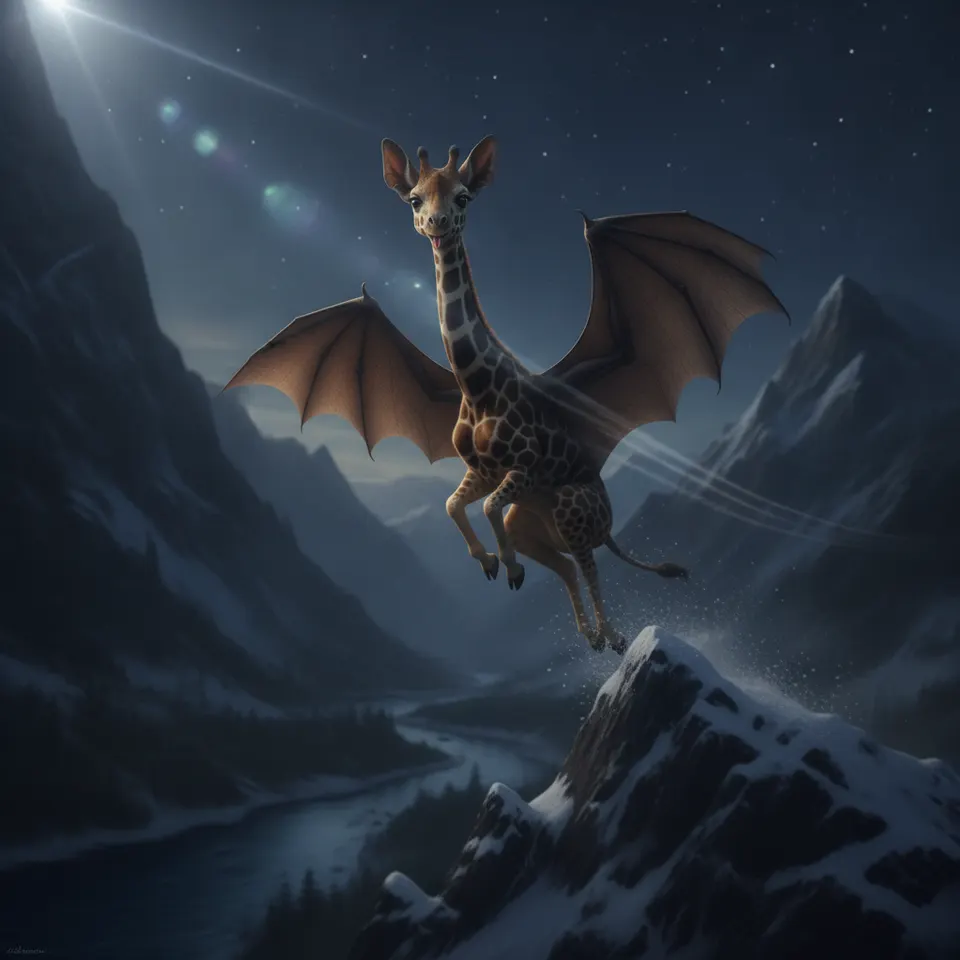
Despite their size, they are remarkably agile fliers, capable of precise aerial maneuvers. They establish vast territories, marked by unique scent glands, and are known to be fiercely protective of prime feeding grounds. During the day, they often roost in high, inaccessible caves or among the densest foliage of ancient trees, camouflaged by their dappled coat. Their quiet movements and keen senses make them incredibly difficult to spot in the wild.
Fun Facts
- 🔬 They possess a unique form of echolocation, utilizing low-frequency calls that allow them to 'map' vast areas of forest and detect distant food sources, even beyond visual range.
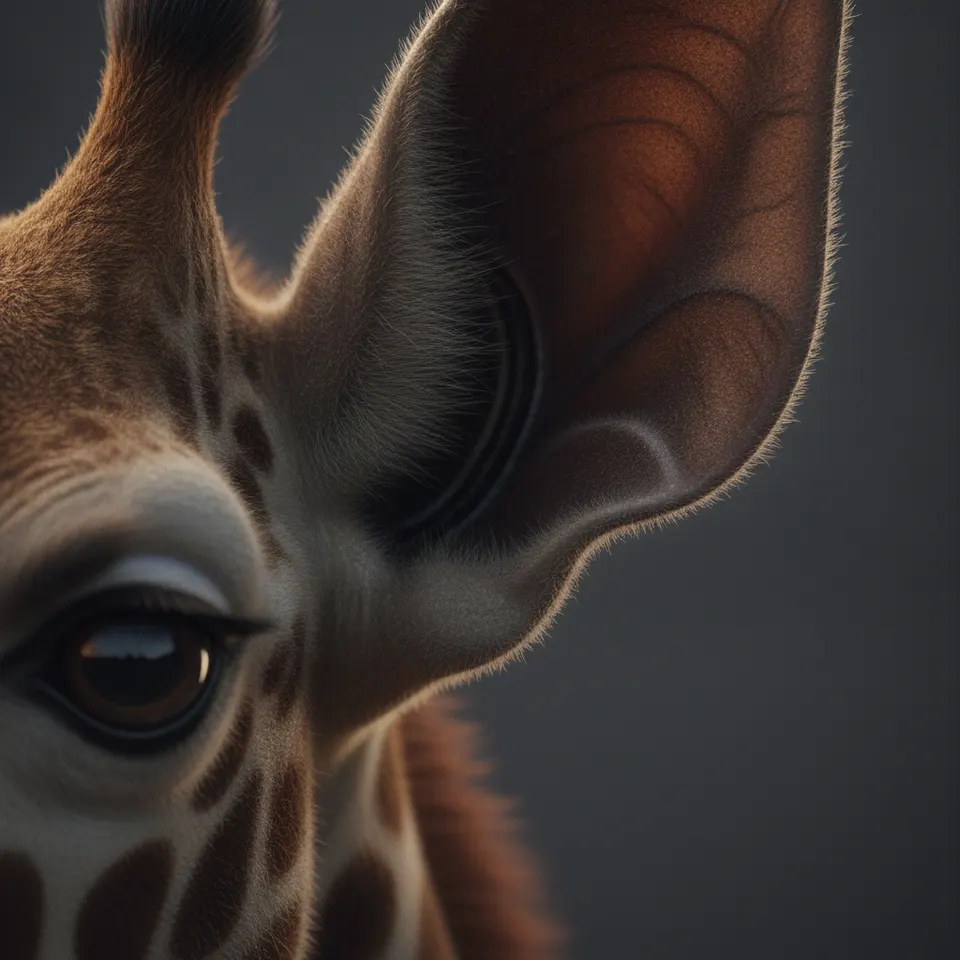
- 🔬 Their long, slender neck is surprisingly flexible, allowing them to groom their massive wings and reach intricate flower structures.
- 🔬 A Chiropteraffe calf (often called a 'pup-giraff') is born with fully developed wings, capable of short flights within hours of birth, clinging to its mother's back or underside for several weeks.