Stripeclaw
Equus carcinidae striatus
Stats

Behavior
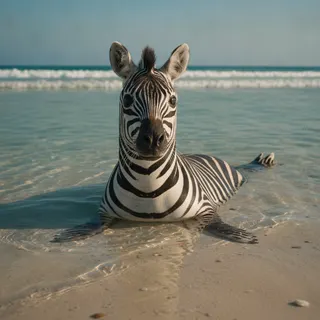
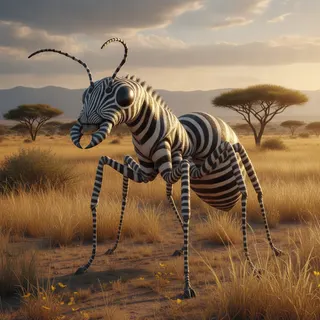
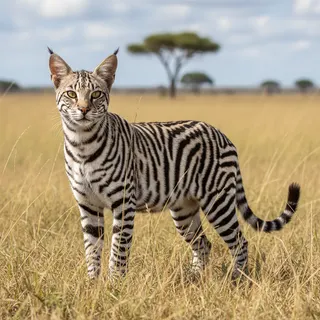
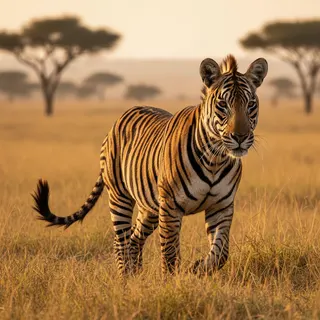
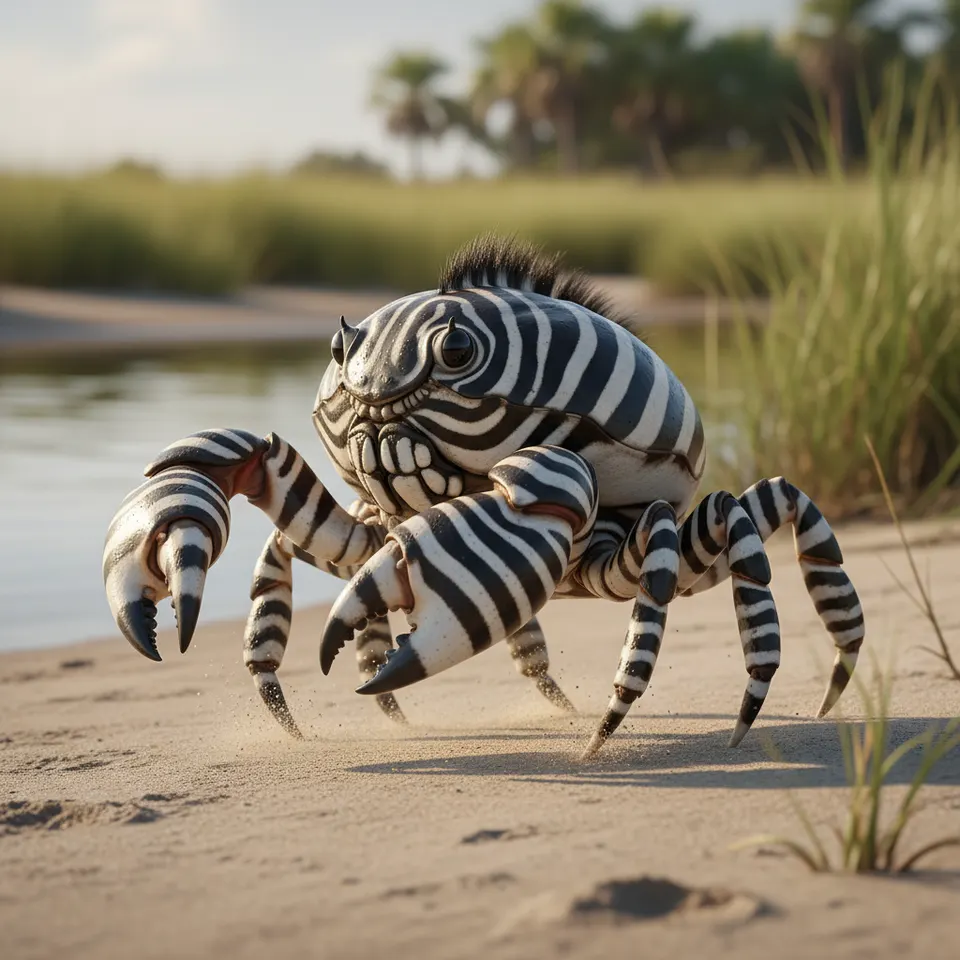
Stripeclaws are remarkably social creatures, forming small 'herd-scuttles' of 5-10 individuals. They navigate their dual-habitat with an unusual gait, a rhythmic, sideways scuttle for speed on land, often kicking up dust like miniature sandstorms. Despite their tough exoskeletons, they are quite skittish, preferring flight over fight, especially when sensing predators like larger marine reptiles or savanna big cats. Their striped patterns provide excellent camouflage in the dappled light of mangrove roots and tall coastal grasses.
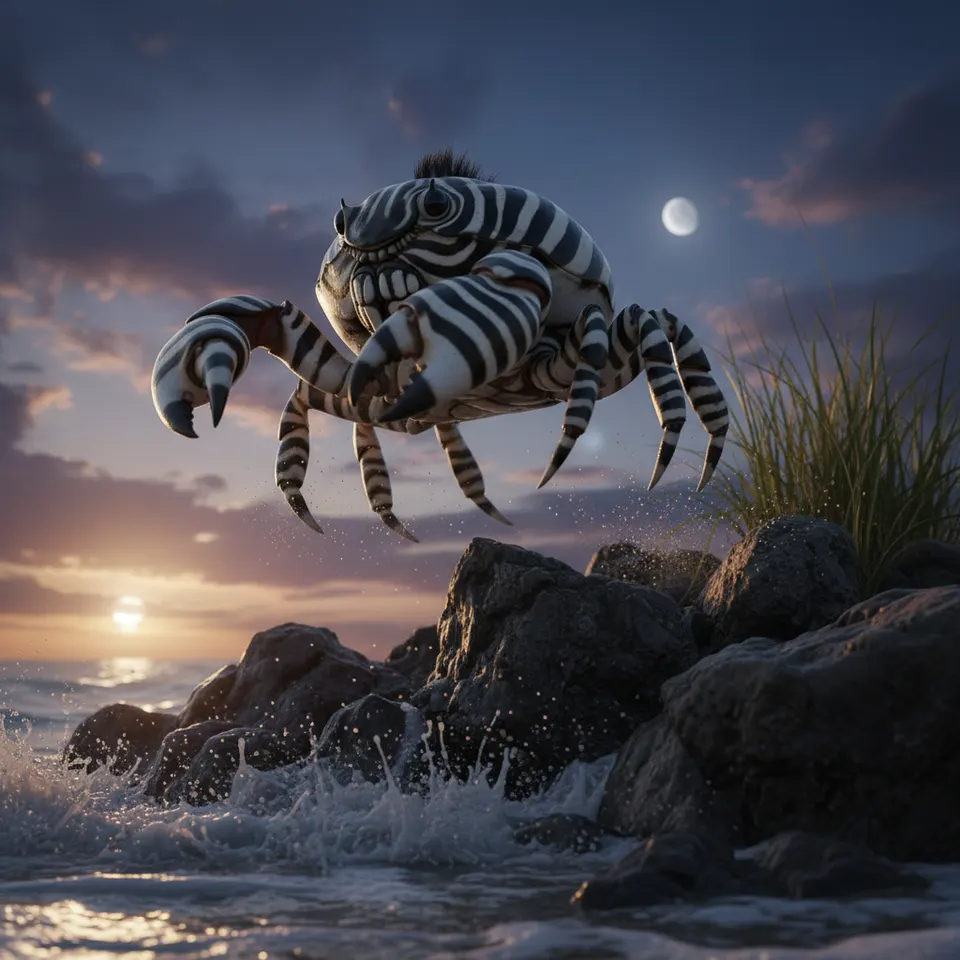
Primarily active during dawn and dusk, Stripeclaws spend their days grazing on tough salt-tolerant grasses near the water's edge and sifting through the mudflats and shallow waters of estuaries for small invertebrates, algae, and detritus. They possess surprisingly dexterous pincers that can strip leaves from branches or efficiently crack open shellfish. During high tide, they may partially submerge themselves, using their modified gills for aquatic respiration while still keeping an eye on the land.
Fun Facts
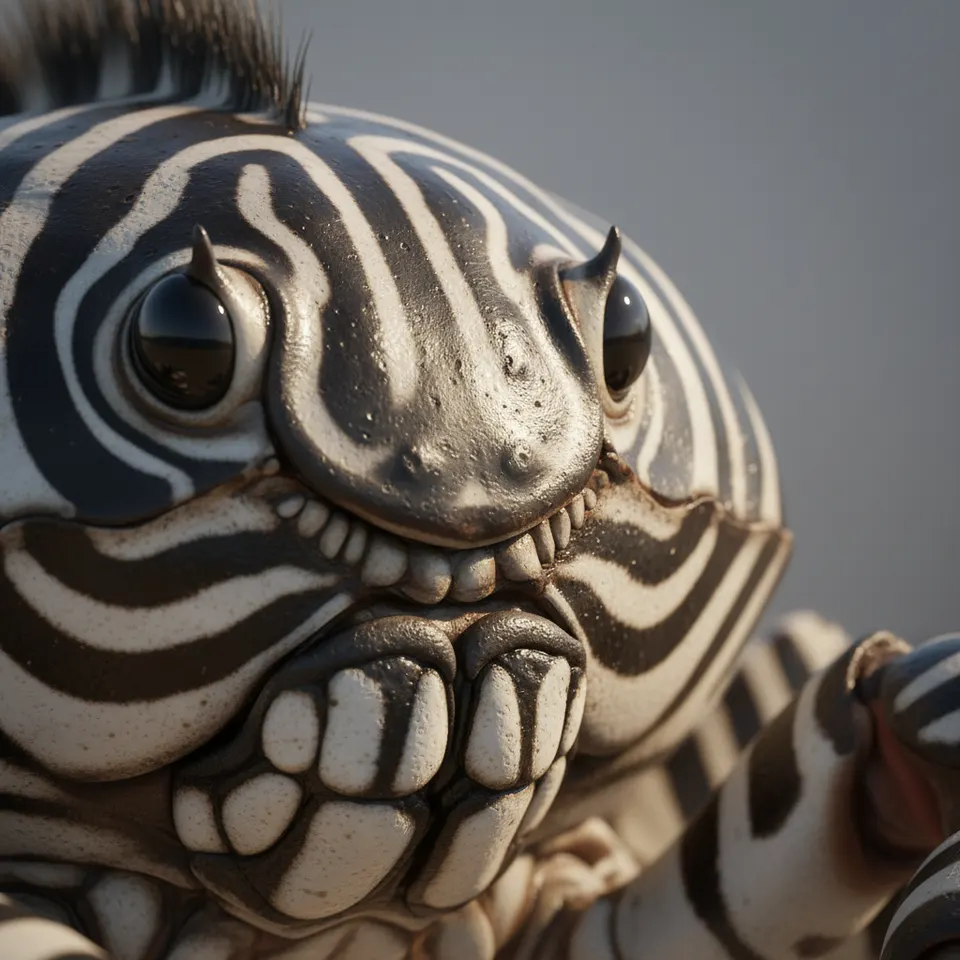
- 🔬 Their 'zebra stripes' are not just pigment, but actually areas of slightly different chitin density, giving their carapace a unique texture that deters barnacles and algae.
- 🔬 Stripeclaws communicate through a complex series of clicks and whistles, often accompanied by synchronized claw movements that resemble an elaborate semaphore.
- 🔬 Newborn Stripeclaws, called 'foal-lings,' are incredibly tiny and resemble miniature striped spiders before undergoing several molts to achieve their impressive adult form.