Carcinocet
Carcinocetus colossalis
Stats

Behavior
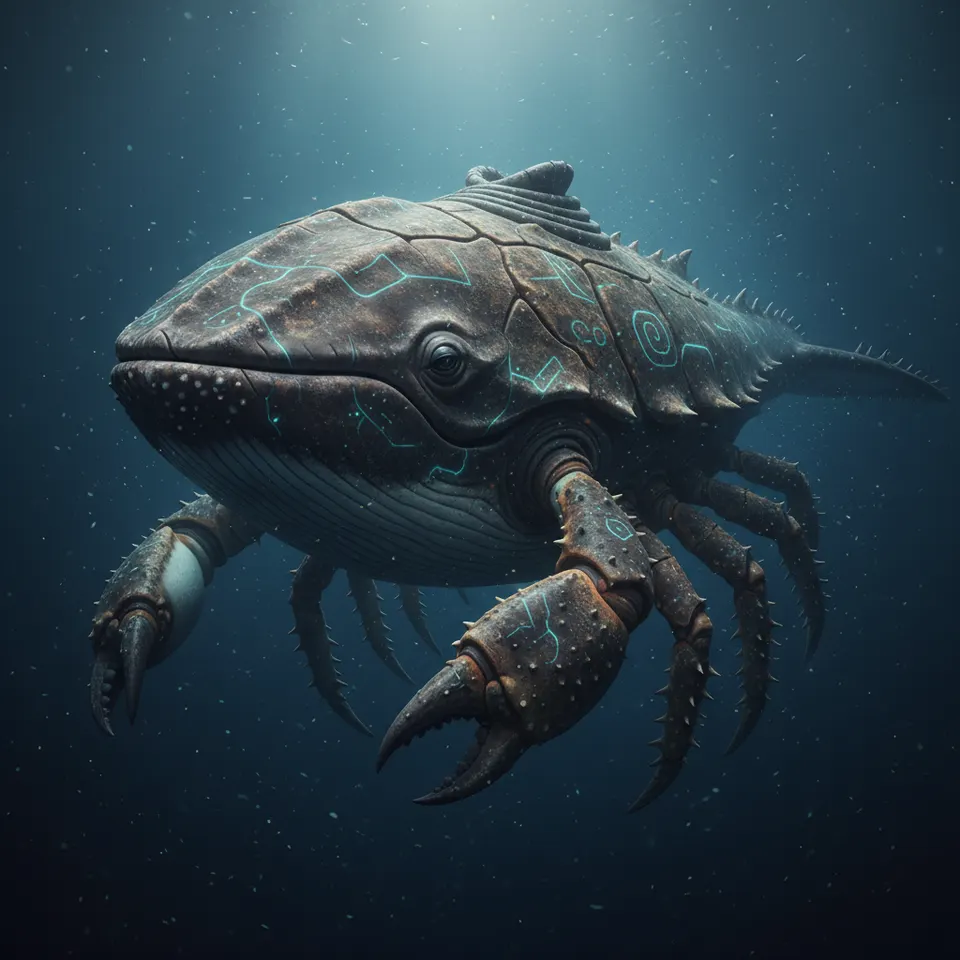
The Carcinocet is a solitary and enigmatic creature, spending most of its life in the crushing depths of the ocean. It propels itself through the water using a powerful, segmented tail reminiscent of a whale's fluke, albeit with a more armored appearance. When on the seafloor, it can ambulate slowly using modified, sturdy crab-like legs that retract into its massive carapace when swimming. Its immense claws are primarily used for crushing the shells of giant cephalopods and scavenging nutrient-rich detritus from the abyssal plains, but also serve as formidable defensive weapons against the rare deep-sea predator.
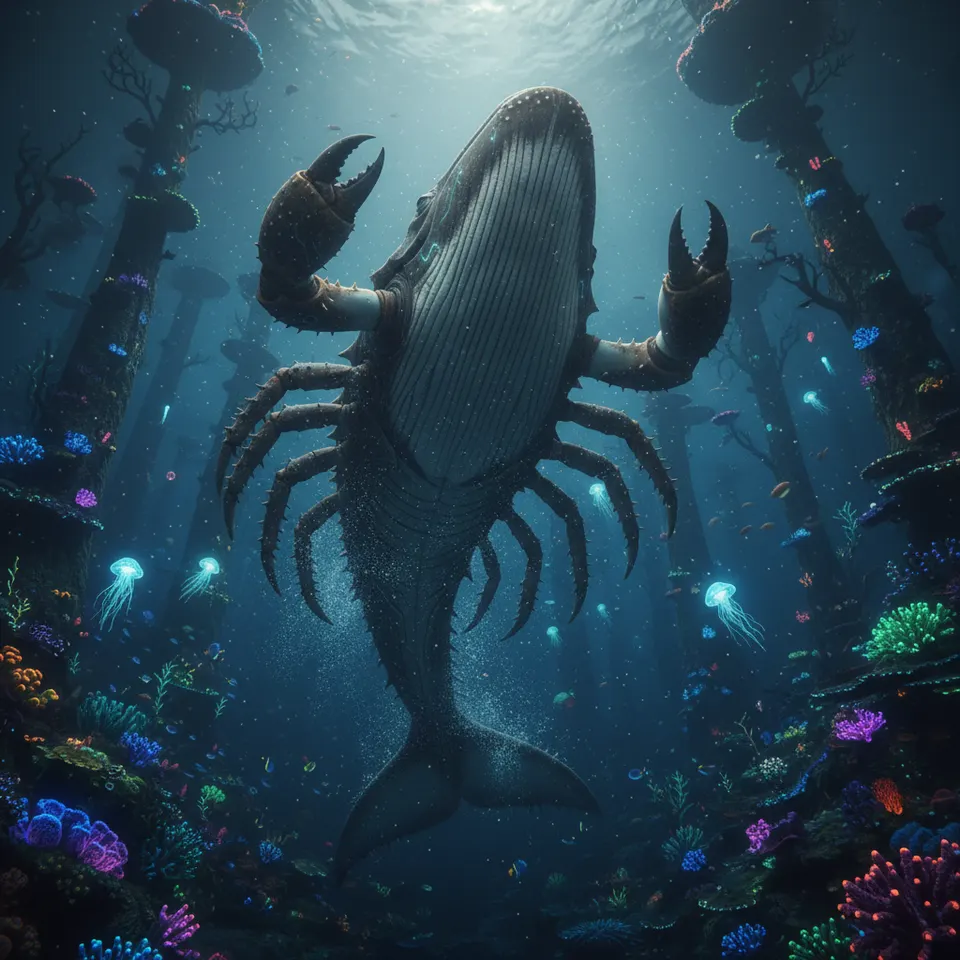
Due to its immense size and the scarcity of resources in its preferred habitat, the Carcinocet maintains vast territories, rarely encountering others of its kind except during brief, intense mating rituals. It possesses a modified blowhole on its dorsal carapace for infrequent visits to the surface, where it expels plumes of mineral-rich water and gas, a phenomenon often mistaken for volcanic activity. Its tough, bioluminescent exoskeleton provides camouflage against the dark abyssal backdrop, blending with hydrothermal vents and mineral deposits.
Fun Facts
- 🔬 Instead of vocalizations, Carcinocets communicate through powerful seismic vibrations transmitted through the ocean floor using their specialized legs, creating intricate 'earthquake songs'.
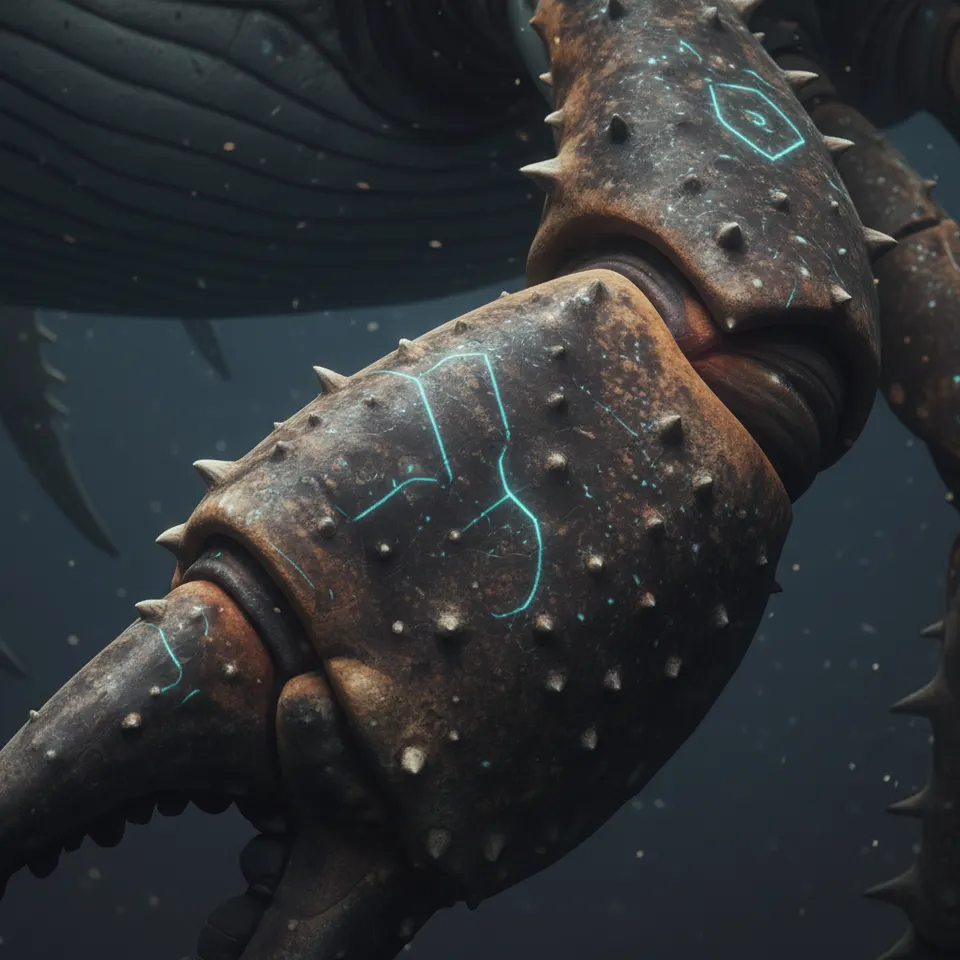
- 🔬 Their blubber contains unique proteins that allow them to withstand extreme pressure and temperatures, acting as a living bioreactor for deep-sea minerals, which are expelled through their blowhole.
- 🔬 The Carcinocet's massive claws are not only for hunting but also for digging intricate, multi-chambered burrows into the seabed, which serve as shelters and nurseries for their young, sometimes spanning acres.